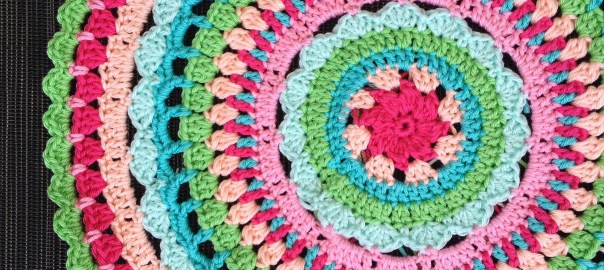
In one of my earliest memories, I’m about five years old, and I’m sitting in my backyard next to a flower garden. It’s summer, and my grandmother is there with me. She’s short and round and has curly hair.
I feel the warmth of dappled sunshine on my shoulders. Grandma’s doing something with her hands. She’s teaching me to crochet.
That moment is like a photograph imprinted on my brain. I don’t know why it’s stayed with me, but I think it’s because I was learning something new–and also because of Grandma, who was probably smiling. And singing. Maybe in Italian, hence my affinity for Romance languages and all things pasta.
One thing I know for sure is that whenever I need to go to my “happy place,” I find myself back there. Recently, I decided to use that memory to draft a memoir-like children’s picture book about a girl, her grandma, and crocheting. It’s not published yet, but (crochet fingers crossed) it will be someday.
Side note: Did you know that the word "crochet" originated from the Old French word "croche," which in turn came from the Germanic word "croc," which means hook? I find that fascinating for two reasons: (1)"croc" just sounds hook-y to me, and (2) not only is there a CROCodile in Peter Pan (both the 1904 play by J.M. Barrie and the Disney version) but there also is a character named Captain HOOK.
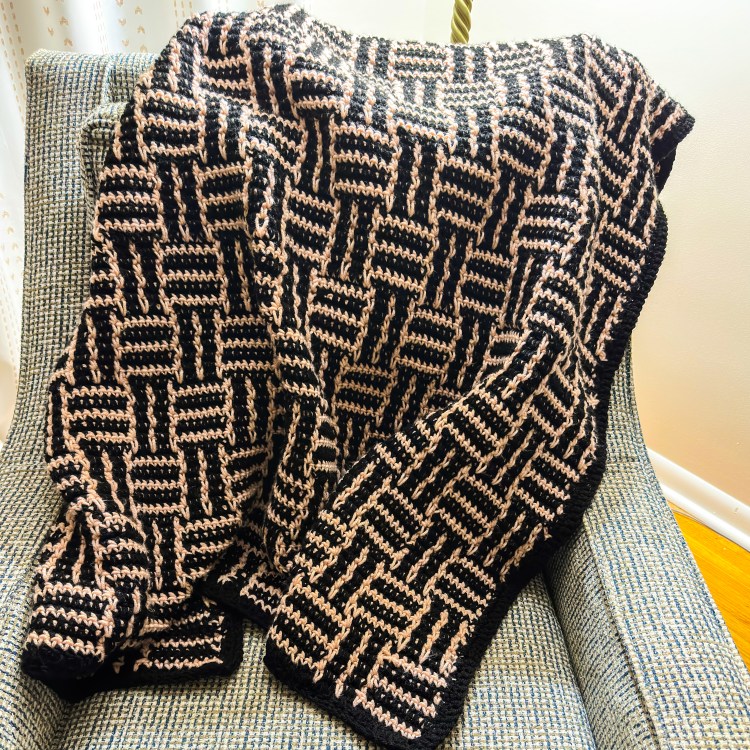
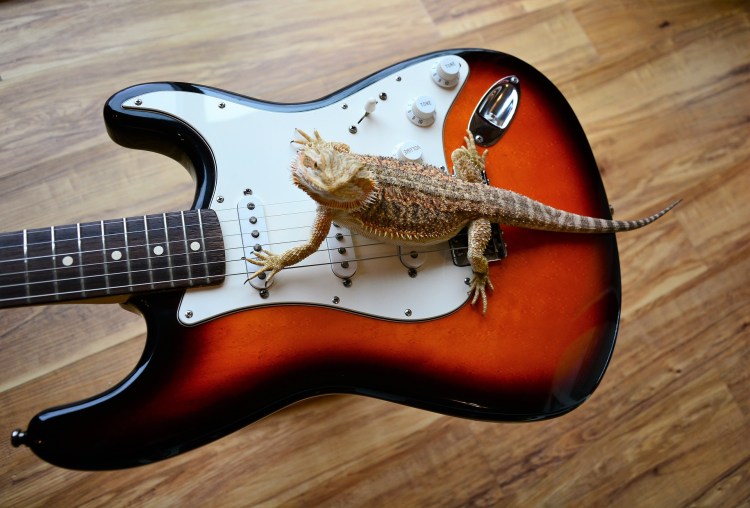
Maybe Grandma’s influence that day is why I love using my hands for things like sewing, baking, playing guitar, and writing. But I never was much of a crocheter myself until a few months ago, when I decided to make afghans as gifts for my two daughters, Erica and Katie.
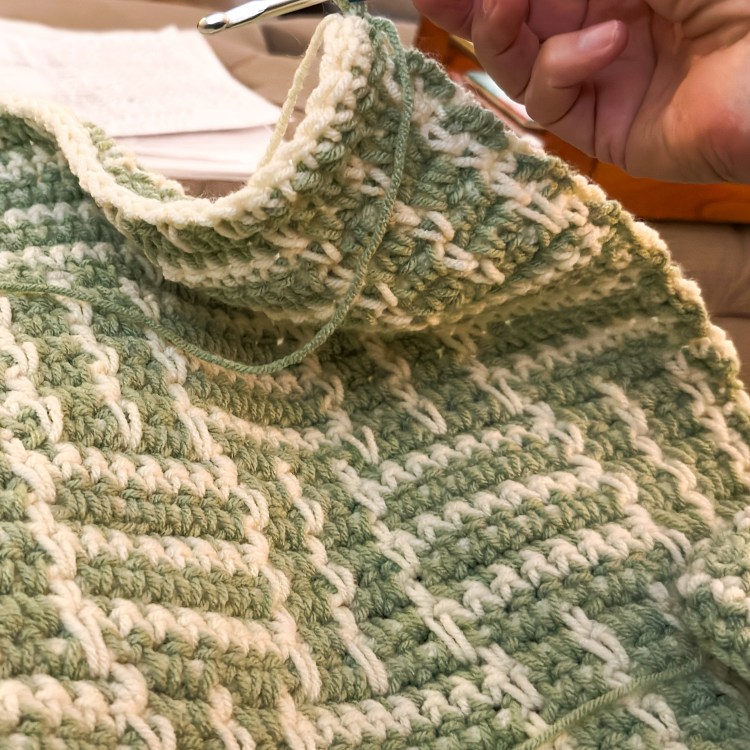
Like my daughters, the afghans are similar, yet different. Erica and Katie both decided on the same pattern but chose different colors. Erica wanted the strong contrast of black and blush (which matches her living room decor), while Katie chose the softer shades of sage and cream (Not blue! she told me, which was confusing because her living room is blue. Go figure.).
Unexpectedly, all this crocheting has been good for my brain! Yes, while sitting still for hours at a time doing not much else besides moving a little hook up and down, over and under, and in and out, I’ve gained a few insights! For example, did you know that:
crocheting is relaxing?
once an afghan gets to a certain size, it keeps your lap warm while you’re working?
crocheting is a little like meditating? (Except that your mind does wander … a LOT)
you can crochet while watching TV? (Unless you need subtitles, in which case it will take you forever to finish your afghan)
crocheting will make you feel productive? (Much more productive than blogging ever will)
an afghan can be a metaphor for life? Well, mine, anyway. It’s a theory I came up with while my mind was wandering (see bullet #3).
Best of all, you’ll learn an important lesson: that a task that seems complicated at first, and maybe downright impossible, can (probably, eventually) be accomplished if you’re patient enough (and if you don’t mind ripping out your stitches and starting over several times like I did).
Well, I should get back to crocheting now if I’m ever going to finish Katie’s afghan. But first, I’m curious:
Do you crochet? Have a happy place? Have a happy childhood memory? I’d love to hear your thoughts, which will give me something more to meditate on while crocheting!
My current writing project is a book about music. In mining the internet for information, I’ve sometimes unearthed facts that feel like sparkly gems – ones that light up my brain with ideas I wasn’t expecting. Here’s an example:
I’ve just learned that Leon Russell, a prolific musician who wrote and recorded one of my favorite songs, “A Song for You,” was mute as a young child. When he finally did speak, his first words were a complete sentence. He’d been watching a group of birds who were having some issues, and he asked:
“What’s the matter, little birdie, you cry?”
My daughter Ericaonce asked a similar question. At age three, while examining the magnetic letter Q stuck on our refrigerator, she wondered aloud:
“What’s the matter, O, are you crying?”
I was pleased to learn that my daughter and a famous musician had so much in common, and I couldn’t stop thinking about how similar their reactions had been.
Was it unusual for young Erica and young Leon to care about another’s feelings? I don’t think so. I believe all humans are born with the capacity for empathy. It’s probably helpful to our survival. If you’re more likely to care about your fellow creatures, they’re probably more likely to return the favor.
But there are other aspects of their responses that impressed me, and that I think are related to creativity:
1. Imagination
Both children demonstrated vivid imaginations. They didn’t see actual tears, but they imagined them, and their imaginations would bear fruit later in life. Leon would grow up to teach himself to play piano, despite having a congenitally weak right hand, because he could imagine himself being able to do so. Erica would eventually create her own art business without having formal art or business training at the time, because she could visualize her goal.
2. Confidence
Rather than asking IF something was the matter, both kids asked WHAT was the matter, indicating they were sure something was amiss. They had confidence in the conclusions they’d come to about what they’d observed.
3. Inquiring Minds
Both children were inquisitive. They didn’t hesitate to ask questions about something that concerned them.
4. Respect
Neither child asked “WHY are you crying?” Instead, they wanted to know “ARE you crying?” This showed a healthy respect for the right to acknowledge and name our own emotions. Maybe I’m going into it too deeply here, but I think it’s an important distinction.
5. Social Interaction
Rather than just filing their observations away, Erica and Leon communicated their concerns. I think this comes from a desire for social interaction, and from a place of caring. This outward stance might be a factor in creativity. Does this mean you have to be outgoing to be creative? Not necessarily, but I think maybe it helps to want to reach out and share your thoughts, concerns, and creations with others, and to help them, too.
I’ve certainly done a lot of thinking today about empathy and creativity, and all while sitting in a room by myself, working on a book … a book I hope someday will be shared with others … so I guess I’m reaching out, too.
And to borrow a phrase from a child I know (and one I don’t): “What’s the matter” with that?
Note: This post also appears on my new website, loribonati.com. It would be wonderful if you’d follow me there! I also have a new social media site at bluesky. (I’ve deleted my Twitter account.) My bluesky account is: @loribuffalo.bsky.social. I’d love to follow you back. Thanks!
That’s a question I recently asked some 5th grade boys, right before launching into my school presentation about poetry, which included a reading of my book, “Iguana in the Road.”
As a member of a local writer’s group, I’d been invited to participate in a literacy program for city youth. I was excited to be around students again, after having been retired from school psychology for 4 years.
I arrived early, hoping to set up my presentation before the students arrived. Unfortunately, I soon learned that there would be a substitute teacher that day.
Then I was informed by the Literacy Specialist that it was a “tough class.”
I knew I could handle that, but what ruffled me a bit was when my PowerPoint presentation wasn’t immediately recognized by the smart board in the classroom.
It was 8:00 a.m. on a Friday before a long weekend, and I’d been hoping my bright, colorful PowerPoint slides would wake the kids (and me) up, and keep us awake throughout the presentation.
I had a Plan B: I’d brought notes. But luckily, I didn’t have to use them! After about 5 minutes, a helpful staff member got the technology working, and my PowerPoint was up on the big screen. Yay! Now all I had to do was inspire a bunch of young boys to write poetry.
I began by holding up a cute stuffed iguana and asking, “What does an iguana have to do with poetry?” Admittedly, it wasn’t a fair question. They couldn’t possibly have known what I was leading up to. But one brave soul raised his hand.
“Eat,” he said.
“Eat?” I asked. He nodded.
“Okay … they both eat?” He nodded again. What could he have meant?
Maybe I misheard him, and what he really said was “neat” (as in “I like both”) or “feet” (as in the rhythmic pattern of poetry). In either case, maybe he should have been teaching the class instead of me.
I decided to move on quickly – and to keep the presentation lively. (A teacher friend of mine once told me that teaching is something like acting.) I believe my strategy worked, because the boys paid attention and were respectful and engaged throughout the entire hour.
I think having props like my cuddly stuffed iguana helped. I also had brought lots of books. I began by showing them a picture book about Gwendolyn Brooks, the first Black person to ever win a Pulitzer Prize. She won the prize for poetry, I informed them, and she wrote her first poem when she was seven years old. They seemed surprised by that.
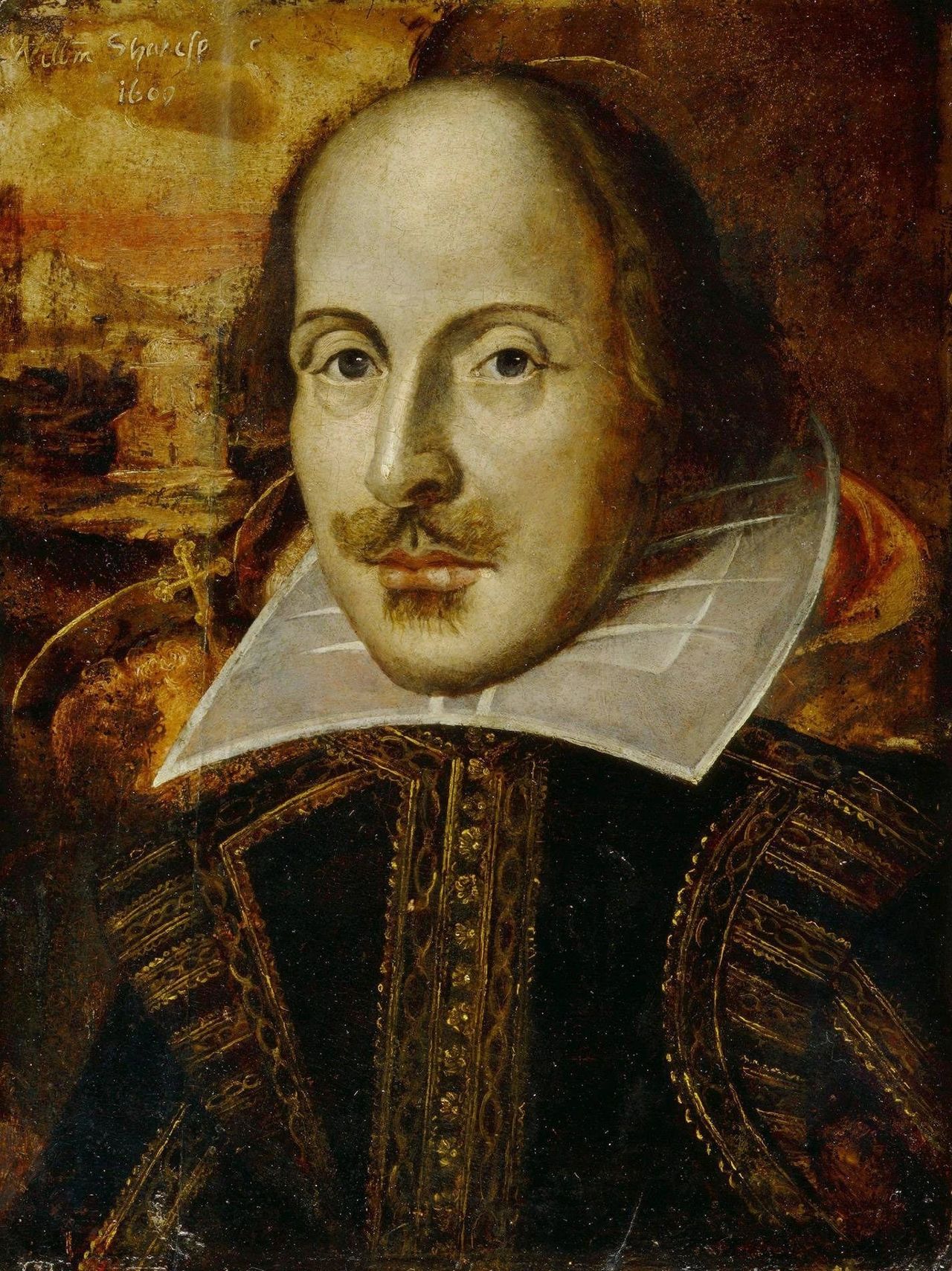
Next, I read short quotes about poetry from three famous poets: Amanda Gorman, William Shakespeare, and Kwame Alexander. They’d never heard of Amanda or Kwame, but one boy not only recognized the Bard, but knew his name.
William Shakespeare
I animatedly read a page from Kwame Alexander’s novel-in-verse, “The Crossover.” When I mentioned that the book is about twin brothers who play basketball, one boy raised his hand. “I’m a twin!” he said. When I said that the main character in the book is named Josh, he grinned. “I’m Josh!” he exclaimed. I was glad I’d chosen “The Crossover” to include in my talk. (P.S. I love that book!)
Kwame Alexander
I then listed the main ingredients in a poem (rhyme, rhythm, and repetition), read a poem as an example of rhyme, showed a photo of my dog (because kids like dogs, right?), and read a poem I’d written about my dog that used repetition.
I added other ingredients, such as comparison (simile and metaphor), and I read a poem my own daughter had written in 4th grade – one that used a metaphor. I wanted them to know as much about poetry as I could squeeze into an hour, without boring them to death.
I also stressed that a poem does not need to be long. As an example, I put Muhammad Ali’s famous poem (“Me. Whee!”) up on the board.
Then I dramatically announced that there were NO RULES! in poetry. I wanted them to relax and feel free to write whatever was in their hearts.
After that, I invited them to think of a topic and brainstorm a few words that could eventually become a poem. Classroom helpers passed out paper and pencils that had been provided by a grant from a local organization.
Several students asked for help with spelling. As I spelled out a word for one boy, he wrote it from right to left, each letter reversed. Some kids didn’t write at all. One child kept his head down on his desk most of the time. I knew from experience that could mean he hadn’t slept the night before, was hungry, or maybe was just trying to keep his emotions together. Whether they wrote or not wasn’t important to me. I was just glad they were listening, because I was hoping to plant some poetry seeds that day.
In the 5 minutes they had to think of topics and write, the majority of kids did write. I’m not sure I could have done that! Their rough drafts ranged from just a few words to whole paragraphs. Several volunteered to stand and read their works-in-progress to the class.
They wrote about football (one poem was a play-by-play description of a game), and about their pets. One of my favorite creations was this one:
“Chocolate, dog, no, no, no.”
Good use of repetition! And it says so much in just five words. After reading his poem aloud, the author explained what he meant (that dogs shouldn’t eat chocolate). This is a clear, concise, rhythmic poem, written in just a few minutes by someone who might never have written a poem before in his life. Bravo!
I concluded my presentation with a reading of “Iguana in the Road,” and moved on to my next assignment, a bilingual 5th grade class down the hall. (The school I visited is the largest bilingual elementary school in my city.)
Right away, I noticed a difference. The students seemed older, taller, quieter. They didn’t raise their hands or respond to my questions … not right away, at least.
But by the end of the presentation? Wow. Not only were they participating, but they were actively encouraging each other to participate, chanting their friends’ names to get them to stand on the “stage” (the front of the room) and to share their poems.
While they wrote, I offered assistance. As with the former class, many asked for help with spelling. One girl asked if it was okay to write in Spanish, or if she had to write in English. I told her it was fine to write in Spanish, and then I mentioned that to the rest of the class. As a result, several kids wrote poems in Spanish.
Since many were reluctant to read aloud, I offered to read their poems for them, including the ones in Spanish. At least ten children handed me poems to read, about half of them in Spanish. I think they were pleasantly surprised that I could read and understand them!
Thanks to the community grant, each child in the participating elementary schools received a free book that day! I was so grateful for the privilege of being part of this program and being among so many creative, talented, and helpful people.
How many books can you read in a week? A month? A year? I’m asking for a friend.
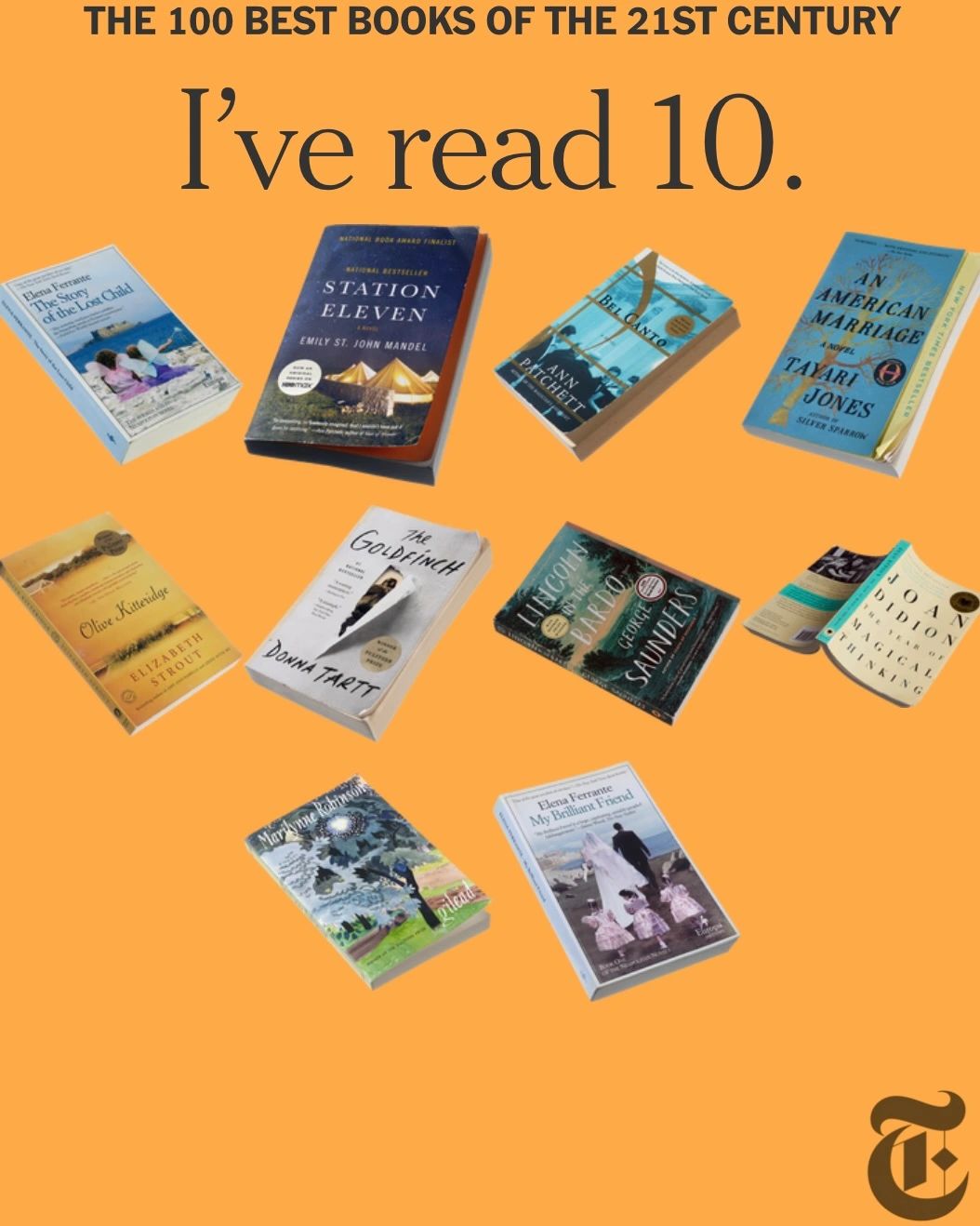
Actually, my friend is me. I’m on a mission to read every one of “The 100 Best Books of the 21st Century,” but at the rate I’m going, I’m afraid I’ll never accomplish my bucket list task before I actually kick said bucket.
The esteemed list (of which I’ve read only 10) was compiled by The New York Times using input from over 500 hand-picked writers, editors, librarians, and other literary types. Here are the ones I’ve read:
The Story of the Lost Child (Elena Ferrante)
Station Eleven (Emily St. John Mandel)
Bel Canto (Ann Patchett)
An American Marriage (Tayari Jones)
Olive Kitteridge (Elizabeth Strout)
The Goldfinch (Donna Tartt)
Lincoln in the Bardo (George Saunders) … well, most of it, anyway
The Year of Magical Thinking (Joan Didion)
Gilead (Marilynne Robinson)
My Brilliant Friend (Elena Ferrante)
(My review: I’m wild about the Ferrante, St. John Mandel, and Strout books, and I liked the others, except for Lincoln in the Bardo, which I just didn’t get.)
Yikes! With 90 more books to go, I’ll have to hustle like crazy. But luckily for me, The New York Times has just come up with another “100 Best Books” list, because the original list was pooh-poohed by some picky Times readers. After receiving numerous complaints, the publication succumbed to the pressure, polled their regular readers, and assembled a second collection of titles: the “Readers Pick Their 100 Best Books of the 21st Century” list. I like this list better.
In fact, I was happy to discover that I’ve read 16 books on this new list, including 9 from the old list, plus:
All the Light We Cannot See (Anthony Doerr)
Lessons in Chemistry (Bonnie Garmus)
Gone Girl (Gillian Flynn)
Caste: The Origins of Our Discontents (Isabel Wilkerson)
Braiding Sweetgrass (Robin Wall Kimmerer) … skimmed parts of it
Where the Crawdads Sing (Delia Owens)
The Dutch House (Ann Patchett)
(My review: I absolutely loved the books by Doerr, Garmus, and Flynn, appreciated and learned much from Wilkerson and Kimmerer, and thought the Patchett was pretty good. I was disappointed in Crawdads, however.)
I’m not all that fond of “best” lists. In fact, “best” is a word I don’t often use. For me, it’s difficult to select just one song, movie, or even friend as “the best,” and the same holds true for books. I’ve read several great ones, and others that were less than great but that I’ve thoroughly enjoyed nonetheless.
That said, I’ll take a recommended reading list any day of the week. In fact, I’ll take it all the way to my local library or indie bookstore. Book lists are helpful. But I’m sad that there are SO MANY great ones out there that didn’t make either one of the “Best Of” lists.
I’m thinking, off the top of my head, of this highly subjective list of my favorite 21st century books (and I’m sure I’ve left out many deserving ones):
Where’d You Go Bernadette (Maria Semple)
Mr. Penumbra’s 24-Hour Bookstore (Robin Sloan)
The Lacuna (Barbara Kingsolver)
Less (Andrew Sean Greer)
Bridge of Sighs (Richard Russo)
The History of Love (Nicole Krauss)
The Guernsey Literary and Potato Peel Pie Society (Mary Ann Shaffer and Annie Barrows)
State of Wonder (Ann Patchett)
How to Be an Antiracist (Ibram X. Kendi)
Turtles All the Way Down (John Green)
Unsheltered (Barbara Kingsolver)
Miracle and Wonder: Conversations with Paul Simon (Malcolm Gladwell)
The Farmer and the Clown (Marla Frazee)*
A Wish in the Dark (Christina Soontornvat)**
The List of Things that Will Not Change (Rebecca Stead)**
* Picture book with no words.
** Middle grade novels.
I’ll keep you posted on my progress toward my goal of reading 100 21st century books. Meanwhile, please leave me a comment about your favorite books, ones you’re currently reading, or anything else!
And be sure to check out the photos that I keep adding to my Photos page. I’ve neglected to blog about what I’ve been up to this summer, so I’m hoping that these pictures (and their captions) will catch you up.
I love coincidences – apparently unrelated events that become connected, otherwise known as synchronicity. Well, this morning a coincidence popped up, and it was perfectly in sync with my day.
Let me set the stage.
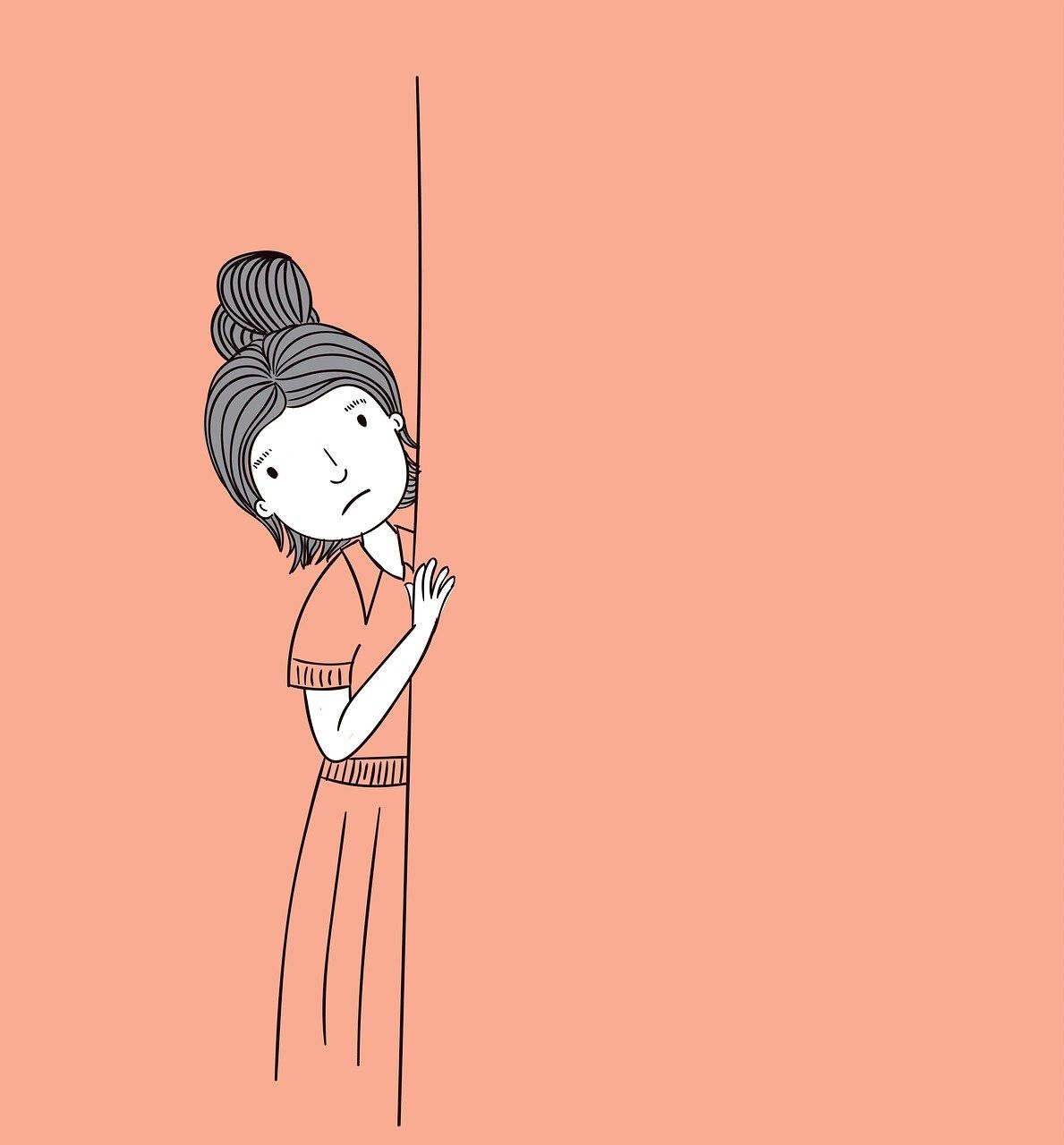
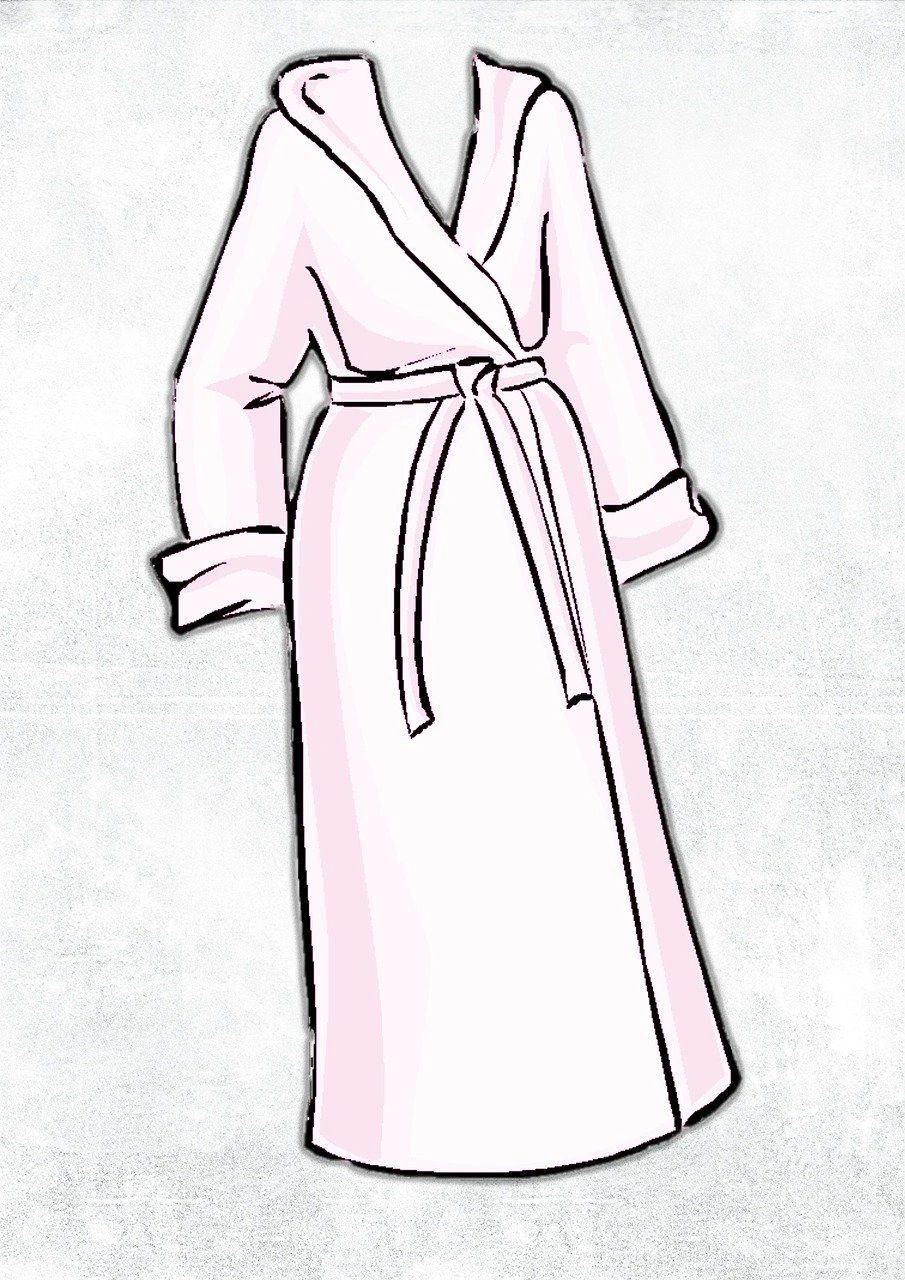
It’s 10:30 on a Sunday morning. I’m still in my fuzzy pink bathrobe. My hair’s a mess. I have raccoon eyes, probably, although I haven’t checked myself in the mirror yet. I’m hiding behind an open door.
Image by Piyapong Saydaung @ Pixabay
What could possibly explain my situation, and my unkempt appearance?
It’s simply this: I was up late last night. I couldn’t help it. I’d spent hours reading. Playing guitar. Watching TV.
Doing a crossword puzzle, browsing YouTube, researching a literary agent online.
Cutting my hair.
Combing through my possessions for doodads to enhance my vendor table at a book fair next weekend.
And cleaning out two closets that suddenly seemed to be jam-packed with clothes I couldn’t believe I’d actually spent good money on, and never wear anymore.
Just an average Saturday night.
Is it any surprise, then, to find me cowering behind my back door late Sunday morning, with one extended hand on my dog’s leash, the other on the doorknob, awaiting the moment we were both safely back inside the house? I wasn’t hung over, just hung UP on one horrifying thought: What if my neighbors see me?
I knew if that happened, and if they asked if I was okay, I probably shouldn’t dive into the litany of activities I’ve just revealed to you: the playing, watching, puzzling, researching, cutting, combing and cleaning I’d spent hours on the night before. Better to just utter a simple excuse before ducking back inside my house. But what could I say? The words “I’m an artist” suddenly sprang to mind. After all, artists are allowed to stay up late and sleep in the next day.
But is that true? I asked myself. AM I an artist? No, absolutely not. Not really. Well, maybe. I just wasn’t sure.
Image by ArtsyBee @ Pixabay
Do artists cower behind doors, dressed in fuzzy pink bathrobes?
Why yes, I suddenly remembered, they do! I’d seen Michael Douglas do just that in Wonder Boys, where he plays an English teacher trying to write a novel. His bathrobe was fuzzy! And pink! (I think it was his wife’s, but that’s beside the point.) Hmm. The idea of calling myself an artist was starting to seem more plausible.
I ate a big breakfast, still ensconced in my robe, after which I listened to the audiobook I’d begun recently: Miracle and Wonder, by Malcolm Gladwell – an extended interview with musician Paul Simon.
When I came to the part where Simon was asked about his motivation to experiment with music, I was stopped in my tracks by his response:
I really didn’t like being called an artist. Until I was in my 40s, I didn’t accept that. I just felt like, no, I’m not an artist. And when I was in my 40s, I took courses around the time of Graceland … I said, well, actually, I AM an artist. It doesn’t mean I’m a GOOD artist, it’s just a personality type. Some people make up stuff all the time, they can’t help it, they make it up. But, you know, it doesn’t mean you’re a … you could be a bad artist, you could be a great artist! But it’s a kind of a type of person. – Paul Simon
I laughed out loud when I heard that! There’s your answer, I told myself. Paul Simon just spoke to you! Paul Simon had imposter syndrome, and he overcame it. And you should, too. You ARE an artist!
I’m no longer going to hide behind a figurative door, fearing to call myself an artist. No, I’m going to wave my fuzzy pink flag proudly. My art might not be great, or even good, but I AM making stuff up (and enjoying the process).
By now you’re probably wondering what selection of songs, TV shows, and books could possibly have kept me up and interested until the wee hours of Sunday morning. Well, here they are, in no particular order:
TV: The final episode of the Netflix series, All the Light We Cannot See. It’s just beautiful, all the way through. Great acting within a story that’s simultaneously deep, dark, and uplifting, based on Anthony Doerr’s lyrical, Pulitzer prize-winning novel by the same name. The blind woman who plays the part of Marie beat out thousands of sight-impaired actors for the role, despite the fact that she’d had no previous acting experience or training. And it was her first audition! Now that’s an artist!
Hardcover book: The List of Things that Never Change, by Rebecca Stead. It’s a wonderful book written for middle grade kids, about a girl with two dads who sees a shrink, wishes she had a sister, and never gets 10 out of 10 on a spelling test (and therefore never gets to eat lunch with her teacher on Fridays). That’s all I know about it so far, and it’s so good I had a hard time putting it down last night.
Audiobook: Miracle and Wonder, by Malcolm Gladwell. I highly recommend it for anyone who’s interested in music, creativity, songwriting, or Paul Simon.
Songs: The songs I practiced on my guitar (26 altogether) before watching TV included ones written by Gordon Lightfoot, Paul Simon, Steve Goodman, Neil Young, Bob Dylan, The Beatles, Jill Sobule, and me. I spent a significant portion of the time listening to recordings of Paul Simon playing Homeward Bound and Still Crazy, trying to copy his fingerings (but not succeeding too well). Nonetheless, the act of listening to the chords and trying to break them down into individual notes is, for me, both fascinating and rewarding.
Crossword Puzzle: The Sunday New York Times. It was around 12:05 a.m., and technically Sunday morning, when I started it. I finished it today during breakfast.
YouTube: After searching “how to set up book festival vendor table,” I watched How to Create the Best Vendor Booth for a Pop-Up Shop by Monica Razak, and it inspired me to run around the house searching for props for displaying my books, crafts, business cards, etc. This somehow led to the cleaning out of closets. I’m not sure why. An artist works in mysterious ways.
Recap: In Episodes 1 and 2, I told you how a turtle made me think reptiles were cute, how an endangered iguana made me write a song about reptile conservation, and how that song became a video and a book.
And now, in Episode 3, you’ll learn about how a lizard made me write another song, video, and book … and all about my upcoming visit to IguanaLand!
I’m a desert spiny lizard, but you can call me “DSL,”
Oh, I’m a desert spiny lizard, but you can call me “DSL,”
My life is hot and dusty … all this crawlin’ in the desert ain’t swell!
That’s how my song, “Desert Spiny Lizard Blues,” begins, and it just gets more blue after that. You can check it out for yourself here.
I really can’t remember what inspired me to write a song about a lizard, so, once again, I’m going to pin the blame on a reptile – probably the one whose photo graces the cover of my latest children’s book, “I’m a Desert Spiny Lizard.”
Yes, that’s right. I wrote a book about a lizard – because once “Desert Spiny Lizard Blues” was written, recorded, and uploaded to YouTube, I felt compelled to create a children’s book to go with it, much as I’d done with my song, “I’m an Iguana.”
Unexpectedly, I now have two reptile books for kids under my belt, and they’re packed with factual information that I learned from reptile experts. I’m proud to announce that I’ll be offering both of these cute, fun, and educational reptile books for sale at the 3rd annual IguanaFest in Punta Gorda, Florida this weekend!
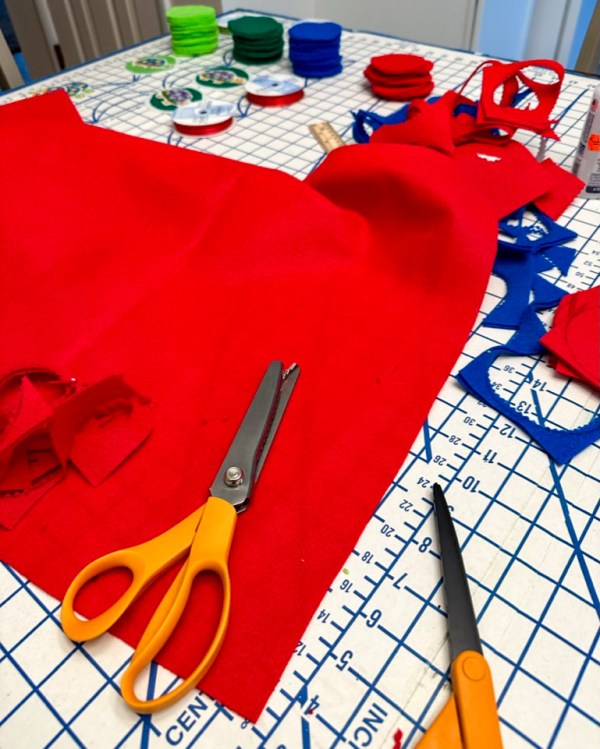
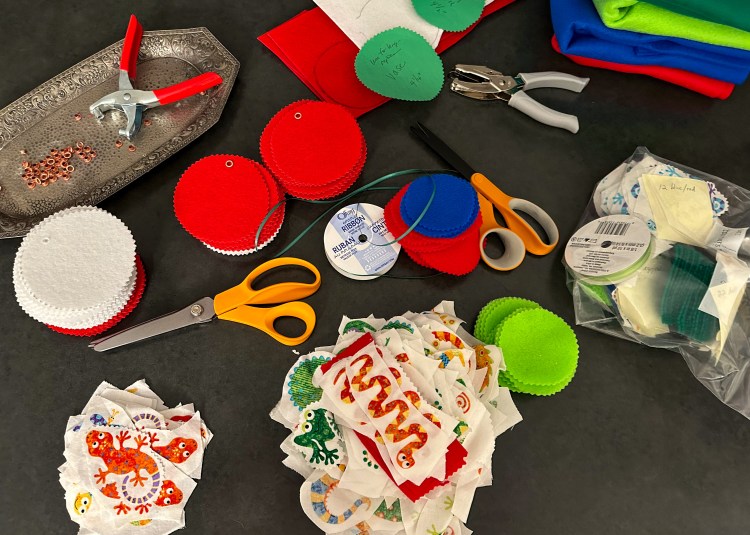
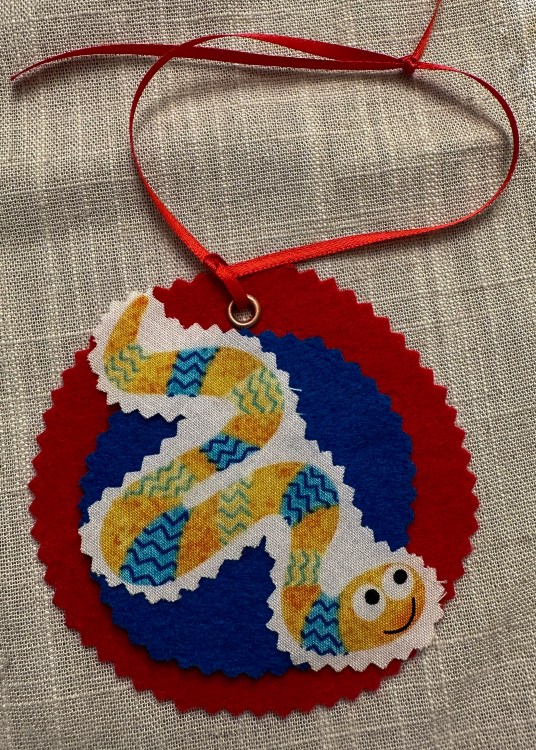
Not only that, but I’ll be selling my own handmade reptile-themed holiday ornaments to go with the books.
It’s true. I’ve gone reptile-crazy. When I first laid eyes on this adorable reptile-themed fabric, I couldn’t resist buying the whole two yards that were left on the bolt, even though I had no idea what I would do with it. Eventually, the idea of making felt holiday ornaments came to me.
So you see, not only have reptiles managed to coerce me into writing songs and books about them, posed for photographs, and demanded to appear in videos, but now they’re even sending me out of state to a reptile FESTIVAL, at the largest reptile zoo in the world (a.k.a. “IguanaLand”).
What’s next? Will a reptile make me write another episode for this blog series? Probably. I’m sure they’ll want you to find out what IguanaFest was like.
Stay tuned for the exciting final episode of A Reptile Made Me Do It!
This is the story of how a reptile motivated me to write two songs and four books. Yes, that’s right! A reptile made me do it!
How, you ask, did a critter known for tucking its head into its shell become my muse? Well, it’s a long story, but I might as well pull my head out of my – er – shell, and start telling it.
As a young child, I was never particularly drawn to reptiles. Don’t get me wrong. I thought Elvis, our tiny pet turtle, was very cute, in a turtley kind of way.
See what I mean?
And I liked most other animals. I loved dogs, cats, and birds. I once caught a salamander with my bare hands. I didn’t mind picking up nightcrawlers and threading their wriggling bodies onto fishhooks. But I wasn’t about to pet a lizard or a snake.
No, I wasn’t enraptured by scaly reptiles the way my little brother Rafa was. In fact, he had two pet snakes. He kept them in his bedroom. I never entered his bedroom after that.
Maybe that was why Rafa kept snakes in his bedroom.
Here’s me at age 12, after accidentally entering his room while sleepwalking:
Just kidding. I didn’t really mind the snakes, as long as they stayed in their glass cases, which they did. I figured it was just a phase my brother was going through.
But it wasn’t just a phase. He continued to be fascinated by reptiles, and has cared for many more over the years. It’s true. Just ask his pet newt, Figgy.
Eventually, he – my brother, not Figgy – became a vertebrate zoologist, a scientist who studies animals with backbones.
And speaking of backbones, I’ve managed to grow a pretty strong one when it comes to seeing snakes and lizards. I sort of had to, after moving to Tucson. Snake encounters are pretty common there.
During my first month in Tucson, I saw two rattlesnakes sunning themselves in my apartment complex parking lot. I came upon at least three while hiking, and another while riding my bike. Once, a rattler even reared up and rattled at my hiking partner and me. I learned to stay calm during these experiences, and to give them a wide berth.
Then there were the lizards. They were everywhere outdoors, including on walking paths built for humans. They were never underfoot, though, and never a threat. I’m sure they were more afraid of me than I was of them.
I knew I was a real Tucsonan when I finally learned to tell some of the different lizard species apart. I even photographed them, when they weren’t moving too fast. In fact, I put some of those photos in my latest book, “I’m a Desert Spiny Lizard.”
But now I’m getting ahead of myself. I need to explain how I went from having a pet turtle named Elvis to writing two songs and four books about reptiles, and I’m not doing a very good job of that.
I think it’s because I like looking up silly pictures of animals and sticking them in my posts.
Right now, I need to go give some love to my pet, a dog named Maya. I’ll be back with Episode 2 soon, in which you will learn how I met a reptile conservationist who, along with Elvis, inspired me to write my first song about a reptile.
I guess I’m officially an author now. At least that’s what I’m told. I mean, I have written a few books, and published them, and people can read them. So there’s that.
And official authors need official author websites. So now I’ve got one. It’s called “Lori’s Stories,” and if that sounds familiar, just look up at the top of this page and you’ll see that it’s not that different from my current site. Clever, huh?
I’d like to thank you for following my blog here at WordPress. But my plan is to eventually transition completely over to the new site. So, if you want to continue to follow me in the future (and I really hope you will!) just do this:
Click loribonati.com, then click the Contact tab, and enter your contact info. I’ll respond right away and add you to my subscriber list. Easy peasy.
I have one more request. My new books need reviews and ratings, so I’m offering a FREE e-book to anyone who will write an honest review of it on Amazon and/or Goodreads. This applies to any of my books, which include:
Iguana in the Road — A cute and colorful rhyming picture book for kids about endangered iguanas, with a “Fascinating Iguana Facts” section in the back. Illustrated by Tucson artist Diane Ronning.
Words with Sisters — Co-written with my sister, Susan Rabideau. This is another book of funny poems, and was inspired by the game “Words With Friends.”
Standing in the Surf— a personal photo journal covering the Pacific northwest area known as the Salish Sea.
My new author site, loribonati.com, will have a few more features than this one currently does, plus it will focus more on my writing life. I hope to see you there soon.
I think this will be my last blog post for this month. After three solid weeks of writing, I’ve simply run out of things to say.
Also, I need to get back to some things I’ve been neglecting, such as reading, exercising, walking the dog, food shopping, house cleaning, and photography.
Oh, and going to bed at a decent hour.
So, for now, it’s sayonara … but before I go, since Thanksgiving Day is just around the corner, I want to leave you with some “food for thought,” as it were – a list of some of my favorite books about food. Some, like The Guernsey Literary and Potato Peel Pie Society, are about much more than just food.
Lori’s Short List of Books about Food
Will Write for Food (the complete guide to writing cookbooks, blogs, memoir, recipes, and more), by Dianne Jacob
Chocolat/The Girl with No Shadow/Peaches for Father Francis (trilogy), by Joanne Harris
Julie and Julia, by Julie Powell
Eat, Pray, Love, by Elizabeth Gilbert
The Guernsey Literary and Potato Peel Pie Society, by Annie Barrows and Mary Anne Shaffer
Heartburn, by Nora Ephron
Like Water for Chocolate, by Laura Esquivel
Last Night at the Lobster, by Stewart O’Nan
The School of Essential Ingredients, by Erica Bauermeister
Hallelujah! The Welcome Table, by Maya Angelou
I may have more to add to this list … in December.
What are your favorite books about food?
~ ~ ~ ~ ~
This is post #21 of the month-long challenge known as #NaBloPoMo or #NanoPoblano. To follow my blog, please click below where it says “Follow loristory.”
And, to read more of the NanoPoblano posts written by the supportive blogging group “Cheer Peppers,” click the image below.
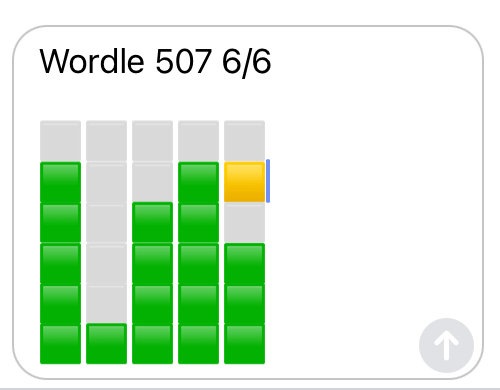
While working on Wordle this morning (see below for my pitiful results), I was reminded that I haven’t written a shameless plug recently. And so, without further ado, or should I say “ADIEU” …
Now available on Amazon and selling like hotcakes in England because … I don’t know, they’re written in English?
Each book contains 30 original, 8-line poems (poems that rhyme!) about the daily act of Wordling, along with diagrams that shamelessly reveal my results for all the world to see.
But: No SPOILERS!
Also: No words were harmed in the making of these books.
These one-of-a-kind, self-published poetry books would make great companions as you sip your morning coffee. (That’s when I always play Wordle.) They also go well with tea and scones. (I shamelessly mentioned tea and scones because of my fans in England.)
That reminds me of the time Homer Simpson complained about having to study English in high school. “English?” he asked. “Who needs that? I’m never going to England.” Well, maybe I’ll go to England someday. A book-signing there would be fab. Do any of you Brits own a bookstore?
The poems in these books are so short and rhyme-y that you’ll have no trouble memorizing them. That way, you can easily impress your friends with your love of poetry. Recite the verses (be sure to call them verses) at dinner parties, and place several copies on tables throughout your home.
Okay, I’m just being silly now. But seriously, even if you never read them, they just look cool because every Wordle fan will recognize them by the colors of their covers: fabulous Wordle Green, acceptable Wordle Yellow, and the less popular Wordle Gray.
AND, for a really special effect, you could purchase the compilation volume, which contains all three books in one (that’s 90 poems altogether!) and comes in a color heretofore unknown to Wordle gamers: Wordle Evergreen. This dark beauty will really pop on your bookshelf, especially when placed next to the other three books in the series.
You can use the “Look Inside” feature on Amazon to read some of my Wordle poems. I hope some of them make you smile. That’s my main objective with the book, and with my life, too, I think.
Okay, that’s it for my shameless plug. Now, here’s my shameless Wordle result for today. My average is 4/6, so this 6/6 is nothing to brag about.
Do you play Wordle? And have you ever self-published a book? Let me know in the comments below.
~ ~ ~ ~ ~
This is post #8 of the month-long challenge known as #NaBloPoMo or #NanoPoblano. To follow my blog, please click below where it says “Follow loristory.”
And, to read more of the NanoPoblano posts written by the supportive blogging group “Cheer Peppers,” click the image below.