This post is about a part of Spain I’d never heard of … and it’s about my grandsons, too.
Yesterday, while listening to a local radio program about world reggae music, I was surprised to hear a reggae song described as Spanish, Celtic, and Galician. I’d never heard the terms “Spanish” and “Celtic” together in the same sentence. To me, Celtic meant Irish, Welsh, and Scottish. I couldn’t imagine a Spanish reggae song with a Celtic flair.
What’s more, I didn’t have the slightest idea what “Galician” meant. Curious, I Googled it and found a reference to a Galicia in eastern Europe. I thought I’d misheard the radio host and thought nothing more about it.
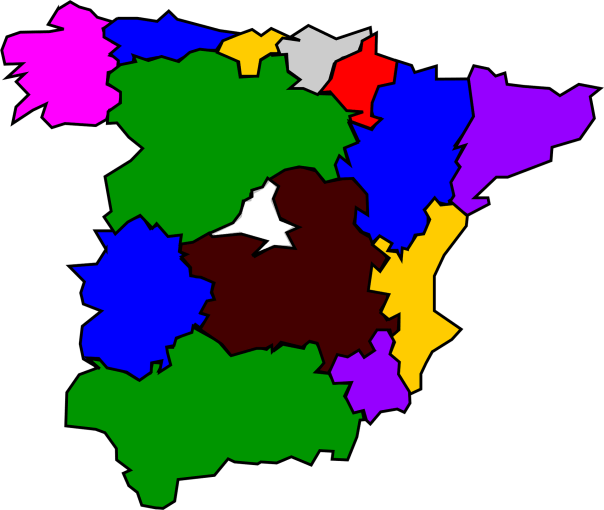
But then, later that evening, while reading a book about Spain (because I’m planning a trip there soon), I stumbled upon a map showing another Galicia – this one a region in the northwestern portion of the country … and the book said that Galicia’s language has Celtic roots.
Galicia is the bright pink region on this map, in the northwest corner of Spain.
Wow! I’d just learned something new about music, language, AND geography. I like learning new things. But today, in the car, when I asked my 10-year-old grandson Porter (who loves maps and history) if he’d ever heard of Galicia, the one in Spain, I learned even more.
Yes, he knew exactly where it was. He even expressed the opinion that the map of Spain would look much better if Galicia were part of Portugal!
He also already knew about Galicia’s Celtic ties, and when I wondered aloud how many languages were spoken in Spain, he mentioned not just Spanish, but Basque and Catalan, too.
After I told him I’d be visiting southern Spain soon, he said he thought there’d be a lot of history there because it was probably the oldest part of Spain. This led to a lively tutorial (by that I mean he tutored me) about Spain’s history, including key points like Charlemagne’s invasion and several Spanish conquests (Mexico, southwestern US, the Philippines, Cuba, and Equatorial Guinea). That’s right. My grandson knows something about the history of Equatorial Guinea, a small country in Africa.
Did I mention that he’s only 10 years old?
Meanwhile, his 6-year-old brother Elliot was quietly absorbing every word, and during a break in the conversation, he sweetly offered his own opinion:
“Grandma, when you come back from Spain, maybe you can tell us all about it … and if you get us anything while you’re there, you can give it to us then.”
Up until today, my main goals in traveling to Spain had been (1) brushing up on my Spanish conversational skills, (2) taking lots of awesome photos, and (3) steeping myself in Andalusian culture. But now, I have a much more important goal: finding a couple of really cool souvenirs for my grandsons.
My current writing project is a book about music. In mining the internet for information, I’ve sometimes unearthed facts that feel like sparkly gems – ones that light up my brain with ideas I wasn’t expecting. Here’s an example:
I’ve just learned that Leon Russell, a prolific musician who wrote and recorded one of my favorite songs, “A Song for You,” was mute as a young child. When he finally did speak, his first words were a complete sentence. He’d been watching a group of birds who were having some issues, and he asked:
“What’s the matter, little birdie, you cry?”
My daughter Ericaonce asked a similar question. At age three, while examining the magnetic letter Q stuck on our refrigerator, she wondered aloud:
“What’s the matter, O, are you crying?”
I was pleased to learn that my daughter and a famous musician had so much in common, and I couldn’t stop thinking about how similar their reactions had been.
Was it unusual for young Erica and young Leon to care about another’s feelings? I don’t think so. I believe all humans are born with the capacity for empathy. It’s probably helpful to our survival. If you’re more likely to care about your fellow creatures, they’re probably more likely to return the favor.
But there are other aspects of their responses that impressed me, and that I think are related to creativity:
1. Imagination
Both children demonstrated vivid imaginations. They didn’t see actual tears, but they imagined them, and their imaginations would bear fruit later in life. Leon would grow up to teach himself to play piano, despite having a congenitally weak right hand, because he could imagine himself being able to do so. Erica would eventually create her own art business without having formal art or business training at the time, because she could visualize her goal.
2. Confidence
Rather than asking IF something was the matter, both kids asked WHAT was the matter, indicating they were sure something was amiss. They had confidence in the conclusions they’d come to about what they’d observed.
3. Inquiring Minds
Both children were inquisitive. They didn’t hesitate to ask questions about something that concerned them.
4. Respect
Neither child asked “WHY are you crying?” Instead, they wanted to know “ARE you crying?” This showed a healthy respect for the right to acknowledge and name our own emotions. Maybe I’m going into it too deeply here, but I think it’s an important distinction.
5. Social Interaction
Rather than just filing their observations away, Erica and Leon communicated their concerns. I think this comes from a desire for social interaction, and from a place of caring. This outward stance might be a factor in creativity. Does this mean you have to be outgoing to be creative? Not necessarily, but I think maybe it helps to want to reach out and share your thoughts, concerns, and creations with others, and to help them, too.
I’ve certainly done a lot of thinking today about empathy and creativity, and all while sitting in a room by myself, working on a book … a book I hope someday will be shared with others … so I guess I’m reaching out, too.
And to borrow a phrase from a child I know (and one I don’t): “What’s the matter” with that?
Note: This post also appears on my new website, loribonati.com. It would be wonderful if you’d follow me there! I also have a new social media site at bluesky. (I’ve deleted my Twitter account.) My bluesky account is: @loribuffalo.bsky.social. I’d love to follow you back. Thanks!
That’s a question I recently asked some 5th grade boys, right before launching into my school presentation about poetry, which included a reading of my book, “Iguana in the Road.”
As a member of a local writer’s group, I’d been invited to participate in a literacy program for city youth. I was excited to be around students again, after having been retired from school psychology for 4 years.
I arrived early, hoping to set up my presentation before the students arrived. Unfortunately, I soon learned that there would be a substitute teacher that day.
Then I was informed by the Literacy Specialist that it was a “tough class.”
I knew I could handle that, but what ruffled me a bit was when my PowerPoint presentation wasn’t immediately recognized by the smart board in the classroom.
It was 8:00 a.m. on a Friday before a long weekend, and I’d been hoping my bright, colorful PowerPoint slides would wake the kids (and me) up, and keep us awake throughout the presentation.
I had a Plan B: I’d brought notes. But luckily, I didn’t have to use them! After about 5 minutes, a helpful staff member got the technology working, and my PowerPoint was up on the big screen. Yay! Now all I had to do was inspire a bunch of young boys to write poetry.
I began by holding up a cute stuffed iguana and asking, “What does an iguana have to do with poetry?” Admittedly, it wasn’t a fair question. They couldn’t possibly have known what I was leading up to. But one brave soul raised his hand.
“Eat,” he said.
“Eat?” I asked. He nodded.
“Okay … they both eat?” He nodded again. What could he have meant?
Maybe I misheard him, and what he really said was “neat” (as in “I like both”) or “feet” (as in the rhythmic pattern of poetry). In either case, maybe he should have been teaching the class instead of me.
I decided to move on quickly – and to keep the presentation lively. (A teacher friend of mine once told me that teaching is something like acting.) I believe my strategy worked, because the boys paid attention and were respectful and engaged throughout the entire hour.
I think having props like my cuddly stuffed iguana helped. I also had brought lots of books. I began by showing them a picture book about Gwendolyn Brooks, the first Black person to ever win a Pulitzer Prize. She won the prize for poetry, I informed them, and she wrote her first poem when she was seven years old. They seemed surprised by that.
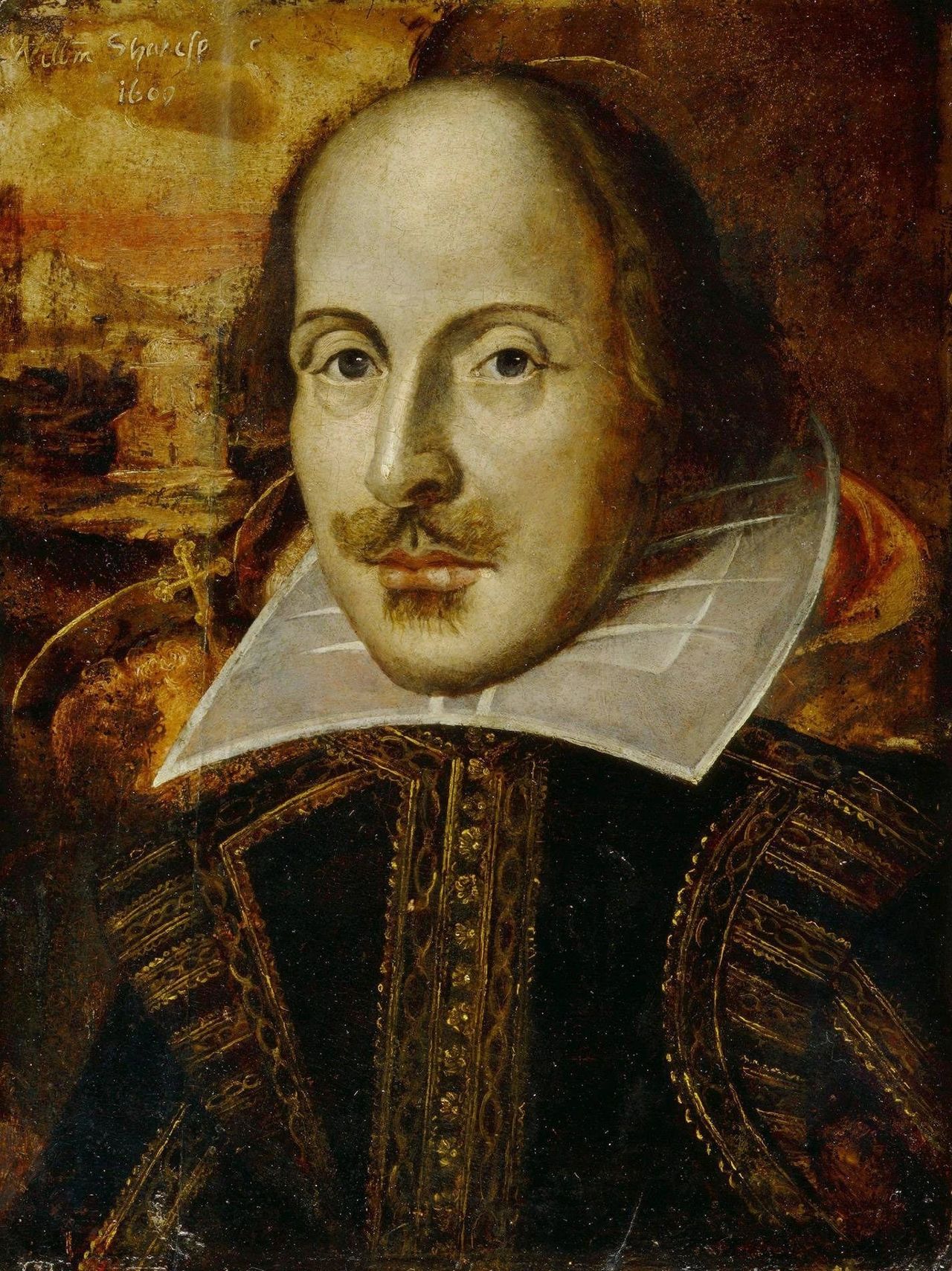
Next, I read short quotes about poetry from three famous poets: Amanda Gorman, William Shakespeare, and Kwame Alexander. They’d never heard of Amanda or Kwame, but one boy not only recognized the Bard, but knew his name.
William Shakespeare
I animatedly read a page from Kwame Alexander’s novel-in-verse, “The Crossover.” When I mentioned that the book is about twin brothers who play basketball, one boy raised his hand. “I’m a twin!” he said. When I said that the main character in the book is named Josh, he grinned. “I’m Josh!” he exclaimed. I was glad I’d chosen “The Crossover” to include in my talk. (P.S. I love that book!)
Kwame Alexander
I then listed the main ingredients in a poem (rhyme, rhythm, and repetition), read a poem as an example of rhyme, showed a photo of my dog (because kids like dogs, right?), and read a poem I’d written about my dog that used repetition.
I added other ingredients, such as comparison (simile and metaphor), and I read a poem my own daughter had written in 4th grade – one that used a metaphor. I wanted them to know as much about poetry as I could squeeze into an hour, without boring them to death.
I also stressed that a poem does not need to be long. As an example, I put Muhammad Ali’s famous poem (“Me. Whee!”) up on the board.
Then I dramatically announced that there were NO RULES! in poetry. I wanted them to relax and feel free to write whatever was in their hearts.
After that, I invited them to think of a topic and brainstorm a few words that could eventually become a poem. Classroom helpers passed out paper and pencils that had been provided by a grant from a local organization.
Several students asked for help with spelling. As I spelled out a word for one boy, he wrote it from right to left, each letter reversed. Some kids didn’t write at all. One child kept his head down on his desk most of the time. I knew from experience that could mean he hadn’t slept the night before, was hungry, or maybe was just trying to keep his emotions together. Whether they wrote or not wasn’t important to me. I was just glad they were listening, because I was hoping to plant some poetry seeds that day.
In the 5 minutes they had to think of topics and write, the majority of kids did write. I’m not sure I could have done that! Their rough drafts ranged from just a few words to whole paragraphs. Several volunteered to stand and read their works-in-progress to the class.
They wrote about football (one poem was a play-by-play description of a game), and about their pets. One of my favorite creations was this one:
“Chocolate, dog, no, no, no.”
Good use of repetition! And it says so much in just five words. After reading his poem aloud, the author explained what he meant (that dogs shouldn’t eat chocolate). This is a clear, concise, rhythmic poem, written in just a few minutes by someone who might never have written a poem before in his life. Bravo!
I concluded my presentation with a reading of “Iguana in the Road,” and moved on to my next assignment, a bilingual 5th grade class down the hall. (The school I visited is the largest bilingual elementary school in my city.)
Right away, I noticed a difference. The students seemed older, taller, quieter. They didn’t raise their hands or respond to my questions … not right away, at least.
But by the end of the presentation? Wow. Not only were they participating, but they were actively encouraging each other to participate, chanting their friends’ names to get them to stand on the “stage” (the front of the room) and to share their poems.
While they wrote, I offered assistance. As with the former class, many asked for help with spelling. One girl asked if it was okay to write in Spanish, or if she had to write in English. I told her it was fine to write in Spanish, and then I mentioned that to the rest of the class. As a result, several kids wrote poems in Spanish.
Since many were reluctant to read aloud, I offered to read their poems for them, including the ones in Spanish. At least ten children handed me poems to read, about half of them in Spanish. I think they were pleasantly surprised that I could read and understand them!
Thanks to the community grant, each child in the participating elementary schools received a free book that day! I was so grateful for the privilege of being part of this program and being among so many creative, talented, and helpful people.
Recap: In Episodes 1 and 2, I told you how a turtle made me think reptiles were cute, how an endangered iguana made me write a song about reptile conservation, and how that song became a video and a book.
And now, in Episode 3, you’ll learn about how a lizard made me write another song, video, and book … and all about my upcoming visit to IguanaLand!
I’m a desert spiny lizard, but you can call me “DSL,”
Oh, I’m a desert spiny lizard, but you can call me “DSL,”
My life is hot and dusty … all this crawlin’ in the desert ain’t swell!
That’s how my song, “Desert Spiny Lizard Blues,” begins, and it just gets more blue after that. You can check it out for yourself here.
I really can’t remember what inspired me to write a song about a lizard, so, once again, I’m going to pin the blame on a reptile – probably the one whose photo graces the cover of my latest children’s book, “I’m a Desert Spiny Lizard.”
Yes, that’s right. I wrote a book about a lizard – because once “Desert Spiny Lizard Blues” was written, recorded, and uploaded to YouTube, I felt compelled to create a children’s book to go with it, much as I’d done with my song, “I’m an Iguana.”
Unexpectedly, I now have two reptile books for kids under my belt, and they’re packed with factual information that I learned from reptile experts. I’m proud to announce that I’ll be offering both of these cute, fun, and educational reptile books for sale at the 3rd annual IguanaFest in Punta Gorda, Florida this weekend!
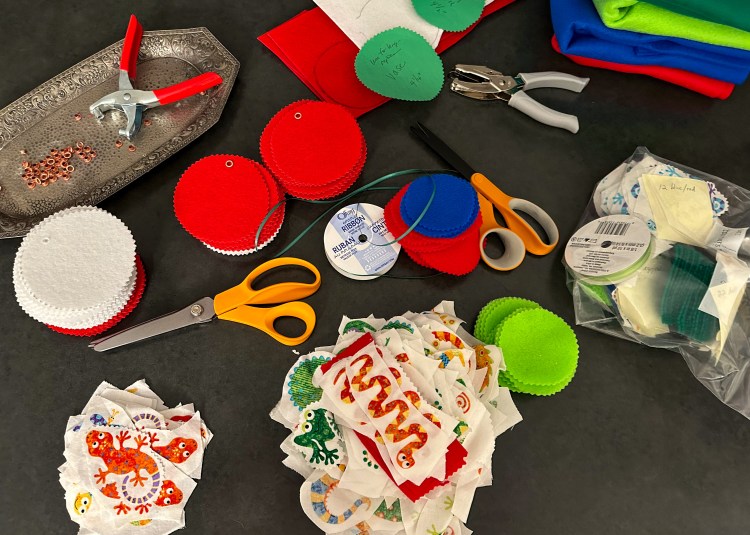
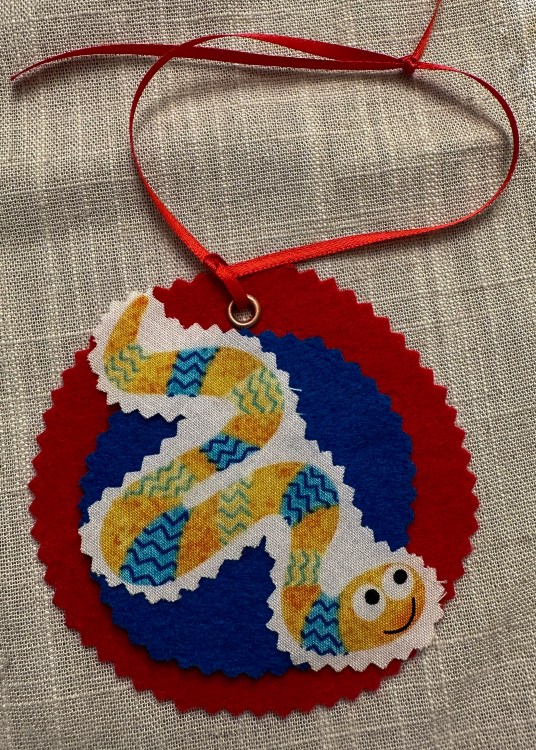
Not only that, but I’ll be selling my own handmade reptile-themed holiday ornaments to go with the books.
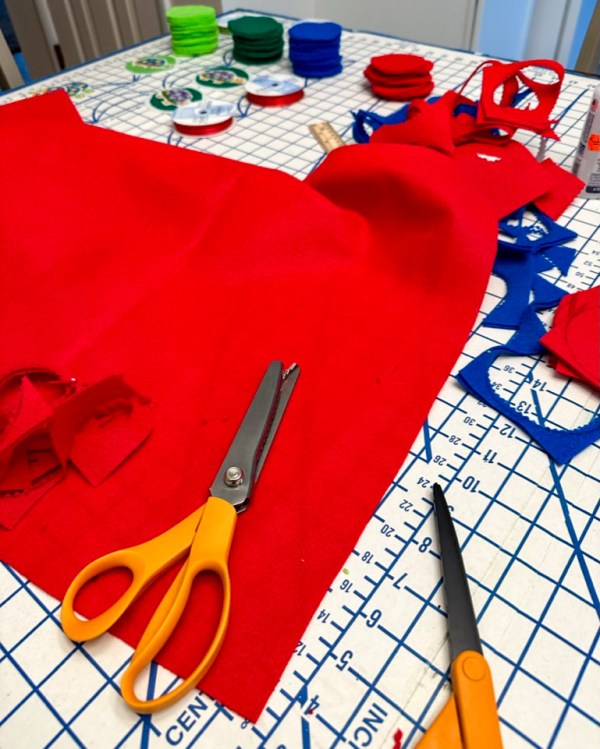
It’s true. I’ve gone reptile-crazy. When I first laid eyes on this adorable reptile-themed fabric, I couldn’t resist buying the whole two yards that were left on the bolt, even though I had no idea what I would do with it. Eventually, the idea of making felt holiday ornaments came to me.
So you see, not only have reptiles managed to coerce me into writing songs and books about them, posed for photographs, and demanded to appear in videos, but now they’re even sending me out of state to a reptile FESTIVAL, at the largest reptile zoo in the world (a.k.a. “IguanaLand”).
What’s next? Will a reptile make me write another episode for this blog series? Probably. I’m sure they’ll want you to find out what IguanaFest was like.
Stay tuned for the exciting final episode of A Reptile Made Me Do It!
My photography critique group’s assignment for this month is to take pictures that reflect emotion.
This is a very subjective task. What might prompt an emotion in one person might not do the same for someone else. But our group mentor gave us some helpful tips. For example, use of lighting, point of view, cropping, color, and composition can all play a role in generating emotion.
It’s a lot tougher to accomplish than I realized. Just taking a photo of a flower doesn’t necessarily prompt an emotion, but if it’s wilting, or if someone is angrily plucking the petals off a daisy, or if it’s being yanked up by its roots? … I don’t know. I’m grasping at stems right now.
We’re supposed to submit three photos to the group by December 7. As if I didn’t already have enough to do writing a blog a day! But I’m going to try my best. Luckily, we’re allowed to turn in one of our favorite old photos, as long as it has the potential of bringing out an emotion in our viewers.
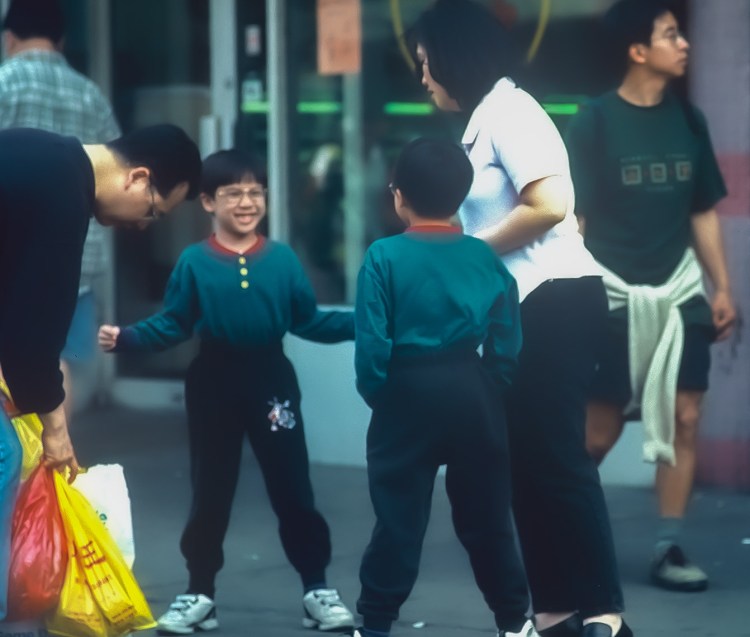
Here’s one that might do the trick. I took it over 20 years ago, with a film camera, when I was first getting started in photography. It’s a little out of focus, but I still like it very much because every time I look at it, I feel joy and spontaneity. (I also feel surprised – surprised that I was lucky enough to capture that precious smile.)
I’ve read somewhere that a great emotional photo CAN be out of focus. The important thing is to capture the moment. If you’ve done that, and created something that will get a reaction, you’ve done your job.
Did you feel anything?
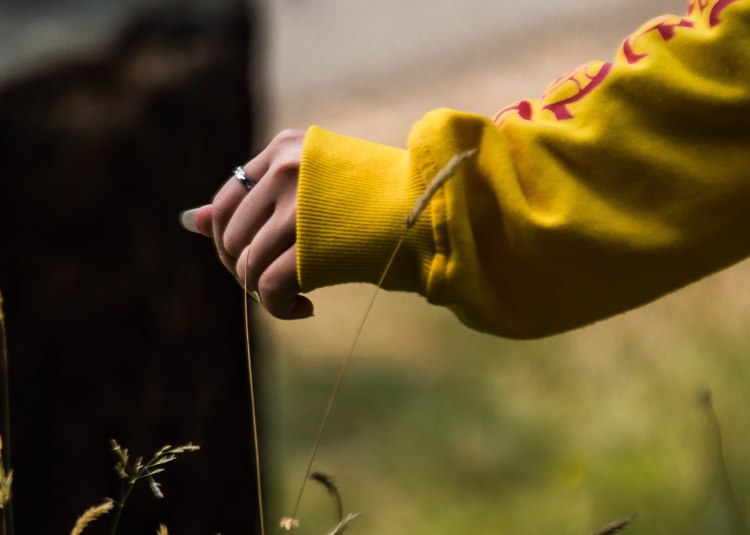
Here are two more photos I’ve taken in the past. They’re both candid shots of strangers. These photos generate emotions in me, but I’m not sure they do the same for others.
This photo assignment makes me realize how few photos I’ve taken of people, and how few that express emotion. It’s a good thing to know.
So, for the next several days, I’ll be focusing (no pun intended) on taking emotional photos (and also catching up on reading blog posts). Wish me luck!
~ ~ ~ ~ ~
This is post #13 of the month-long challenge known as #NaBloPoMo or #NanoPoblano. To follow my blog, please click below where it says “Follow loristory.”
And, to read more of the NanoPoblano posts written by the supportive blogging group “Cheer Peppers,” click the image below.
Title photo (smiley faces) by AbsolutVision @ pixabay.com.
We interrupt this Souvenirs blogcast to bring you this important message:
I had a good day.
It began at 6:30 a.m., when I awoke to the rude realization that I’d only gotten 5.5 hours of sleep. (Thanks, #NanoPoblano!) Once I decided to skip my 8:00 yoga class, though, I felt much better about life. I turned over and went back to sleep for another hour.
Next, I had breakfast and picked up my 7-year-old grandson, whom I would be watching for the rest of the day. (It was a teacher conference day; no school.)
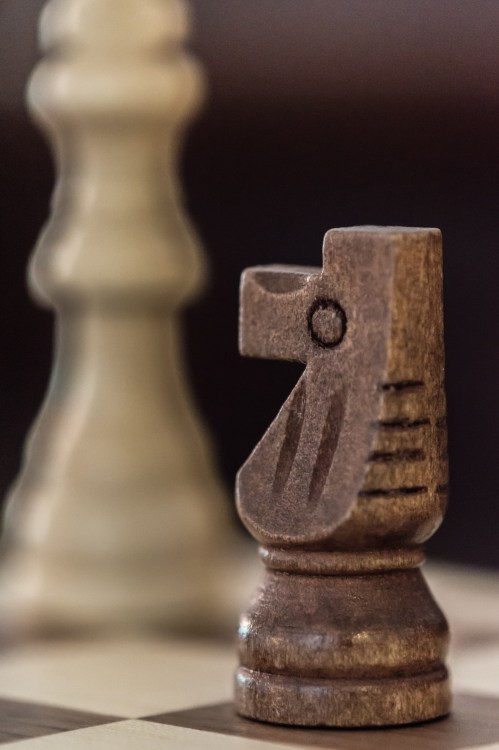
First, we played a game of chess at my house – and when I say chess, I’m using the term loosely, since it included about two dozen plastic Army men surrounding the board and another dozen or so squeezed onto the board alongside the regular pieces. (I just go with the flow.)
Sometimes we made some crazy moves. I remember one of the knights (mine) moving in a straight line like a rook toward the end of the game, for example. We laughed a lot. By making sure not to stress him out since he’s just learning how to play, I’ve learned from him not to take the game seriously. Kids can teach us so much.
Of course, we had to have a mock funeral for the pieces on the losing side (mine). After the ceremony (during which he made the pieces miraculously come back to life), we went to McDonalds, something I haven’t done in 25 years. Yes, it was a good day for bending rules.
No, not that kind of bending!
Then we took a 2-hour tour of a state historic site, Ganondagan, a Seneca and Haudenosaunee (Iroquois) Indian cultural center that houses a museum, longhouse, hiking trails, and more. We both learned a lot and really enjoyed our time there.
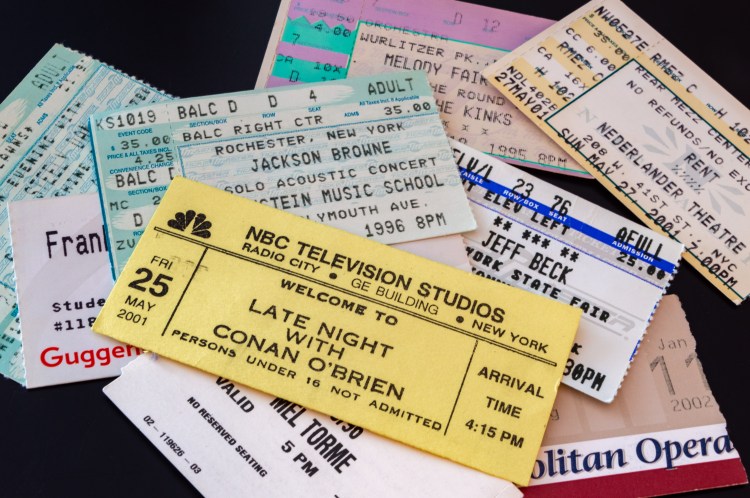
Now that I’ve spent so much time telling you about my Not Terrible, Not Horrible, Good, Very Good Day, I haven’t left much room for Souvenirs, Part 2, the next installment of my series about concert tickets I found the other day. But here’s a little something:
Jackson Browne, Solo Concert, Hochstein Music School, 1996
It was my second or third time seeing Jackson Browne in concert, but what made this time so special was the fact that it was a solo concert in a really small auditorium (less than 850 seats). Also, while accompanying himself on piano, Jackson Browne forgot the words to one of his own songs. I’ll never forget the deer-in-the-headlights look on his face when that happened. This made a huge difference to me when, years later, I started performing myself. I had stage fright and was always afraid I’d forget the lyrics and freeze up on stage, but telling myself that even Jackson Browne could forget the words to a song helped a lot.
So, how was your day?
~ ~ ~ ~ ~
This is post #10 of the month-long challenge known as #NaBloPoMo or #NanoPoblano. To follow my blog, please click below where it says “Follow loristory.”
And, to read more of the NanoPoblano posts written by the supportive blogging group “Cheer Peppers,” click the image below.
Today’s post is about Zooming (video conferencing with my kids) and Blooming (photos I took about a month ago).
I haven’t been outside with my camera for several weeks, for fear of encountering someone on the trail who might sneeze on me. That actually happened to a friend of mine. Maybe my next batch of photos will be of the still life variety, taken indoors.
Let’s see … I could artfully arrange that pile of work folders that’s sitting on a stool in my living room. I might create a colorful collage from the pile of fabric rectangles stacked up next to my sewing machine. Or perhaps the world is ready for a sculpture I’ve created out of my pile of dirty laundry — the laundry I’m hesitant to do in the community laundry room. Then there’s my dwindling pile of toilet paper rolls … I really had better photograph it before it’s gone.
I’m doing okay, though. I just had a fun three-way video chat with my daughters. Tomorrow is the older one’s 40th birthday, so we celebrated by using Zoom. After the initially unsuccessful attempt at connecting, there we all finally were on the screen, looking like a pared-down version of the Brady Bunch (without the makeup, weird hairdos, or fake smiles). Well, in my case, I had put on a touch of makeup. They may have, too, but I couldn’t tell because they always look beautiful to me.
It wasn’t exactly the birthday party my daughter would have wanted, but it definitely made my day. I got to see with my own eyes how they’ve been coping during the pandemic, and it was reassuring. They even hilariously modeled their new masks, which they’ve made by cutting up the many pairs of leggings that they own, and making holes in them to place over their ears. It’s genius!
As always, they made me laugh, demonstrating how the stretchiness of the masks enables the wearer to quickly change them into long earrings, headbands, or a clever way to hide a double chin.
It was also a chance for me to visit with my grandsons. The 4-year-old (who tells his parents every day that he’s “so sick of the coronavirus”) said “I love you” (unprompted) and the almost 1-year-old smiled and waved and blew me an almost-kiss, touching his open palm to his mouth and holding it there for about 20 seconds. I have to say, it might have been one of the longest kisses I’ve ever received. It was definitely one of the best, anyway.
I hope you enjoy these photos of budding life and the promise of spring.
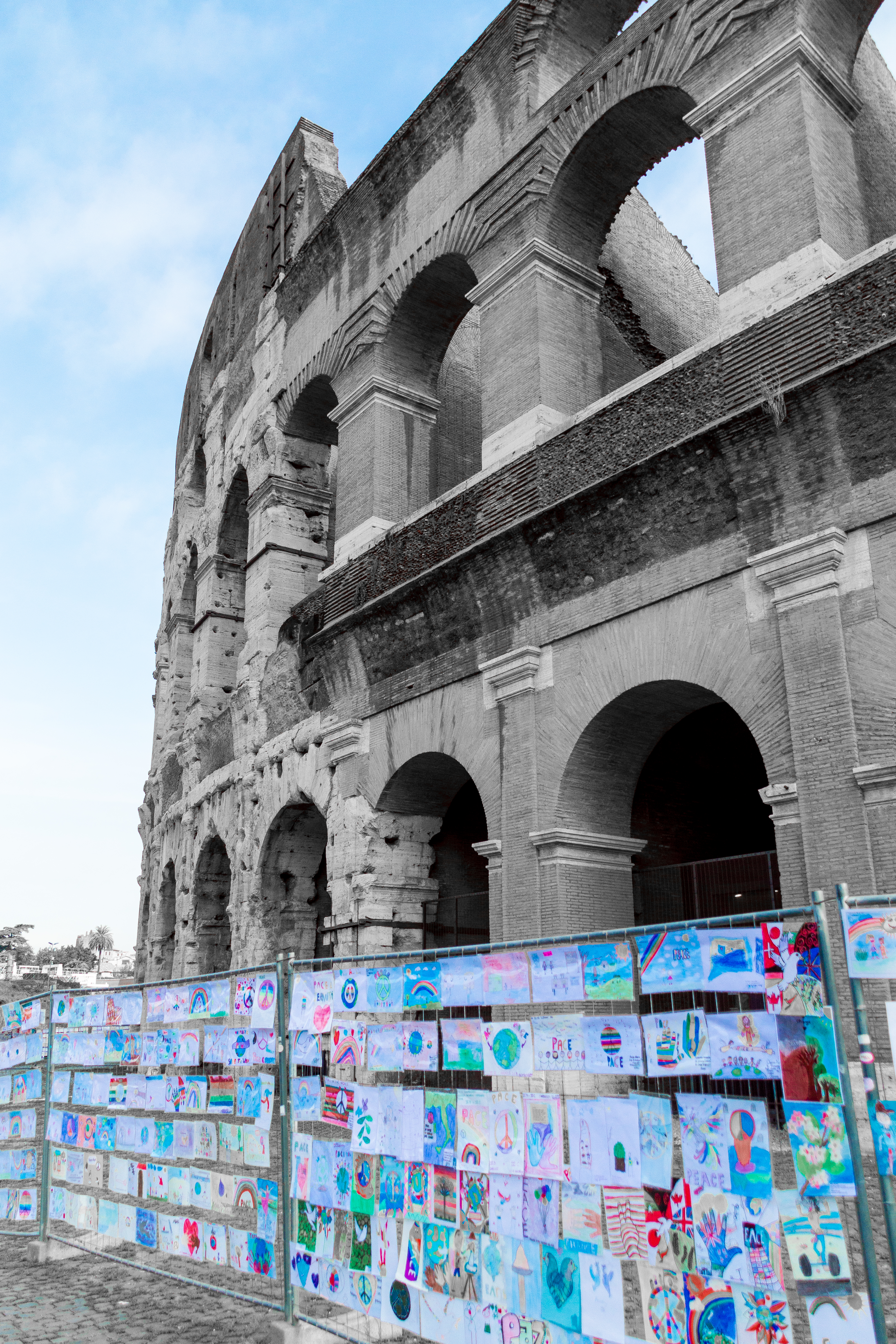
The Roman Colosseum, built between 72 A.D. and 80 A.D., is a symbol of brutality.
It is widely believed to have been built by tens of thousands of slaves. During some of the spectacles, it is said that 10,000 animals were slaughtered in a single day. Gladiators fought to their deaths and criminals were executed, all for the sheer entertainment of crowds of 50,000 or more. It is not my favorite place.
In fact, I never was very interested in Roman history, or in seeing the Colosseum. But when I was in Rome for two days in September with someone who did want to visit the Colosseum, I said, “sure, why not,” and went along.
It’s big. It’s old. And it’s kind of shocking to be strolling along on an ordinary cobblestone street, turn a corner, and there it is, looming over everything. Kind of spooky, actually.
But for me, the most compelling part about the Colosseum was the fence around it — a fence that was covered with children’s colorful drawings calling for peace. I loved the contrast.
Maybe there’s hope for this world yet.
This is post #3 for NanoPoblano2019. Click the link to read some other posts from a wonderful bunch of dedicated bloggers known as “cheer peppers.”
My two-week Airbnb guest house in upstate New York comes with ducks and chickens. I didn’t know this when I rented the place, but I’ve discovered that I enjoy waking up to the sound of quacking and clucking in the morning. Sure, I have to be careful not to step in duck poop when I enter and exit the building, but I’m getting back to nature!
It had rained overnight. Good weather for the ducks, who were quacking up a storm this morning as they waddled around drinking from the puddles. Then the sun came out, and so did the chickens, clucking and pecking and watching me with their beady little eyes.
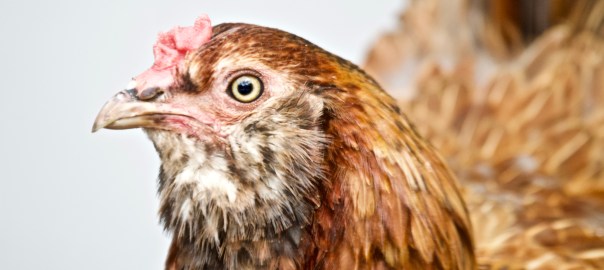
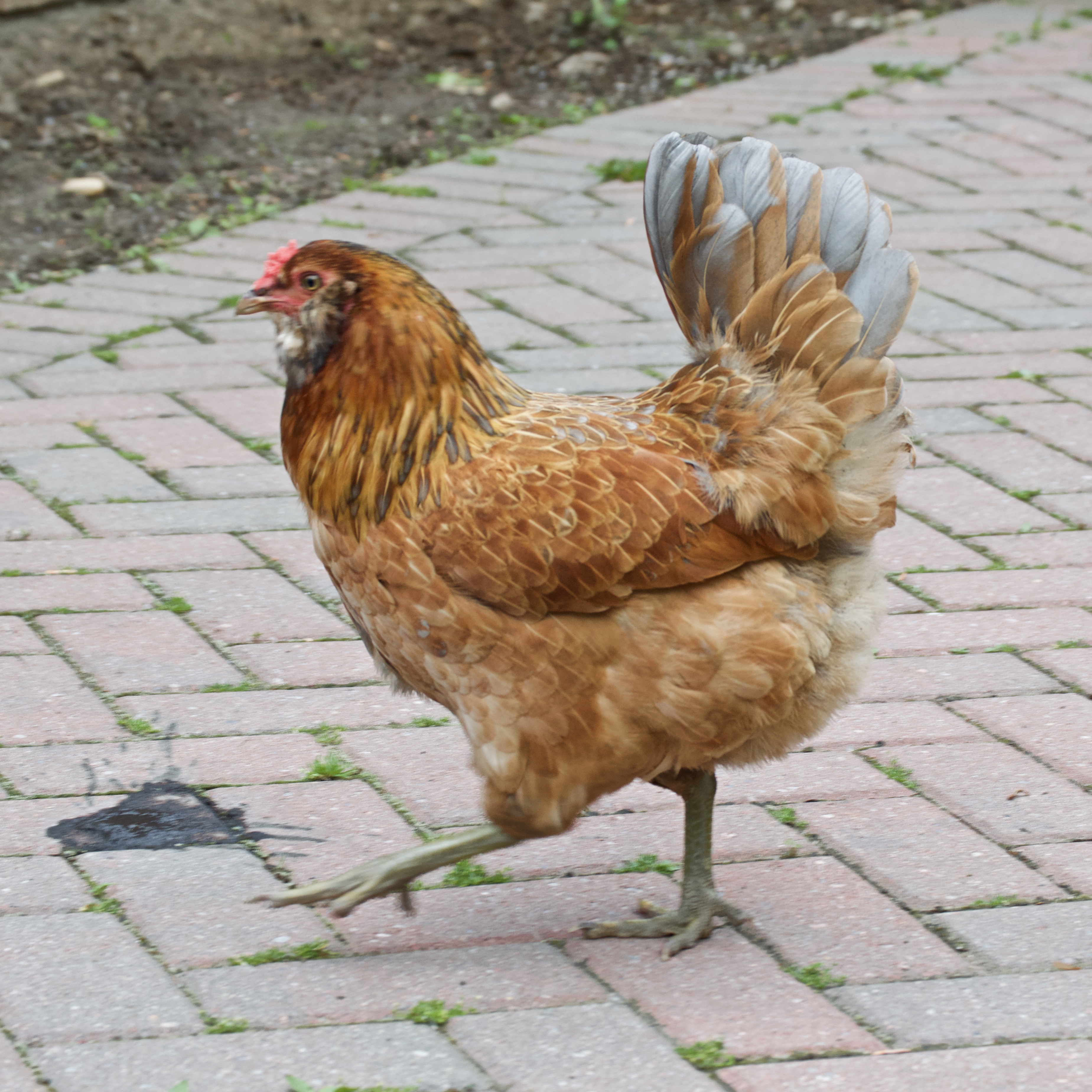
One of them came up to me and circled around my legs. She didn’t try to peck at me, so I put her to work as my model. I felt like a professional fashion photographer as I complimented her fine feathers and jaunty gait.
The photo shoot continued as we headed over to the chicken coop. I was hoping the door to the nesting box would be open so I could collect an egg or two for breakfast. Sadly, the door was closed and latched. I thought about opening it, but I wasn’t sure all of the chickens were out roaming around.
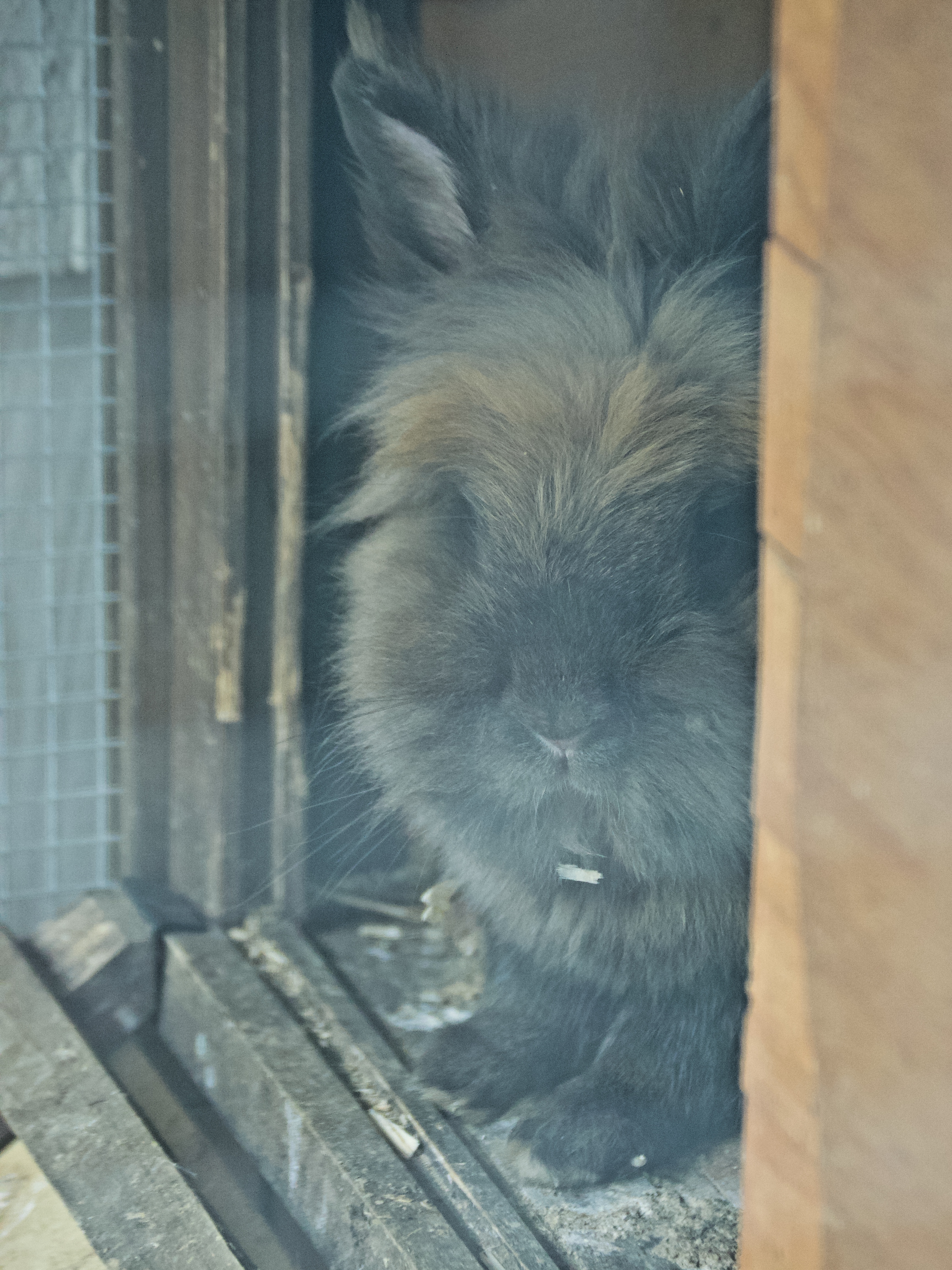
Just then my model chicken started clucking like crazy. Apparently, she really wanted to get inside of the coop. I thought about opening the door for her until I noticed a pair of eyes looking out from an opening in the nesting box. It was a rabbit.
What was a rabbit doing in the chicken coop? Guarding the eggs? Keeping them warm? Just hanging out? Maybe the chicken and the rabbit are BFFs. I’m dying to know. Could this be the inspiration for my next children’s novel?
The “Frog and Toad” books were a big hit. Maybe “Chicken and Rabbit” would be even more popular with today’s kids … especially if I include illustrations of duck poop.
Any illustrators out there interested in collaborating? If you act fast, I can pay you in fresh eggs.
It rarely snows in Tucson, Arizona, but when it does, it’s a pretty big deal.
There was a dusting of snow to our north last night, and probably five inches of the stuff 25 miles up the road, in Oracle State Park, which is where I went today to take photos. The place was swarming with “snow peepers,” and some of them were building snowmen.
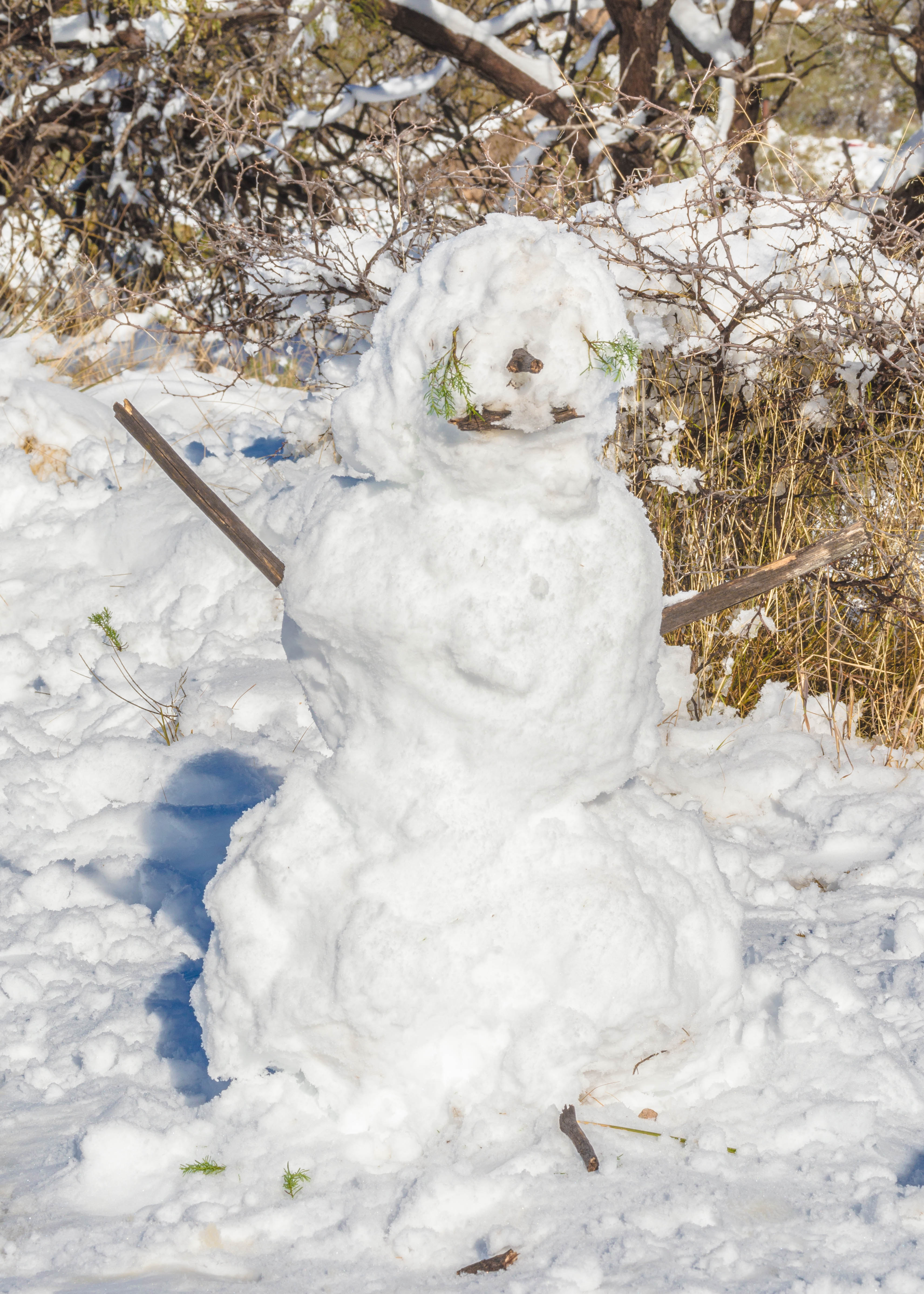
Here’s one of my snowmen photos. But this snowman isn’t really a man, is it? Because he (it?) has three ears (horns?) and wings (gigantic shoulder muscles?). Obviously, it was built by a bunch of men with issues. I won’t say what their issues are, but what’s that guy in the red jacket pointing at?
I do think this snowman is kind of lovable. Just look at that expression.
Here’s another snowman. This one is more typical of the ones I saw in Oracle today:
A 3-foot tall snow person with eyes made from a plant called “desert broom.”
Obviously, we southwest Arizona residents aren’t too good at building snowmen. But then, can you blame us? It only snows one day a year here! We need more practice.
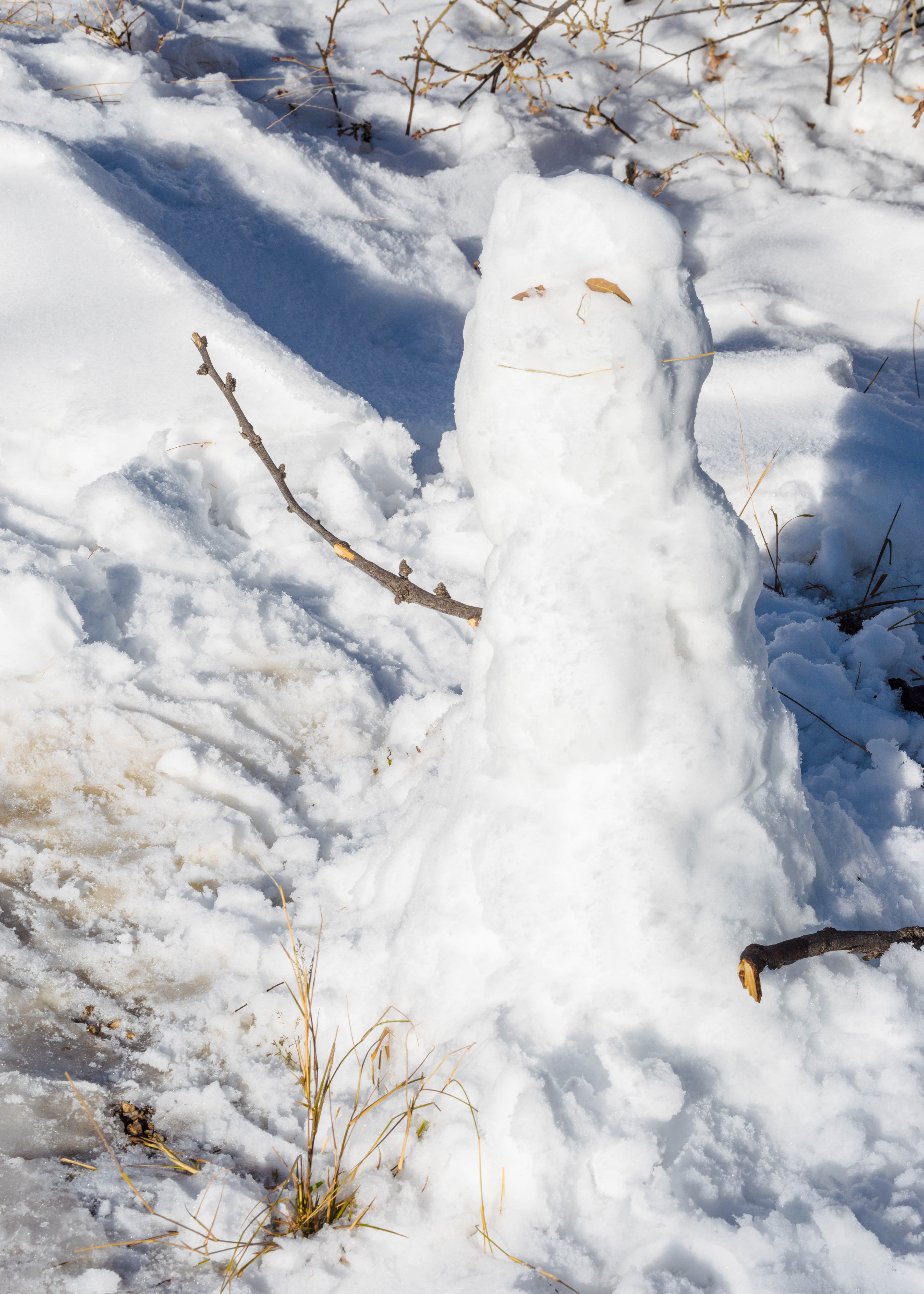
On my way out of the park, I spotted this 2-foot tall model pointing the way:
Actually, I think its arm fell off.
I think this minimalist sculpture was the best little snowman of all.
If you like snowmen, you’ll probably enjoy listening to my song about them, called “Gonna Build a Snowman.” It’s guaranteed to get you in touch with your inner child, and you can listen now, for free, here: