Category Archives: inspiration

Lucky to Live in the ROC (Part 5)

Welcome back for the fifth and final installment of “Lucky to Live in the ROC.” After Part 4‘s mad-dash adventures in pizza tasting, coffee drinking, and mural gazing, I’ll bet you’re ready for a nice relaxing drive through the autumn hills of upstate New York.

But first, a note: November is National Blog Post Month (#NaBloPoMo), when dedicated bloggers everywhere try to post a little something every day. Throughout the month, I’ll be writing daily posts until I run out of ideas – which could be tomorrow. 🙂 Luckily, I’m part of a Facebook group (NanoPoblano) that cheers each other on by reading and commenting on each others’ posts. To read NanoPoblano posts, just join the NanoPoblano Facebook group or type NanoPoblano in the WordPress search field.

Now for those autumn hills:

Letchworth State Park

A beautiful upstate New York destination – especially in the fall – is Letchworth State Park, 40 miles south of Rochester. Due to its scenic gorge carved out by the Genesee River, the park is known as the “Grand Canyon of the East.” The photo below was taken at Inspiration Point, where you can take in the view of both Upper Falls in the distance and Middle Falls. (Lower Falls can’t be seen in this photo.) It’s just a short drive (or fairly easy round-trip hike) from one waterfall to the next, with plenty of parking areas, and even a snack bar close by. I visited the park on a Sunday, and even though it was a weekend, it wasn’t crowded at all.
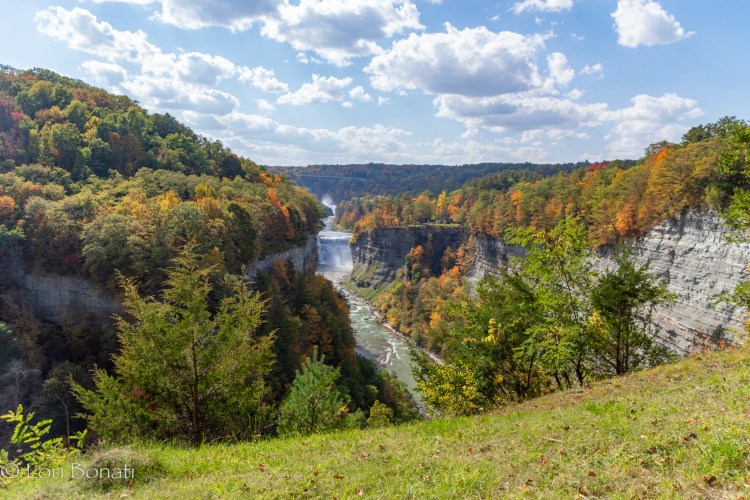
After admiring the view, I turned around and looked up at the trees. They seemed to be communicating with each other (which, according to Peter Wohlleben in “The Hidden Life of Trees,” they actually do). These trees literally inspired me to go home and write a song about them. I call it “Listen to the Trees.”
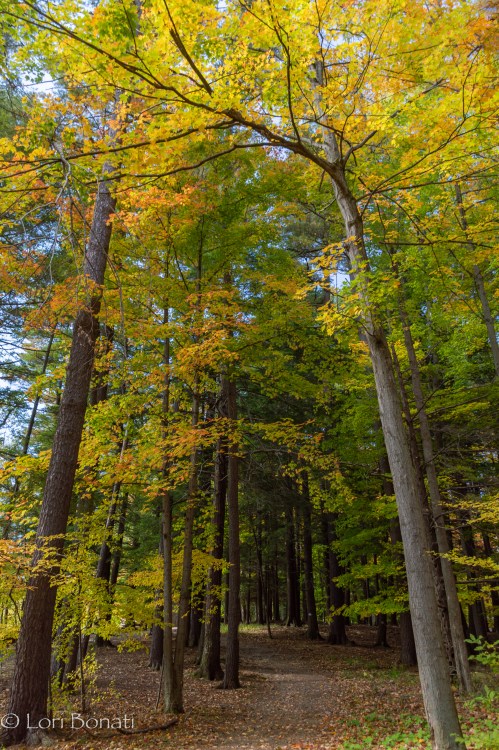
Here’s a closer look at Upper Falls:
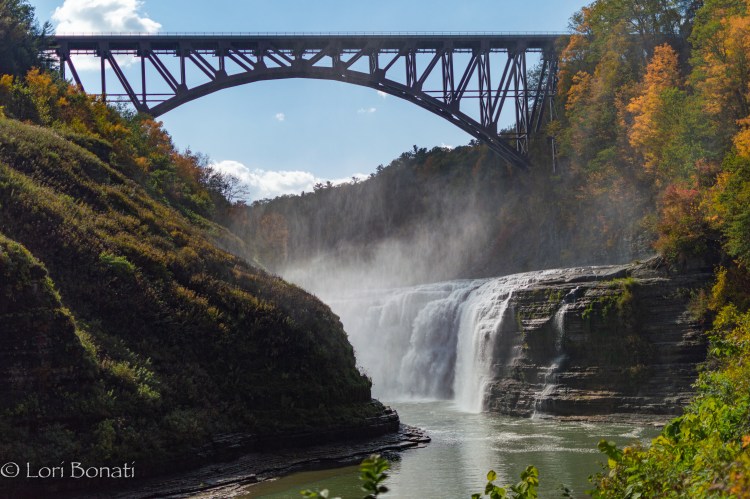
The photo at the top of this post (above the title) is Middle Falls.

Harriet Hollister Spencer State Recreation Area

About 35 miles south of Rochester, you can hike through Harriet Hollister Spencer State Recreation Area and get a lovely view of Honeoye Lake, one of the eleven Finger Lakes.

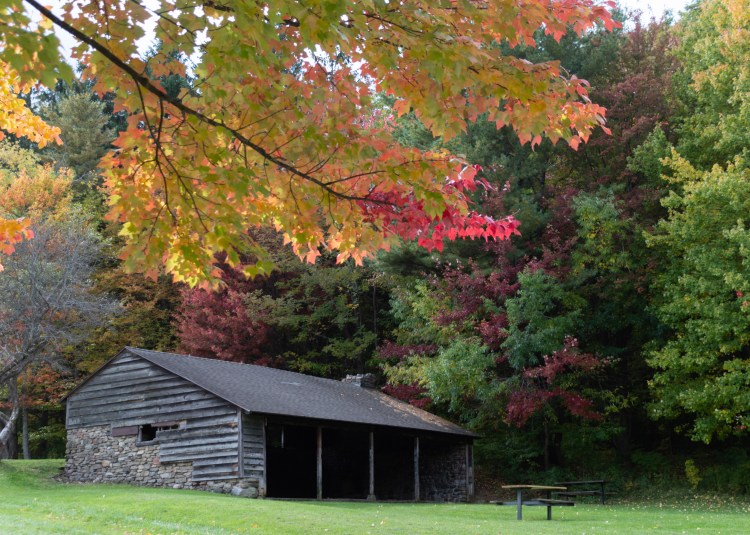
Look around and you’ll see even more to admire there: leaves, park buildings, a hornet nest (yikes!), and even a gray squirrel or two. Full disclosure: the squirrel was perched on a fence in nearby Dansville, which I visited later in the day, but somehow he jumped into this scene. I’ll forgive him for acting so squirrely.
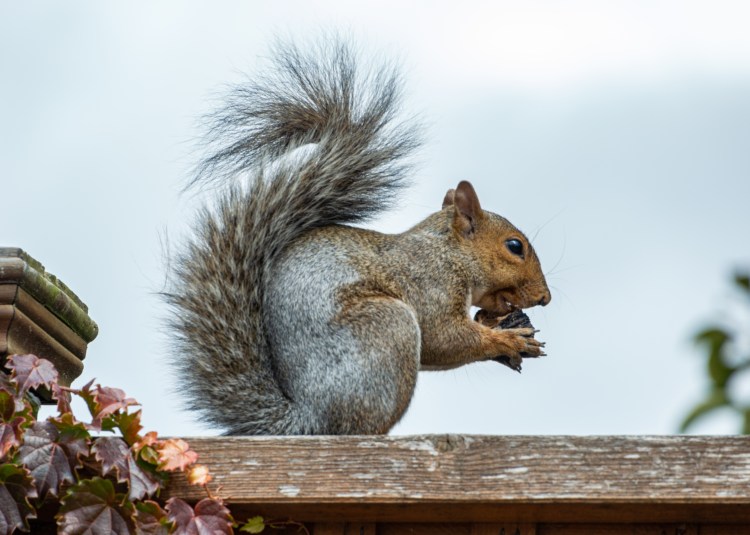
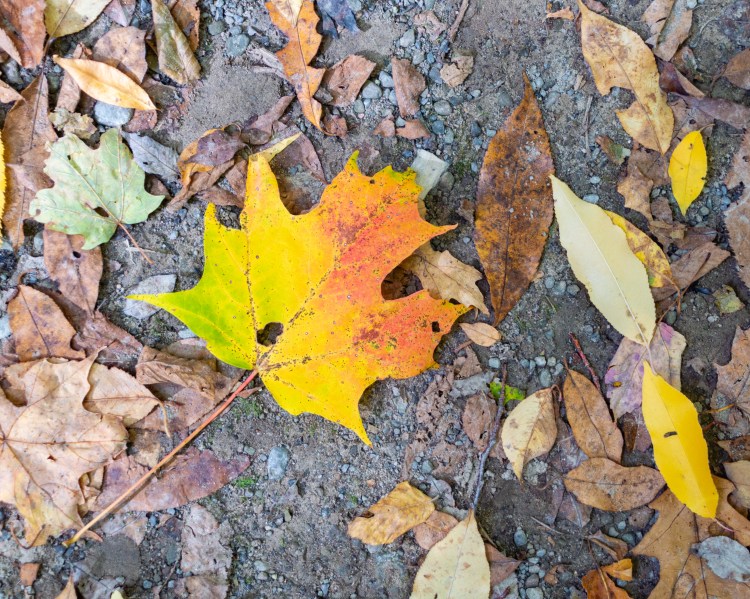
This sure was a good year for fall colors. The hills seemed to be alive with brilliant reds, oranges, and golds, especially when the sun hit them just right. I’m glad I got outside with my camera in October, because the leaves are dropping quickly now.

Speaking of which, I have a new camera! Although the above photos were taken with my older one (a Nikon D3200, considered “entry level” among DSLR cameras), future posts will show my attempts at learning to use my new Nikon Z5 in “manual” mode. Stay tuned!

If you’d like to follow me to see how long I last in the #NaBloPoMo challenge, a.k.a. #NanoPoblano, just click below where it says “Follow loristory.”

Thanks, and happy November!

Lucky to Live in the ROC (Part 4)

Welcome back for another installment of “Lucky to Live in the ROC,” the ongoing series in which I write about upstate New York attractions in and around Rochester. In the last episode, I promised you an epic road trip in search of the perfect pizza, and some unexpected artwork, so here goes:

The Pizza

On a recent road trip through upstate New York, I stopped in Geneseo, a quaint college town thirty miles south of Rochester, and discovered “Mama Mia’s Pizza.” The pizza was so amazing – thin and crispy, with great-tasting sauce – that I returned a few weeks later with a friend for another slice. This time, I didn’t just get great pizza, I got a great cup of coffee, too.

When I ordered my coffee, the woman behind the counter said they’d make a fresh pot. “Okay,” I replied, wondering if I was causing them too much trouble as I began to eat my pizza at a table outside. Pretty soon, a young man came out. “I’m going to make you a cup of Costa Rican coffee.” “That’s fine,” I said.” About ten minutes later, I’d finished my pizza and was wondering if I’d ever get my coffee. Suddenly, the coffee man came out with a steaming cup.

“I ran home and got some beans,” he explained. “I bought them at the Rochester Public Market, they’re great.” And he’d come back to the shop and ground them just for me. Wow. It was the BEST cup of coffee I’ve had in a long time.

I didn’t take a picture of my pizza because it disappeared too quickly, but it looked something like this:

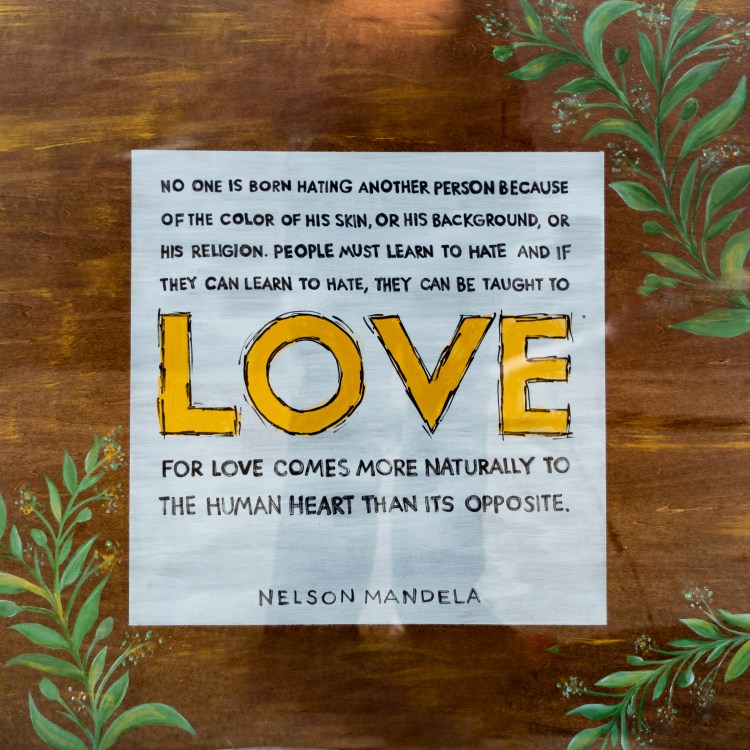
And here’s a sign I saw in a Geneseo shop window.

The Unexpected Artwork

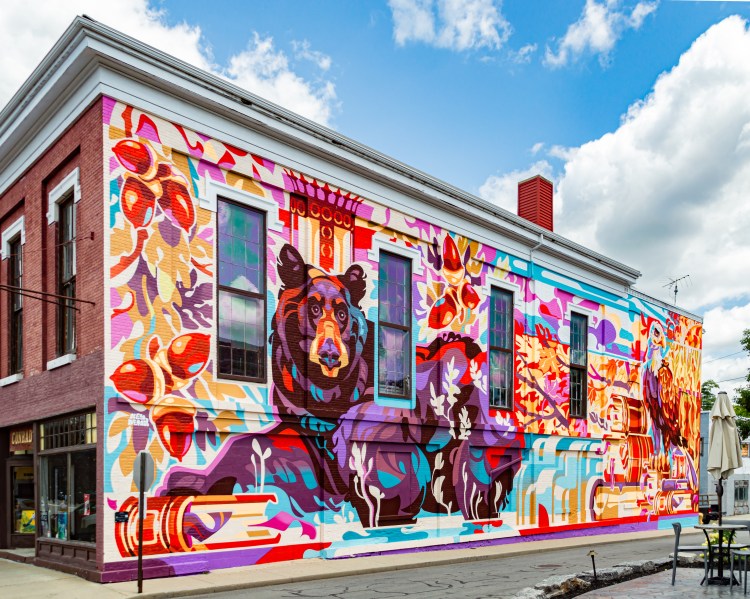
In 1914, Robert Frost wrote “Mending Wall,” a poem about a wall that divided his orchard from his neighbor’s forest. “Something there is that doesn’t love a wall,” he wrote. But in Livingston County, New York, the residents love their walls so much that, last July, they commissioned some artists to paint murals on them, and then they held the Livingston County Mural Festival to show them off.

The colorful walls are actually the sides of buildings, one for each of the nine villages in Livingston County. I hadn’t heard about the murals, but on our way home from Mama Mia’s Pizza, my friend pointed out of his window.

“Cool,” he said. “I’d like to photograph that.” We parked on Main Street and gaped at the mural for a while.

Soon, a woman approached us. I thought she might have been the mural’s artist, eager to talk about her work. But she was just a helpful citizen who wanted to tell us all about the festival.

Like the friendly coffee man, she momentarily ran off and returned bearing a gift: a small booklet detailing everything you ever wanted to know about the festival, including maps and the painters’ names. That day, we made it our mission to visit each and every one of the Murals of Livingston County.

I know that sounds like “The Bridges of Madison County,” but please do NOT mistake this essay for that book. If you’ve ever been forced to read “The Bridges of Madison County,” or if, like me, you were just curious to see how bad it was, I’m sorry to bring it up.

But hey, who am I to judge? I just binge-watched eleven episodes of “Virgin River,” where almost every scene ends with a warm embrace and this stunning dialogue:

“I love you.” “I love you, too.”

I can’t wait for Season Five! And no, I’m not being sarcastic!

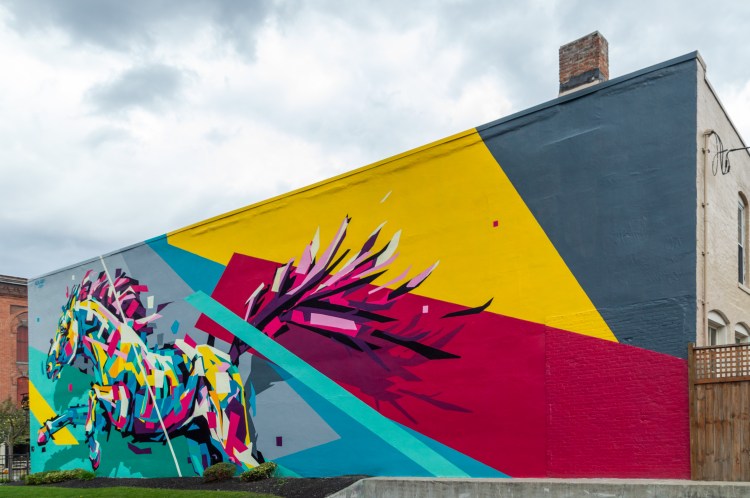
But I digress. Here are two more murals of Livingston County. I’ve actually been to four others to date (Avon, Caledonia, Leicester, and Lima), but I lost the photos! It’s the first time a memory chip has failed on me (besides the one in my brain, that is). It’s disheartening, but I can always go back and take more photos. I think the murals will be there for a while.

Next time, I’ll post recent photos of Mother Nature’s artwork: the colorful autumn leaves I’m seeing everywhere. Stay tuned!

Be sure to follow my blog so you don’t miss a thing! Just click below, and then look for the small blue button that says “Follow loristory.” Thanks!

Featured image by Wilfried Pohnke @ Pixabay.com.

Two Bridges and More

Inspired by a recent post by my friend Mary (“A Bridge Too … High!”), I’ve decided to post something about bridges, too.

While Mary’s article is about a bridge in Ireland; mine is about two bridges in Italy.

And, while hers is witty and thoroughly entertaining, mine is more along the lines of “here are some photos of bridges, and here is all I can think of to say about them at the moment.” Oh well. One can’t always be witty and entertaining!

I hope you enjoy the photos, and that you’ll check out Mary’s blog as well.

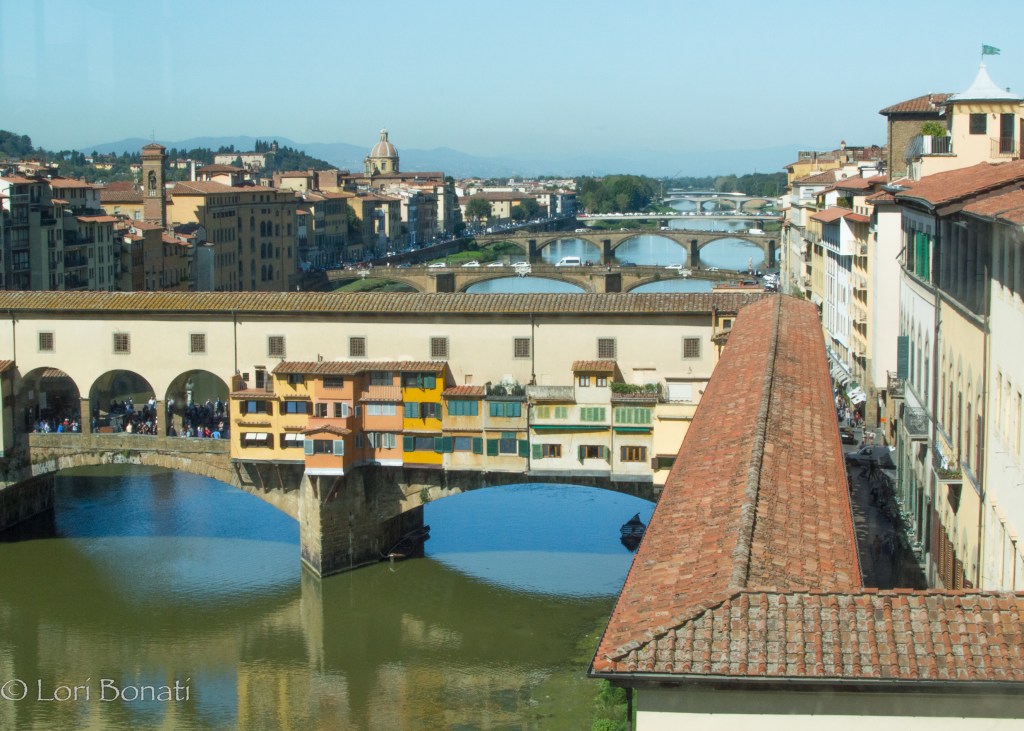
Ponte Vecchio, Florence, Italy, 2017:

Ponte Vecchio (“Old Bridge”) is aptly named; it’s over 1,000 years old! (The first written record of it is from the year 996.) These days, it’s lined with shops, and tons of tourists. I just noticed that there are at least six bridges in this photo!

Gazing at this picture brings me back to the moment when I captured it. I’d just toured the nearby Uffizi Gallery. In fact, I was standing inside the gallery when I took the photo, looking down at the Arno River. It was my first trip to Italy (first time in Europe, too). I’d flown there from Tucson, Arizona with a small travel group (only eight of us). Together, in just one week, we visited several interesting and beautiful sites around Tuscany, including Florence, Pisa, San Gimignano, Lucca, and Siena.

On my last day of the trip, I took a 20-minute bus ride from the outskirts of Florence, where we were staying, into the city, all by myself, just so I could absorb some of the local culture and language on my own time. It was an amazing experience. I could barely speak a full sentence in Italian, yet the people on the bus (who barely spoke English) helped me out when I wasn’t sure which was my stop.

My day of solo museum-hopping (which included a delicious three-course lunch – meat, pasta, tiramisu, and of course vino) went by much too quickly. At about 5 p.m., after standing at the wrong bus stop for ten minutes, I discovered my error just in time to catch the last bus back to the hotel. I wasn’t the least bit nervous. It was a friendly, warm, and welcoming place, and gorgeous, too.

Ponte Sisto, Rome, Italy, 2019:

Two years after my first trip to Italy, I had the chance to go again with the same tour group. This time there were only four of us, and we were going to study Italian in Sicily for a week! After the week was up, rather than flying home directly from Sicily, two of us opted to spend two extra days in Rome. I mean, how could I possibly skip seeing Rome when I had the chance? (I LOVED Rome and hope to return some day.)

Ponte Sisto (the bridge pictured above) has a long history. From what I can gather from my online search, there was a bridge on this site in the 4th century known as Pons Aurelius. It was partially destroyed in 772 when Rome was attacked and taken over by a Lombard king, Desiderius. In 1473, Pope Sixtus IV commissioned the rebuilding of the bridge. It is now only for pedestrians and spans the Tiber River in Rome’s historic district. I didn’t realize it when I took this photo, but that’s the dome of St. Peter’s Basilica (in Vatican City) in the background!

* * * * * * * *

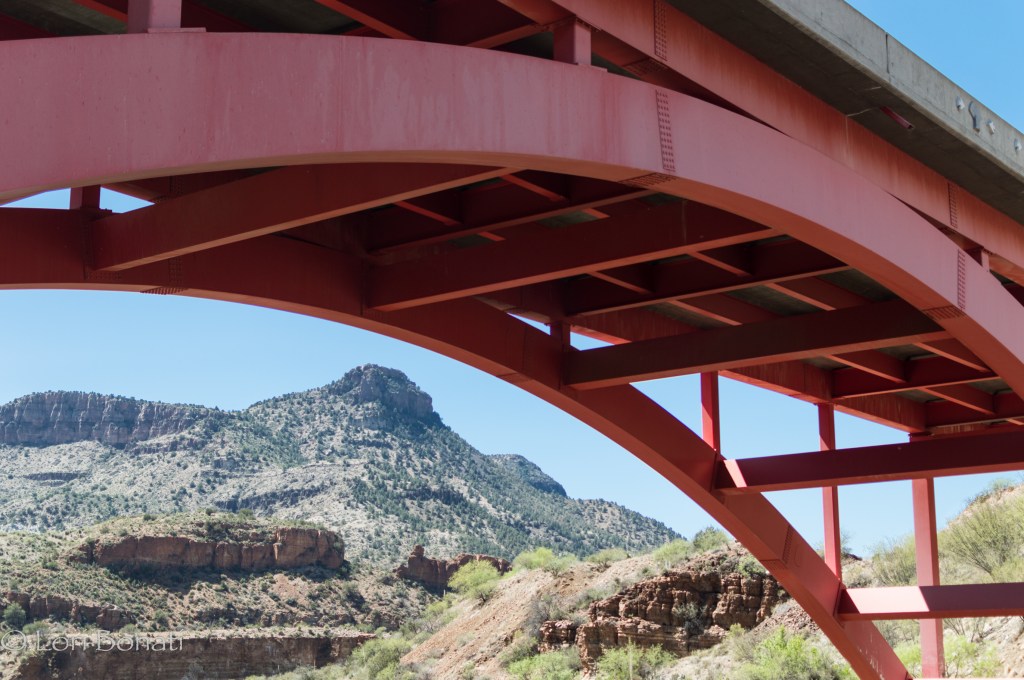
This isn’t the first time I’ve written about bridges. My post, “Bridges in Literature,” will bring you up to speed on the many appearances of bridges (or lack thereof?) in books, songs, and movies. Here’s a sneak peek at the photo I used in that article. It’s a bridge somewhere in southern Arizona:

* * * * * * * *

One last thought: The “featured image” at the top of this post is a blue and yellow banner in honor of Ukraine. These days, I’ve been thinking a lot about the bridges there, and about how so many thousands of innocent victims of the Russian invasion are trying to cross them to safety.

This post is dedicated to the brave people of Ukraine.

* * * * * * * *

If you haven’t already done so, please check out my brand new book, “Wordle Poems: A Poem a Day for Wordle Nerds,” on Amazon. It contains 30 original poems inspired by the daily act of Wordling. No spoilers! Reviews are greatly appreciated!

For more of my writing, visit my author page over at Bardsy, as well as my book, “Standing in the Surf,” on Amazon. It’s a photo journal about the Pacific Northwest area known as the Salish Sea, which includes Whidbey Island, Vancouver Island, Stanley Park, Butchart Gardens, and more.

Two’s Day/Cave Conversation

Today’s date, according to the Gregorian (western) calendar, is 2/22/22. And it happens to fall on a Tuesday! How cool is that?

Even cooler is the fact that TWO people pointed out the date to me today.

A date like that happens only TWICE every century! It took me a while to come to this conclusion. I had to write it out, like this:

            21st century:  1/11/2011 and 2/22/2022

            20th century:  1/11/1911 and 2/22/1922

            19th century: 1/11/1811 and 2/22/1822

        etc.

No sooner had I written this, than I began to wonder how far back the pattern would go. When was our calendar invented, I asked myself. And so, of course, I traveled down the proverbial rabbit hole and discovered that the history of the calendar is (a) fascinating, and (b) confusing!

What I can tell you, though, is that it has to do with the cycles of the sun and the moon that ancient peoples observed. You probably already knew that, but what might be news to you is the actual very first conversations by cave people in the process of inventing the calendar, which I’ve reconstructed here for the first time:

Cave Woman to Cave Man: Hey! Come here! Stop hunt! Look at sky! Light! Dark! Light again! Dark again! I make mark on cave wall each time! Okay, you make mark, I hold baby. Let us call marks “days.” … Just do it! Me no know why! Me just like sound.

Later, Cave Man to Cave Woman: Hey! Stop cook! Look up! Yesterday moon little! Now moon bigger! Other day moon very big! Me make more marks on cave wall! Oh, okay, I hold baby, you make moon marks. You make pretty marks. You pretty. You … okay, me go sleep now.

Much later, Cave Baby to Cave Parents: Mom, Dad! Look! Moon get big every time we have this many marks on cave wall! (Holds up both hands and flashes all ten fingers three times.) Let us call this many marks “month!” … Me no know why! Me just like sound.

Much, much later, Cave Grandkid to other Cave Grandkids: Hey! Come to my cave! We have many cool marks on my cave walls! (Flashes all ten fingers 30 times.) Marks in color! Come see marks, then play games!

Outside of cave, Grandkids playing rock, rock, rock (paper and scissors not invented yet): Winner make up funny word for 300 marks on cave wall! Okay, how about … “year?” (Howls of laughter)

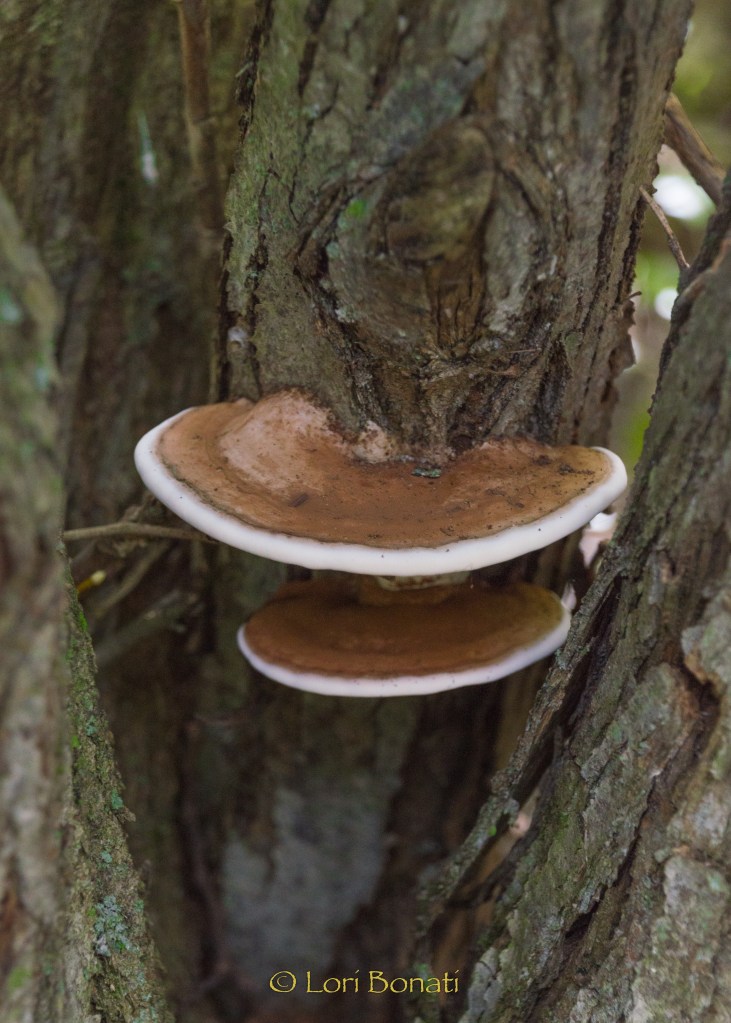
And now for a photo I took last summer in the Adirondacks, in honor of Two’s Day:

—–

If you haven’t already done so, please check out my brand new book, “Wordle Poems: A Poem a Day for Wordle Nerds,” on Amazon. It contains 30 original poems inspired by the daily act of Wordling. No spoilers! Reviews are greatly appreciated!

For more of my writing, visit my author page over at Bardsy, as well as my book, “Standing in the Surf,” on Amazon. It’s a photo journal about the Pacific Northwest area known as the Salish Sea, which includes Whidbey Island, Vancouver Island, Stanley Park, Butchart Gardens, and more.

Where Did I (Gink)Go?

photo credit: olga drach on unsplash

Quick: What ancient Chinese tree is known for its reputation as a memory-enhancing supplement?

If you guessed “GINKO,” you’d be just partially right, because you misspelled it. The word is “GINKGO,” but I’ll forgive you for using only five letters, because you’ve probably been playing too much Wordle.

I’m writing about the ginkgo tree today for three reasons:

  • Their leaves are gorgeous.
  • They’ve managed to survive for thousands of years.
  • I have some photos of ginkgo trees to share with you.

But on a deeper level, my reasons are more complicated. As you may remember if you’ve been taking your ginkgo supplements (just kidding!), my dog Maya and I packed up and moved cross-country last year. You can read about our journey in my previous blog series, “New Latitude.” I stopped blogging temporarily, but now that I’m all settled in, I want to get back to my mission: writing stories inspired by my camera.

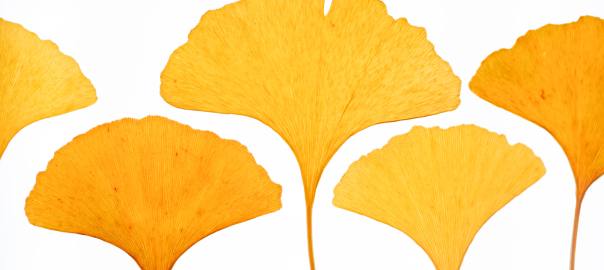
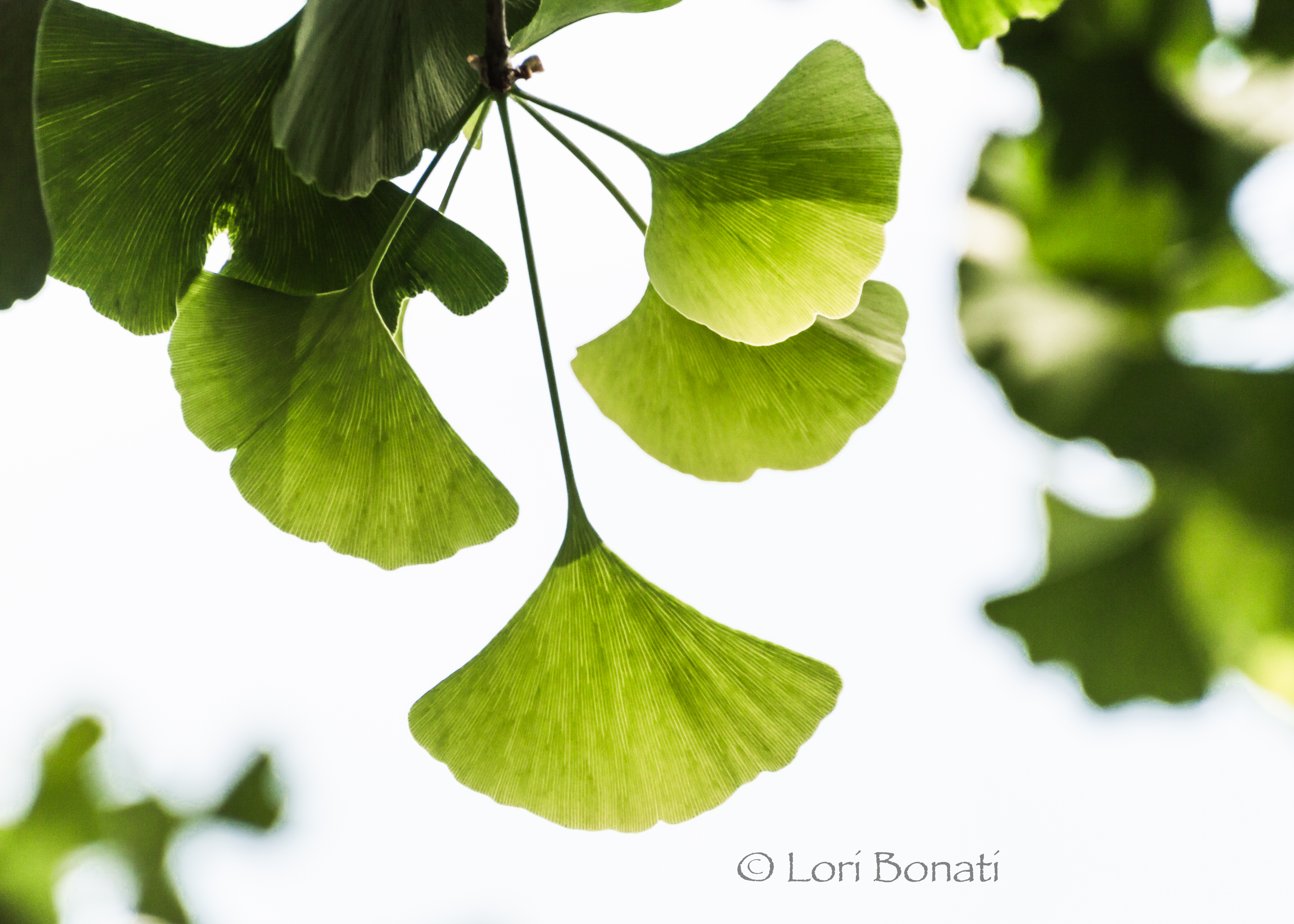
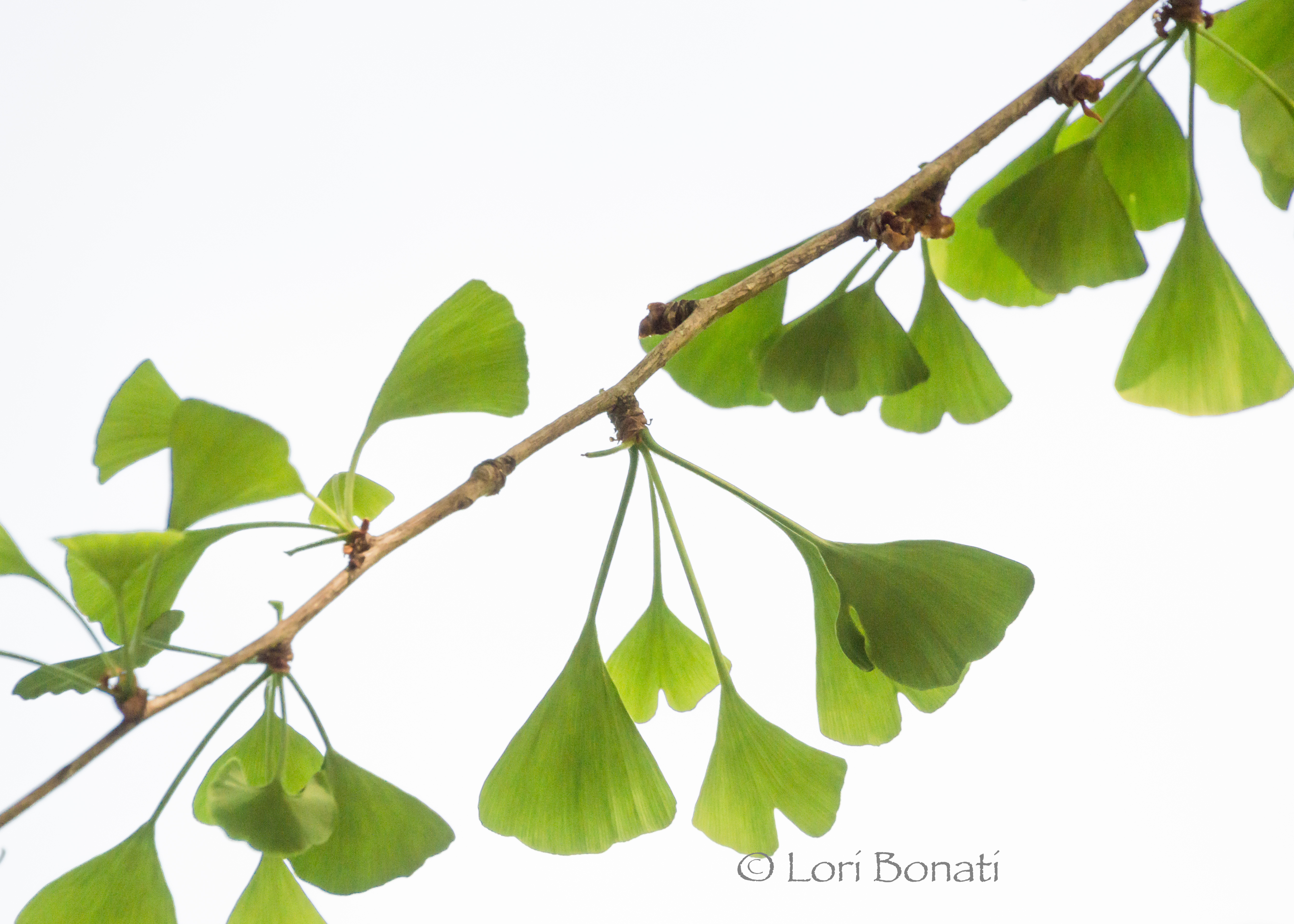
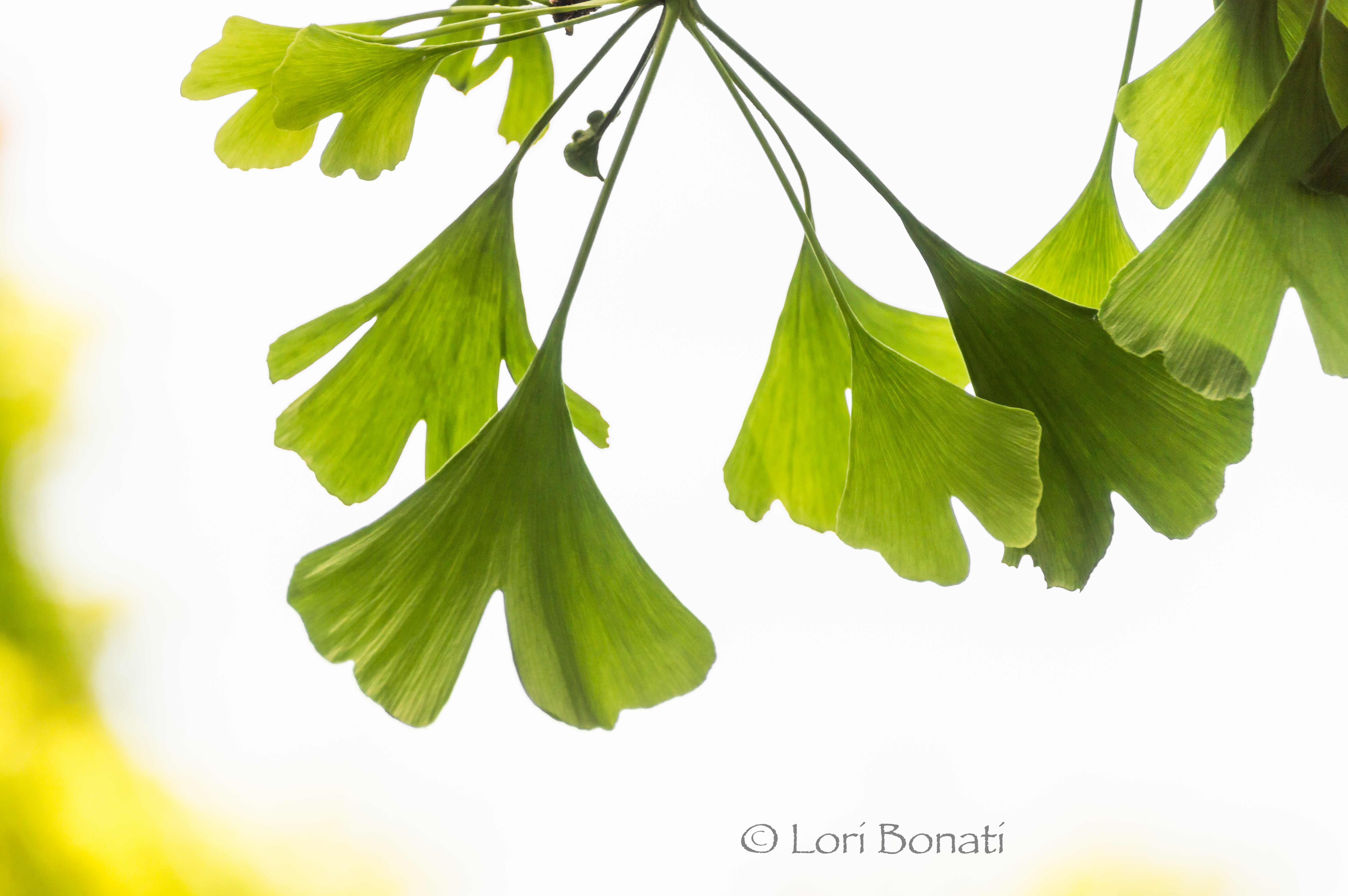
Yesterday, I uploaded 24 new photos, and I’ll be writing about each one, starting with GINKGO LEAVES:

And now for some Fascinating Facts about the Ginkgo tree:

  • Its scientific name is Ginkgo biloba.
  • It’s native to China.
  • Although its natural range is a small area of China, it has been cultivated in other parts of the world. (My photos were taken at Highland Park in Rochester, New York.)
  • Fossils in the Ginkgo genus date back to the Middle Jurassic period (about 170 million years ago). It was cultivated early in human history.
  • Its DNA genome is about three times as large as our human genome, which is thought to be why the ginkgo tree has many natural defenses against bacteria and chemicals. In fact, it’s so resistant to environmental assaults that six specimens growing in close proximity to the 1945 atomic blast at Hiroshima, Japan survived and continued to grow as healthy plants. They are still alive today.
  • According to an article by the Memorial Sloan Kettering Cancer Center, its use as a dietary supplement for the treatment of various diseases is mixed, and more study is needed.
  • It originally was two separate Japanese words pronounced “gin kyo.” Its current spelling dates back to a probable spelling error by a German, Engelbert Kaempfer.
  • It can grow to over 100 feet tall.
  • It’s considered a “living fossil.” Some living specimens are reported to be over 2,500 years old.
  • The ginkgo leaf is the symbol of Tokyo.

I’m glad I thought to take pictures of those pretty ginkgo leaves in Highland Park last summer. Otherwise, I wouldn’t have been so inspired to learn more about this admirable tree. I’d love to read about what inspires you. Please leave a note in the Comments section if you’re so inclined.

Before I go, I just want to say it’s (gink)GOOD  to be back!

—–

If you haven’t already done so, please check out my brand new book, “Wordle Poems: A Poem a Day for Wordle Nerds,” on Amazon. It contains 30 original poems inspired by the daily act of Wordling. No spoilers! Reviews are greatly appreciated!

For more of my writing, visit my author page over at Bardsy, as well as my book, “Standing in the Surf,” on Amazon. It’s a photo journal about the Pacific Northwest area known as the Salish Sea, which includes Whidbey Island, Vancouver Island, Stanley Park, Butchart Gardens, and more.