Category Archives: reading

Book Bucket List

How many books can you read in a week? A month? A year? I’m asking for a friend.

Actually, my friend is me. I’m on a mission to read every one of “The 100 Best Books of the 21st Century,” but at the rate I’m going, I’m afraid I’ll never accomplish my bucket list task before I actually kick said bucket. 

The esteemed list (of which I’ve read only 10) was compiled by The New York Times using input from over 500 hand-picked writers, editors, librarians, and other literary types. Here are the ones I’ve read: 
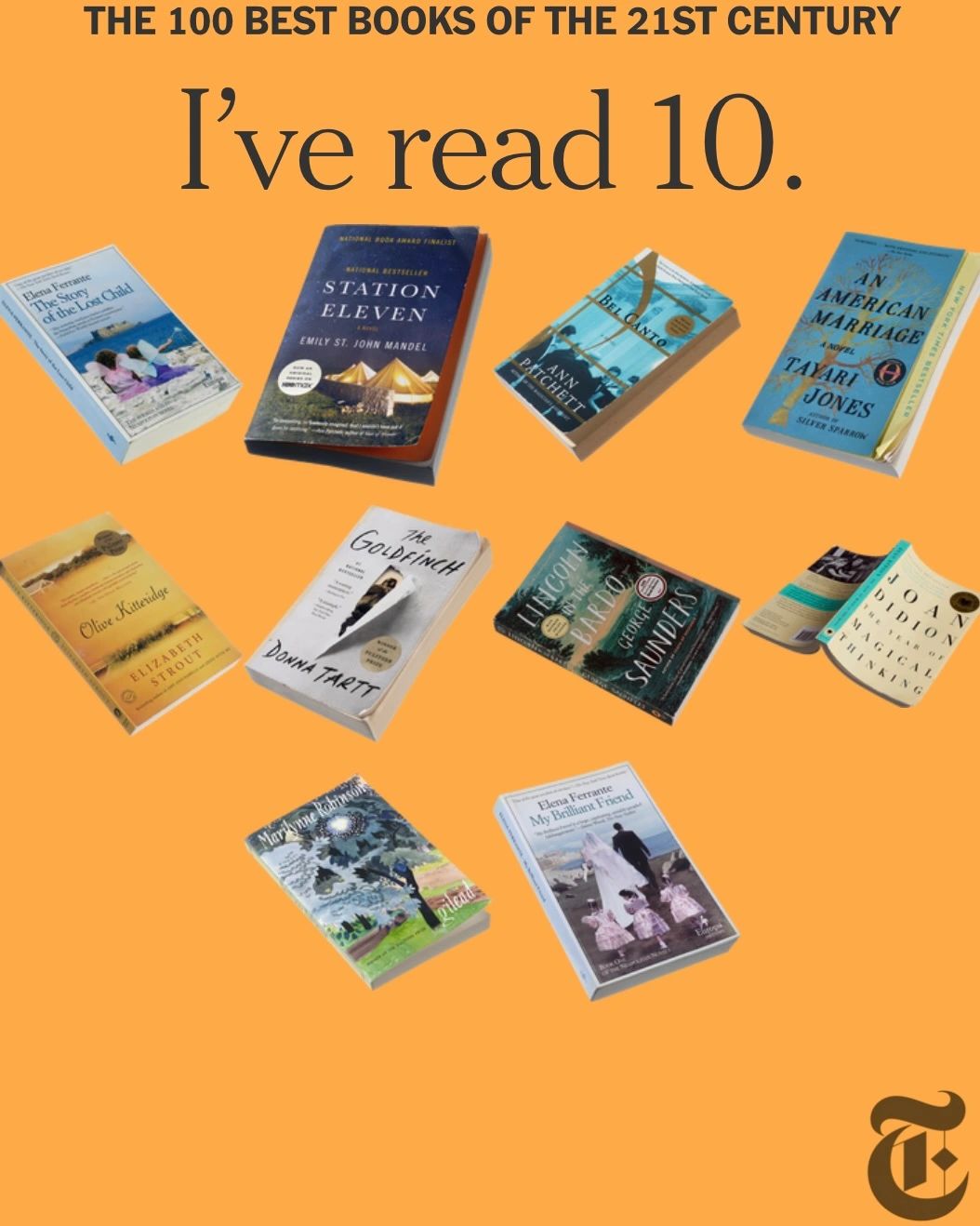
  • The Story of the Lost Child (Elena Ferrante) 
  • Station Eleven (Emily St. John Mandel) 
  • Bel Canto (Ann Patchett) 
  • An American Marriage (Tayari Jones) 
  • Olive Kitteridge (Elizabeth Strout) 
  • The Goldfinch (Donna Tartt) 
  • Lincoln in the Bardo (George Saunders) … well, most of it, anyway 
  • The Year of Magical Thinking (Joan Didion) 
  • Gilead (Marilynne Robinson) 
  • My Brilliant Friend (Elena Ferrante) 

(My review: I’m wild about the Ferrante, St. John Mandel, and Strout books, and I liked the others, except for Lincoln in the Bardo, which I just didn’t get.)

Yikes! With 90 more books to go, I’ll have to hustle like crazy. But luckily for me, The New York Times has just come up with another “100 Best Books” list, because the original list was pooh-poohed by some picky Times readers. After receiving numerous complaints, the publication succumbed to the pressure, polled their regular readers, and assembled a second collection of titles: the “Readers Pick Their 100 Best Books of the 21st Century” list. I like this list better.

In fact, I was happy to discover that I’ve read 16 books on this new list, including 9 from the old list, plus:

  • All the Light We Cannot See (Anthony Doerr)
  • Lessons in Chemistry (Bonnie Garmus)
  • Gone Girl (Gillian Flynn)
  • Caste: The Origins of Our Discontents (Isabel Wilkerson)
  • Braiding Sweetgrass (Robin Wall Kimmerer) … skimmed parts of it
  • Where the Crawdads Sing (Delia Owens)
  • The Dutch House (Ann Patchett)

(My review: I absolutely loved the books by Doerr, Garmus, and Flynn, appreciated and learned much from Wilkerson and Kimmerer, and thought the Patchett was pretty good. I was disappointed in Crawdads, however.)

I’m not all that fond of “best” lists. In fact, “best” is a word I don’t often use. For me, it’s difficult to select just one song, movie, or even friend as “the best,” and the same holds true for books. I’ve read several great ones, and others that were less than great but that I’ve thoroughly enjoyed nonetheless.

That said, I’ll take a recommended reading list any day of the week. In fact, I’ll take it all the way to my local library or indie bookstore. Book lists are helpful. But I’m sad that there are SO MANY great ones out there that didn’t make either one of the “Best Of” lists.

I’m thinking, off the top of my head, of this highly subjective list of my favorite 21st century books (and I’m sure I’ve left out many deserving ones):

  • Where’d You Go Bernadette (Maria Semple)
  • Mr. Penumbra’s 24-Hour Bookstore (Robin Sloan)
  • The Lacuna (Barbara Kingsolver)
  • Less (Andrew Sean Greer)
  • Bridge of Sighs (Richard Russo)
  • The History of Love (Nicole Krauss)
  • The Guernsey Literary and Potato Peel Pie Society (Mary Ann Shaffer and Annie Barrows)
  • State of Wonder (Ann Patchett)
  • How to Be an Antiracist (Ibram X. Kendi)
  • Turtles All the Way Down (John Green)
  • Unsheltered (Barbara Kingsolver)
  • Miracle and Wonder: Conversations with Paul Simon (Malcolm Gladwell)
  • The Farmer and the Clown (Marla Frazee)*
  • A Wish in the Dark (Christina Soontornvat)**
  • The List of Things that Will Not Change (Rebecca Stead)**

* Picture book with no words.

** Middle grade novels.

I’ll keep you posted on my progress toward my goal of reading 100 21st century books. Meanwhile, please leave me a comment about your favorite books, ones you’re currently reading, or anything else!

And be sure to check out the photos that I keep adding to my Photos page. I’ve neglected to blog about what I’ve been up to this summer, so I’m hoping that these pictures (and their captions) will catch you up.

Cover image: by Pham Trung Kien from Pixabay
A Reptile Made Me Do It – Episode 3

Recap: In Episodes 1 and 2, I told you how a turtle made me think reptiles were cute, how an endangered iguana made me write a song about reptile conservation, and how that song became a video and a book.

And now, in Episode 3, you’ll learn about how a lizard made me write another song, video, and book … and all about my upcoming visit to IguanaLand!


I’m a desert spiny lizard, but you can call me “DSL,”

Oh, I’m a desert spiny lizard, but you can call me “DSL,”

My life is hot and dusty … all this crawlin’ in the desert ain’t swell!

That’s how my song, “Desert Spiny Lizard Blues,” begins, and it just gets more blue after that. You can check it out for yourself here.

I really can’t remember what inspired me to write a song about a lizard, so, once again, I’m going to pin the blame on a reptile – probably the one whose photo graces the cover of my latest children’s book, “I’m a Desert Spiny Lizard.”

Yes, that’s right. I wrote a book about a lizard – because once “Desert Spiny Lizard Blues” was written, recorded, and uploaded to YouTube, I felt compelled to create a children’s book to go with it, much as I’d done with my song, “I’m an Iguana.”

Unexpectedly, I now have two reptile books for kids under my belt, and they’re packed with factual information that I learned from reptile experts. I’m proud to announce that I’ll be offering both of these cute, fun, and educational reptile books for sale at the 3rd annual IguanaFest in Punta Gorda, Florida this weekend!

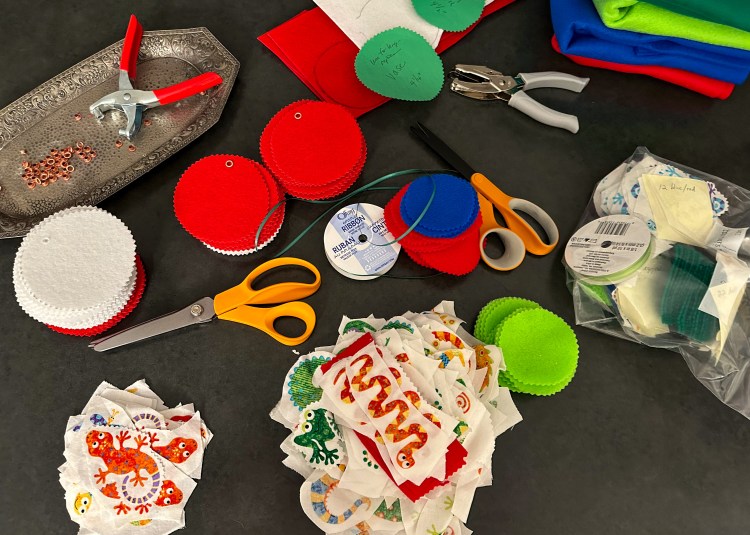
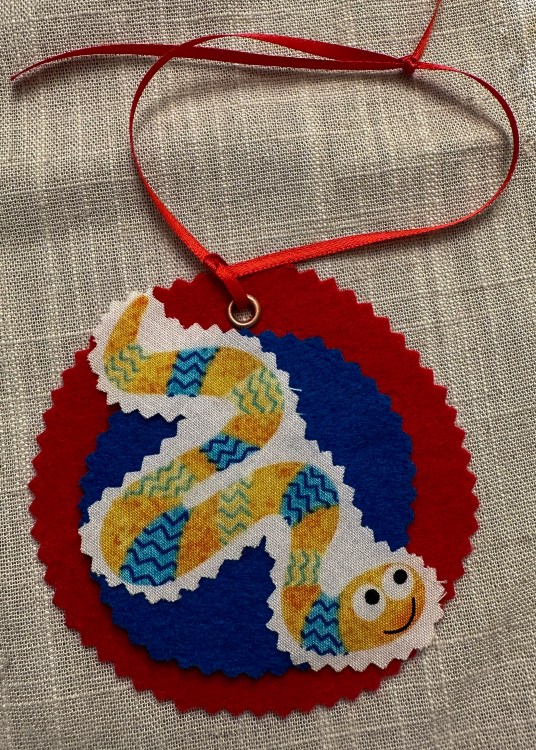
Not only that, but I’ll be selling my own handmade reptile-themed holiday ornaments to go with the books.

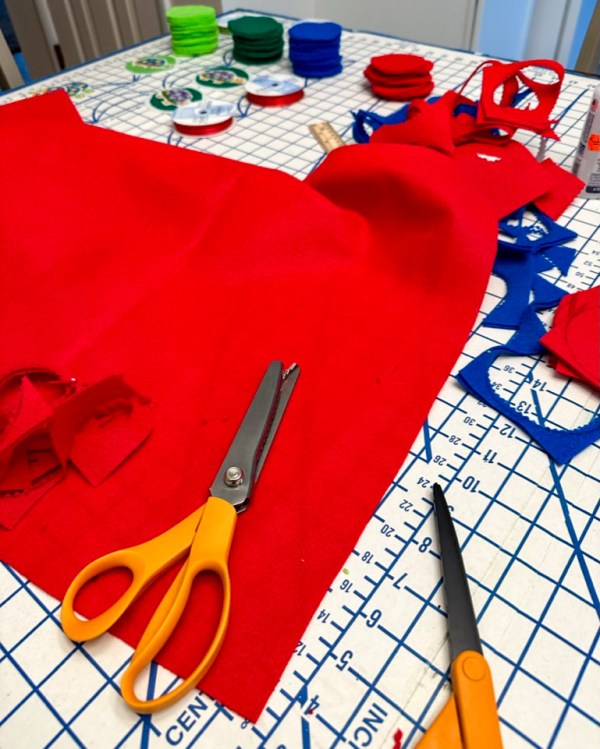
It’s true. I’ve gone reptile-crazy. When I first laid eyes on this adorable reptile-themed fabric, I couldn’t resist buying the whole two yards that were left on the bolt, even though I had no idea what I would do with it. Eventually, the idea of making felt holiday ornaments came to me.

So you see, not only have reptiles managed to coerce me into writing songs and books about them, posed for photographs, and demanded to appear in videos, but now they’re even sending me out of state to a reptile FESTIVAL, at the largest reptile zoo in the world (a.k.a. “IguanaLand”).

What’s next? Will a reptile make me write another episode for this blog series? Probably. I’m sure they’ll want you to find out what IguanaFest was like.

Stay tuned for the exciting final episode of A Reptile Made Me Do It!

The Curious Case of Life Imitating Art

The muse must have been looking over my shoulder yesterday because, unexpectedly, I stumbled upon a case of life imitating art. Or was art imitating life?

I’d spent most of the day walking my dog, talking with friends online, and reading Anna Quindlen’s novel, “Still Life with Breadcrumbs,” the story of a photographer whose career is in decline.

In late afternoon, I decided to take my car out for a spin, since the last time I’d started it up, it had been sluggish. I feared the battery was about to reach its moment of planned obsolescence. (That would be about par for 2020.) But I hoped that if I drove around for an hour or so, maybe I could revive it.

On a whim, I grabbed my camera before heading out (something I haven’t done in a while, since it’s been too hot during the day for photography). “You never know,” I thought, imagining for just a second a chance encounter with a dust devil, or maybe a space alien. The car sputtered to a reluctant start. Before it could die on me, I put it in gear and headed north.

My destination was Oracle, about half an hour up the road – an unincorporated town whose most famous resident to date has been Buffalo Bill Cody. En route, it occurred to me to plug in an audiobook that was in my phone.

Unfortunately, I’m not too good with modern audio systems in cars (or in phones, for that matter). In fact, I was surprised I’d managed to get the book copied into my phone at all. So as not to cause an accident, I turned off the main highway, Oracle Road, and onto Biosphere Road (which, inconsequentially, leads to Biosphere 2) in order to park, thumb through my owner’s manual, and figure out how to tell my car to read a book to me.

After a few hundred feet, I came to a turnaround. It looked like an ideal place for rattlesnakes and tarantulas to hang out, but I wasn’t planning to get out of the car and join their party, even if they were wearing masks. Heavy, dark storm clouds were gathering in the distance, and a few were above my head. I was anxious to queue up my book and get back on the road.

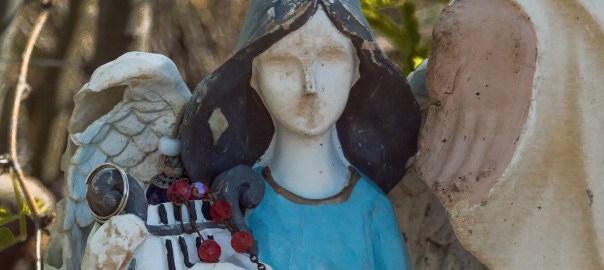
The clouds had other ideas. They suddenly moved out of the sun’s way, and a shaft of light landed on something smooth, tall, and bright along the trail: a scarred and dusty shrine in the middle of the desert.

It seemed to be a case of life imitating art. You see (spoiler alert), on page 37 in Still Life With Breadcrumbs, that book I’d been reading earlier that day, the protagonist goes for a hike in the woods and comes upon a shrine – a white wooden cross with a glittering child’s volleyball trophy lying on the ground next to it. She takes some photos.

I felt like life was trying to tell me something, so I shut off the engine, grabbed my camera, and got out of the car. Scoping out the ground for snakes or spiders, I cautiously approached the little memorial and took a few photos. As soon as I’d finished and gotten back in my car, I realized I might have made a mistake.

It was 107 degrees out, and there I was in the middle of the Arizona desert with a car whose battery was on its last legs. I wondered how long it would be before AAA could find me. I turned the key in the ignition. The engine choked for a few seconds, and then, reluctantly, it caught.

I sighed, turned the car around, and glanced back at the shrine, but by then the sun had ducked behind the clouds again; the scene was now in shadow. I’d gotten there just at the right moment.

All I could think of on the drive home was the phrase, “life imitates art.” So today I looked that up and learned a thing or two. The idea has been around since at least the time of Plato, who believed art was a poor imitation of life, and for that reason could be dangerous. Aristotle, on the other hand, welcomed art’s imitation of life. And Oscar Wilde’s take was that life imitates art more often than art imitates life. Even Dostoevsky got into the debate, describing it as more of a codependent relationship, where art imitates life, which then imitates art, causing life to owe its very existence to art.

As for me, I was totally flabbergasted by the way my life (finding the shrine) seemed to be imitating art (the book I’m reading). Or maybe art (the book) was imitating life (its pathos) which in turn was imitating art (the shrine). It’s something I thought was worth pondering, especially when I realized one more thread:

In “Still Life With Breadcrumbs,” the protagonist doesn’t notice a certain, possibly significant, detail on the cross until she gets home and enlarges the photo. That same thing happened to me – I didn’t notice the coins at the base of the statue until I got home. Can you spot them?

Shrine 5

I’ve searched online for other photos of this shrine but couldn’t find any, so I don’t know who it’s for. I wish I did. In any case, I think I’ll return soon and add some coins to their collection.


Thankful for Peppers

Today I’m going to cheat a bit and write about other people’s posts.

By other people, I mean Cheer Peppers, a.k.a. bloggers participating in the daily November blogging challenge known as NanoPoblano. If you want to indulge in some good reading, and if you’re on Facebook, find the Cheer Peppers group and join it.

Or you can find them in the Cheer Peppers list below. (I hope I haven’t left any out. I borrowed this list from fellow Cheer Pepper Carolyn Owens.)

A.R. at StarvingActivist.com
Barbara at teleportingweena.wordpress.com
Bill at BillFriday.com
Breanna at BooksHooksAndYarn.wordpress.com
Carolyn Owens at InfinityCoaching.net
Cyn at Cynk.wordpress.com
David at TooFullToWrite.com
Dean at DeanKealy.design
Echo at trueecho22.wordpress.com
Gwenlynn at JustALittleBitSweet.com
Hasty at FearingCrazy.wordpress.com
Hope at HopesThoughts.blog
Jessie at BehindTheWillows.com
Jesska at NotThrowingStones.today
Julia at AberrantCrochet.com
Julie at JulieBurton.blog
Kay at SuddenlyTheyAllDied.com
Kim at DrunkOnLifeBlog.com
Lillian at HumanInRecovery.wordpress.com
Liz at CatsAndChocolate.com
Lori at LoriStory.wordpress.com
Matt at TheMatticusKingdom.com
Namy at NamySaysSo.com
Nessa at vanessence.wordpress.com
Nutty at SpokenLikeATrueNut.wordpress.com
Owen at NoTalentForCertainty.com
Paula at TheTemenosJournal.com
Ra at Rarasaur.com
Rebecca at MommyQuits.wordpress.com
Renee at ReneeRobbinsWrites.com
Revis at RevisEdgewater.wordpress.com
Robert at FreshOffThePadPoetry.wordpress.com
Sahara at CreoSomnium.org
Symanntha at FailingAtHaiku.wordpress.com
Quixie at QuixiesMindPalace.wordpress.com

In keeping with the energetic but forgiving spirit of the Cheer Peppers, I’ve been trying to keep up with my daily posts (but not beating myself up if I skip days). I’m also trying to read ALL other Cheer Pepper posts. So far I’ve posted 14/21 days but read all posts for only 3/21 days. I’m batting .667 when it comes to posting, but only .143 for reading.

It’s not that I don’t love reading their posts. I do! It’s just that I run out of time during the week. But I’ll get caught up, I promise! I’m pledging today to read a ton of Cheer Pepper posts over this 4-day weekend.

To prove I’m serious about my pledge, here’s what I’m using to keep track of my progress.

image1

By November 30, I hope to post another photo showing many more check marks in the right hand column.

Cheer Peppers are a thoughtful, funny, kind, and talented bunch, and their work is labor-intensive. Blogging is different from other types of writing, in that blog posts often try to say a lot using a relatively limited number of words.

Good blog posts are attention grabbing, clear, concise, artistic, sometimes amusing, and often deeply personal. It’s difficult to get all of that into a blog post, which is why I’m so thankful I stumbled upon the riches of NanoPoblano. Not only is it good writing practice for me, but it’s introduced me to some amazing people.

Thanks, Cheer Peppers!

nanopoblano2018-notrim

Dwarsligger: A New Dutch Invention

According to an article I read recently, the Netherlands is responsible for a number of important inventions, including:

  • the microscope
  • the telescope
  • the submarine
  • wi-fi
  • orange carrots

I admit that the above items are all really cool (especially orange carrots), but there’s a new invention on the horizon. I heard about it the other day on National Public Radio, so I believe it to be true. And its presence could revolutionize the literary world. Its name is:

DWARSLIGGER

The word “dwarsligger” comes from two Dutch words: “dwars,” which means “crossways,” and “liggen,” which means “to lie” (as in lying crossways), and which also can mean “a person or thing that stands out as different.” So, a dwarsligger is a different sort of thing that lies crossways. To see what this means in terms of books, try this:

  • Imagine a book that opens like a regular book, except that instead of a regular binding, it has a hinge.
  • Now turn the book sideways and imagine that the text is printed in landscape mode.
  • Make the book small, about the size of a cell phone.
  • Now make the pages really thin, like onion skin.

That’s a dwarsligger – a mini-book you can hold with one hand, with pages that can be flipped out of the way as you read them. It’s like swiping on an electronic device, but better. It’s a real book.

Dutton (part of Penguin Random House) just released its first set of dwarsliggers – all novels by YA author John Green. Being a John Green fan, I can’t wait to get my hands – er – hand on these little dwarsliggers.

And now, in honor of the U.S. midterm elections (November 6, don’t forget to vote!), I’m conducting a mini-poll of my own:

The 2018 LoriStory Official and Unbiased Pre-Election Day Book Poll:

Which of the following book formats is your favorite?

_____ Hardcover

_____ Paperback

_____ E-book

_____ Dwarsligger

_____ Wait for the movie

Vote for as many as you like in the comment section below.

nanopoblano2018-notrim

Bridges in Literature

I’m reading Richard Russo’s Bridge of Sighs. Actually, I’m working my way through all 27 hours and 4 minutes of the audiobook version (21 cds) while driving around town. If you see me cruising down the road while I’m immersed in this wonderful novel, please honk or wave, but not so much that you distract me and cause an accident. One can only concentrate on so much input at once while DWEEB (Driving While Enjoying an Excellent Book).

My favorite part of the book so far has to do with how we see life as we get older, as compared with how we view it from the vantage point of youth. I don’t want to try and paraphrase Russo’s well-crafted prose here, or deprive you of the pleasure of dwelling on the passage of time while screeching to a halt at a stop sign. Just go pick up a copy and read it, preferably the 480-page hard copy version that you can spend some time with while reclining comfortably in your armchair at home. The world will be a much safer place without two DWEEBs driving around in a book-induced reverie.

Reading Bridge of Sighs has gotten me thinking about bridges in general, and wondering how often they’re mentioned in literature, music, and other genres.  Off the top of my head, I immediately thought of Bridge on the River Kwai and Bridge Over Troubled Water. Given that a bridge would be a powerful symbol, representing transition and change, I guessed that the bridge image must be commonplace in popular culture. As is often the case, I guessed wrong.

After thinking very hard (a.k.a. “Googling”), I managed to find only seven books worth mentioning with the word “bridge” in the title:

  • Bridge to Terabithia by Katherine Paterson
  • A Bridge Too Far by Cornelius Ryan
  • A View from the Bridge by Arthur Miller
  • An Occurrence at Owl Creek Bridge by Ambrose Bierce
  • The Bridge of San Luis Rey by Thornton Wilder
  • Mrs. Bridge by Evan S. Connell
  • Mr. Bridge by Evan S. Connell

(I just couldn’t bring myself to include The Bridges of Madison County.)

I then moved on to songs, and although there were some Top Ten song lists with “bridge” in the title, I’m only going to mention three here, because, to be honest, the other seven didn’t interest me:

  • Bridge over Troubled Water (Simon & Garfunkel)
  • Under the Bridge (Red Hot Chili Peppers)
  • London Bridge (Traditional)

Finally, I resorted to adding characters named “Bridge” to my list, and I’m glad I did, because all of them are important in their own right.

  • Walter and India Bridge in the movie, Mr. & Mrs. Bridge, based on the books about Mrs. and Mr. Bridge, listed above.

This is important because I read the books AND saw the movie, and the movie has both Paul Newman and Joanne Woodward in it, something that just makes me happy for some reason.

  • George Bailey’s bridge in the movie, It’s a Wonderful Life. 

Okay, the bridge is not actually a character, but if it were a character, its name would most certainly be Bridget, and it would have won an Oscar for best movie prop in a supporting role.

  • Ruby Bridges, the first black child to integrate an all-white school in the American south (Nov. 14, 1960).

Through My Eyes by Ruby Bridges tells Ms. Bridges’ story in her own words. I think her name is particularly symbolic.

Returning to the subject of Bridge of Sighs, I’m now on cd number 12 of 21, so I’m more than halfway across the bridge, so to speak. This is one of those books that I’ll be sorry to finish. I’ve already become quite attached to Lucy Lynch, its main character. Spoiler alert: Lucy is not at all the way you’re probably picturing him.

So if you see someone in the driver’s seat of a white Subaru Impreza, deep in thought while barreling toward you on the highway, maybe you’d better just stay out of their way, because it could very well be me, on the last page of the last chapter of Bridge of Sighs, possibly crying my eyes out, or smiling, or whatever it is Richard Russo has in store for me, and I wouldn’t want to have to plead DWEEB in traffic court.