Category Archives: writing

Colorado Rocks

Colorado always seemed like a distant idea to me: a concept, as opposed to a real place I’d ever get to visit. I’m not sure why that is. I’ve traveled all across the country and back. I’ve been to each of Colorado’s neighboring states. I’ve also been to Hawaii. Hell, I even hitchhiked across Canada (back in the 70s when it was a little safer and I didn’t know any better). But until last month, I’d never set foot in Colorado.

Well, I’ve just returned from a five-week-long road trip with my husband — more posts about that to follow — and I can finally say, “I’ve been to Colorado.” By the way, Colorado is AWESOME. I’m sorry it took me so long to get there.

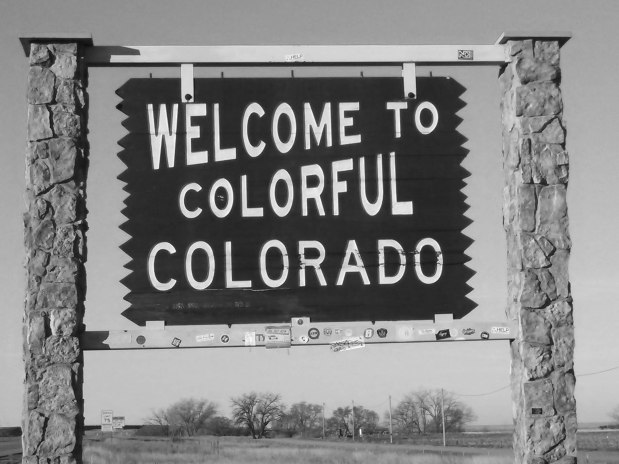
As I crossed the state line from New Mexico into Colorado, though, it was pouring rain, and the sky was a dull, drab gray. An even duller, drabber highway sign announced, “Welcome to Colorful Colorado.” It looked something like this:

Welcome to Colorado BW

(Photo credit: marchinileo0 via Pixabay)

“Colorful?” I asked myself. “What’s so colorful about Colorado?”

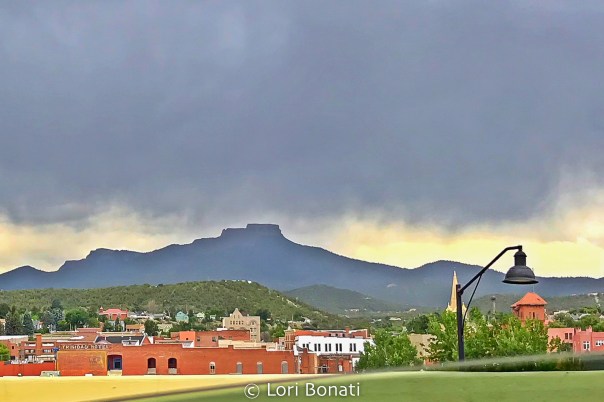
Well, a little farther down the road, we came to Trinidad, Colorado, and the sun started to come out.

Garden of the Gods 5

I could see the potential and hoped for more color as we traveled on.

That night, we stayed in Colorado Springs, also known as “Olympic City USA.” That’s because the headquarters for the US Olympic Committee, the US Olympic Training Center, and the US Anti-Doping Agency are all located there.

Speaking of drugs, Colorado was one of the first states to legalize marijuana for recreational use and sale. But I didn’t need to visit one of their green stores to appreciate the place. You can get high just walking around admiring the scenery.  John Denver knew a good thing when he saw it.

We had a little spare time the next morning before continuing on our journey, so I googled “Top 10 Things to Do in Colorado Springs.” Garden of the Gods popped up as #1, so that’s where we went. Here are some photos I took while there:

Stay tuned for more photos of our trip in my next post.


Bridges in Literature

I’m reading Richard Russo’s Bridge of Sighs. Actually, I’m working my way through all 27 hours and 4 minutes of the audiobook version (21 cds) while driving around town. If you see me cruising down the road while I’m immersed in this wonderful novel, please honk or wave, but not so much that you distract me and cause an accident. One can only concentrate on so much input at once while DWEEB (Driving While Enjoying an Excellent Book).

My favorite part of the book so far has to do with how we see life as we get older, as compared with how we view it from the vantage point of youth. I don’t want to try and paraphrase Russo’s well-crafted prose here, or deprive you of the pleasure of dwelling on the passage of time while screeching to a halt at a stop sign. Just go pick up a copy and read it, preferably the 480-page hard copy version that you can spend some time with while reclining comfortably in your armchair at home. The world will be a much safer place without two DWEEBs driving around in a book-induced reverie.

Reading Bridge of Sighs has gotten me thinking about bridges in general, and wondering how often they’re mentioned in literature, music, and other genres.  Off the top of my head, I immediately thought of Bridge on the River Kwai and Bridge Over Troubled Water. Given that a bridge would be a powerful symbol, representing transition and change, I guessed that the bridge image must be commonplace in popular culture. As is often the case, I guessed wrong.

After thinking very hard (a.k.a. “Googling”), I managed to find only seven books worth mentioning with the word “bridge” in the title:

  • Bridge to Terabithia by Katherine Paterson
  • A Bridge Too Far by Cornelius Ryan
  • A View from the Bridge by Arthur Miller
  • An Occurrence at Owl Creek Bridge by Ambrose Bierce
  • The Bridge of San Luis Rey by Thornton Wilder
  • Mrs. Bridge by Evan S. Connell
  • Mr. Bridge by Evan S. Connell

(I just couldn’t bring myself to include The Bridges of Madison County.)

I then moved on to songs, and although there were some Top Ten song lists with “bridge” in the title, I’m only going to mention three here, because, to be honest, the other seven didn’t interest me:

  • Bridge over Troubled Water (Simon & Garfunkel)
  • Under the Bridge (Red Hot Chili Peppers)
  • London Bridge (Traditional)

Finally, I resorted to adding characters named “Bridge” to my list, and I’m glad I did, because all of them are important in their own right.

  • Walter and India Bridge in the movie, Mr. & Mrs. Bridge, based on the books about Mrs. and Mr. Bridge, listed above.

This is important because I read the books AND saw the movie, and the movie has both Paul Newman and Joanne Woodward in it, something that just makes me happy for some reason.

  • George Bailey’s bridge in the movie, It’s a Wonderful Life. 

Okay, the bridge is not actually a character, but if it were a character, its name would most certainly be Bridget, and it would have won an Oscar for best movie prop in a supporting role.

  • Ruby Bridges, the first black child to integrate an all-white school in the American south (Nov. 14, 1960).

Through My Eyes by Ruby Bridges tells Ms. Bridges’ story in her own words. I think her name is particularly symbolic.

Returning to the subject of Bridge of Sighs, I’m now on cd number 12 of 21, so I’m more than halfway across the bridge, so to speak. This is one of those books that I’ll be sorry to finish. I’ve already become quite attached to Lucy Lynch, its main character. Spoiler alert: Lucy is not at all the way you’re probably picturing him.

So if you see someone in the driver’s seat of a white Subaru Impreza, deep in thought while barreling toward you on the highway, maybe you’d better just stay out of their way, because it could very well be me, on the last page of the last chapter of Bridge of Sighs, possibly crying my eyes out, or smiling, or whatever it is Richard Russo has in store for me, and I wouldn’t want to have to plead DWEEB in traffic court.


What The Flair?

I’ve written a middle grade novel and am querying agents. Last month I received a request for a full manuscript.

Don’t worry, I’m not about to gloat and tell you how excited I am to be represented by a big-name publisher or how you can download a copy of my book.

Nope. Nothing of the kind. After reading my manuscript, the agent decided to pass. But she did give me something I’ll never forget: valuable constructive criticism, which in the end might turn out to be even better than an offer of representation.

(Bear with me … I’m trying to see the silver lining.)

What she said was that my character didn’t have that “unique flair” she was looking for.

My initial reaction (after telling myself that I hadn’t expected her to like it anyway) was irritation. I’d heard that publishers are looking for “edgy” characters these days, but I didn’t want to give my eight-year-old protagonist suicidal thoughts, nose rings, or tattoos. This edginess is just a phase, I told myself. Surely it will pass.

But then I got humble and gave myself a minute to see the book through the agent’s eyes. When I did, I had to admit that my character was a bit on the bland side. Not much of a personality, actually, except that she’s shy, lacking in confidence, and has a good imagination. She needed something more. That agent was right. My character needed flair.

But what exactly is flair?

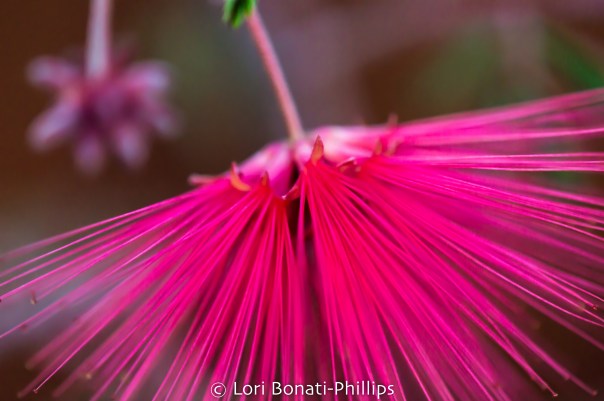
Fairy Duster Flare

No, that’s “flare.”

According to my best friend Merriam (last name Webster), “flair” is a special skill or ability, a style, or even — in the old days — an odor. (The word “flair” comes from Latin, French, and Middle English words for scent or fragrance.)

So, if I’m to give my character a unique flair, how do I do that? Should she have some hidden talent, unique mannerisms, or — how unique would this be — a special smell?

I’ve decided to revise my book (again), keeping an eye on all the ways I can enhance my character’s unique flair. I don’t mind doing this. I think I’m going to love my character more when I’m finished with her. After all, isn’t a character’s uniqueness what we love about them, what makes us root for them, and why we’re sad when the book ends?

Think of some of your favorite characters in novels. The first one to pop into my mind is Holden Caulfield; the second is Aza Holmes. I loved them both, for totally different reasons. (And after reading the article about Holden Caulfield that I just linked to, I love him even more.) But the thing both Holden and Aza have in common is personality. They had unique flair, no doubt about it. That’s what I want for my character, and I’m going to try my best. I’m no J.D. Salinger or John Green, but I can sure as hell try to be a better Lori Bonati.

It’s like when I edit photographs. After some initial gross adjustments like cropping and straightening, I work on more subtle enhancements such as vibrancy, clarity, and color. Here’s an example of a photo I took recently before and after editing. This simple little photo was taken through the windshield of a car while it was moving. (Don’t panic, I wasn’t driving.)

BEFORE editing:

Fog Unedited

No flair at all. But check out that unique angle and dashboard reflection!

AFTER editing:

Fog Edited

The second photo sold online in one day. If only I could say that about my book.

Have you ever received feedback from an agent? If so, did you follow it?

Yellow

YELLOW

In spring

yellow makes me feel like laughing

the tickle of a lemon breeze

ruffles my hair and

puckers my lips

In summer

it pours from the sun

like hot flat sheets of maple syrup

drenching my body

in liquid sugar

In autumn

yellow turns to orange

and licks my face like a ginger cat

purring

until I try to catch it

In winter

it’s a trickle of iced tea

dropping in to say

stick around

I’ll be back soon.

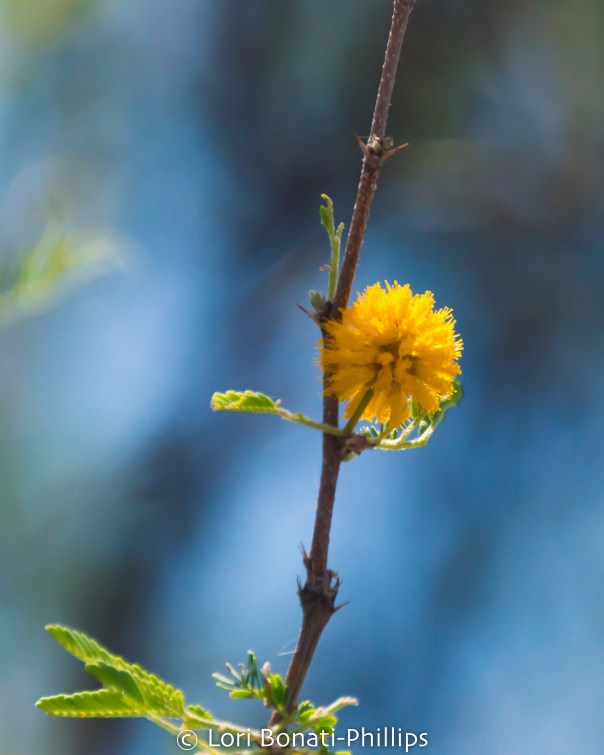
Acacia Flower

The Language of Living Things

How do birds chirp? This is a question I asked myself yesterday while taking a walk and listening to a songbird.

Do they have vocal cords? Do they blow air through their nostrils? Or is it something I can’t even fathom, like maybe a hum that starts in their bellies? I’d like to know the answer.

Somehow, the universe must have heard my question, because last night my husband turned on the TV to watch NOVA, and the episode was about how animals communicate. And although it didn’t specifically answer my question about how birds sing, it did have some fascinating things to say about the language of animals.

Did you know, for example, that male spiders have a vocal language when they mate, and that whales have certain hit songs that spread from ocean to ocean like the British Invasion of 1964?

We humans have much in common with other animals when it comes to language, and I’m not just talking about our mating behavior. Take Zipf’s Law, for example, which I learned about for the first time last night on NOVA. According to Zipf (by the way, I’m not sure how to pronounce Zipf, but he probably could tell me if he were still alive, since he was a linguist), there’s a universal rule when it comes to language.

Using computers, linguists have analyzed large texts in several languages and have found that if you rank the words in order according to how often they appear, there’s a mathematical relationship (Zipf’s Law):

  • The frequency of word #1 is two times that of word #2,
  • the frequency of word #1 is three times that of word #3,
  • and so on.

If you plot it on a graph, it makes a straight line (slope) from upper left to lower right. And the same graph happens no matter what language you use. It even works with vocalizations of dolphins, elephants, and birds!

I don’t pretend to know much about animal language, but it’s already changed how I react when I listen to the birds sing.

I wonder if they write poetry, too?

Hanging Out with Bats

Tucson has a large bat population. In 2008, there were about 200,000 bats living here. Who knows how many more there are now. Most of them migrate north from Mexico in April and stay until October.

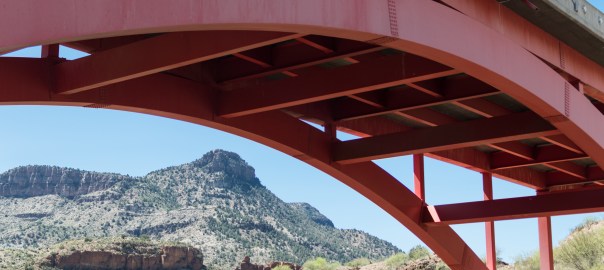
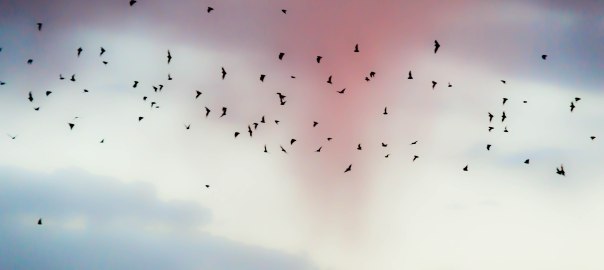
By day, the bats hang out under bridges, emerging en masse at sunset for their nightly feeding frenzy. People gather near the bridges to watch the bats take off. Bat-watching is excellent and cheap entertainment.

Several years ago, a small group of folks in Tucson came up with the slogan, “Keep Tucson Shitty,” in response to Austin’s “Keep Austin Weird.” They did it as a joke, and it was embraced by another faction who were upset about the sudden gentrification of the scrappier parts of downtown. But “Keep Tucson Shitty” never caught on. Too many people were appalled and resented anything resembling a put-down of their beloved “Old Pueblo.”

I can understand why they would be appalled. I love Tucson’s beauty, its character, its blending of cultures, its mountains and sunsets and desert flowers. The last thing we want people to think of when they think of Tucson is excrement.

However, I think I’ve come up with a solution that will satisfy everyone. How about the slogan, “Keep Tucson Batty”? It might just be the compromise this town needs. On the one hand, it lets others know that Tucson’s a nature-loving town that values its bats and supports sustainable lifestyles, while on the other hand it recognizes the scruffiness that sets us apart from Phoenix.

I’ve even written a song (well, the lyrics, anyway) to go with the slogan. It’s sung to the melody of that Cuban classic, “Guantanamera,” with apologies to Jose Martí (Cuba’s national poet who wrote the lyrics originally used in the song).

I call my version “Guano-tanamera.”

Chorus:

Guano-tanamera, don’t step in guano-tanamera

Guano-tanamera, watch out for guano-tanamera


Verse 1:

I am a bat on a mission

For tasty bugs I am wishin’

Rather eat flies than go fishin’

Can’t drive, I don’t have ignition

Can’t fry an egg in the kitchen

But I have perfect night vision


Chorus:

Guano-tanamera, don’t step in guano-tanamera

Guano-tanamera, watch out for guano-tanamera


Verse 2:

We bats cannot go out shopping

For tasty tacos and toppings

That’s why each night without stopping

Out from the bridge we come popping

Over our guano you’ll be hopping

Or all your floors you’ll be mopping


Chorus:

Guano-tanamera, don’t step in guano-tanamera

Guano-tanamera, watch out for guano-tanamera


Verse 3:

Although I look kinda scary

I’m just a little bit hairy

My name’s not Tom, Dick, or Larry

But I can fly like a fairy

Over the town and the dairy

And City Hall where folks marry!


Chorus:

Guano-tanamera, don’t step in guano-tanamera

Guano-tanamera, watch out for guano-tanamera


Chorus:

Guano-tanamera, don’t step in guano-tanamera

Guano-tanamera, watch out for guano-tanamera.


The Writer’s Brush

Have you ever been immersed in a book and suddenly been struck by the knowledge that the writing isn’t just good, it’s great?

Of course you have. But what exactly is it about the writing that gets to you? What hits you over the head and makes you say, “Wow”? Is it what the writer has to say, or how they say it?

To my mind, great writing requires both. It not only has to impart something worth saying, but it has to say it in a particularly artful way. I came across an example of this today while reading “One-Eyed Cat,” by Paula Fox.

This book is an example of how characters, setting, mood, plot, and theme all come together delicately yet quite powerfully. The author has something to say to young adult readers, and she says it with finesse. I couldn’t help but think “Wow” to myself several times while reading. Here’s an example of what I mean:

 “The stillness was deep as though the earth itself had drawn in its breath. The only thing moving was a wasp near the roof of the outhouse. Ned watched it as its circles grew smaller and smaller until, all at once, it disappeared. Probably its nest was there just under the roof. Maybe there were snakes in back of the outhouse where the tangled grass grew thick. He suddenly recalled how Janet had flung her whole self against Billy, how the snake had flown out of his hands. A thought was buzzing and circling inside his head, a thought that stung like a wasp could sting.”

With those few sentences, the author creates a silence, then fills it with small terrors. She has not only created a mood, she’s put us right inside of Ned’s head and made us feel the sting of the painful thought that Ned can’t just swat away. That sting is the tangible representation of the book’s central theme.

After that paragraph, I couldn’t stop turning the pages. I was in Ned’s head and I wanted to know how things would turn out. The theme was what hooked me, and the writing style made me a very willing catch.

cat-1460882_1280

And here’s another analogy: great writing is like great painting. The subject is important, but so is the execution. A splash of blue color on canvas is just that, unless it happens to be as majestically painted as Starry Night. A face could be quite boring unless it’s captured the mystery of the Mona Lisa or the terror of The Scream.

Great writing requires a solid subject and an artistic brush.

What examples of great writing have you read lately?

My Carb-less Day

My cholesterol is high. Well, at least that’s what the doctor says. Do I believe her? Well, yes … and no. I read the lab test results, and I looked at the chart. I can see that my numbers are higher than they should be. But it’s complicated. My good (HDL) cholesterol is very, very good, while my lousy (LDL) cholesterol is quite bad. My triglycerides were very bad the first time I had the test, but now (only one month later) they’re fine. So what’s going on?

I’ve tried figuring all of this out via the internet, but the answers are either conflicting or lacking, especially in regard to medical research of the female variety. I’ve decided not to panic, but to make some changes and get re-checked in six months.

I already eat ground flax seed every day to boost my Omega 3’s and reduce cholesterol. (I know salmon’s supposed to be even better for that, but I’m allergic to fish, so no salmon for me.) I’ve cut down on dairy, I no longer use half-and-half, and I rarely have bacon, eggs, beef, or pork.  I guess you could say my diet is Mediterranean, for the most part, but I probably do eat too many carbs.

One thing I read on the internet (and for some reason I believe it) is that cutting down on carbs can reduce cholesterol. So yesterday, I decided to try going a whole day without a single carb. And I’m not even Catholic.

It wasn’t that hard, because I knew I was only going to try it for 24 hours.

My food intake consisted of: coffee (with unsweetened soy milk), a smoothie (banana, orange juice, mango chunks, ice, soy milk), three hard-boiled eggs (I know, I know … cholesterol!), an avocado, an orange, a few berries, an apple, and lots of natural, unsalted, unsugared peanut butter on that apple. (I despise plain apples.) Also, a tiny bit of cheese, and a cup of green tea (without my usual honey).

No wine. No crackers. NO CARBS. (Except the sugar that was in the fruit. Oh well.)

I was pretty proud of myself. But then this morning happened.

I had: coffee, toast with peanut butter and jelly. And a snack: crackers with avocado.

But later, I wasn’t even hungry for lunch, and my dinner was a handful of black olives, a cup of green tea, half of an apple, and lots of peanut butter on that apple.

I’ve learned that giving up carbs yesterday wasn’t that hard, and it seems to have carried over a bit into today. I’ll let you know in six months how this is working out.

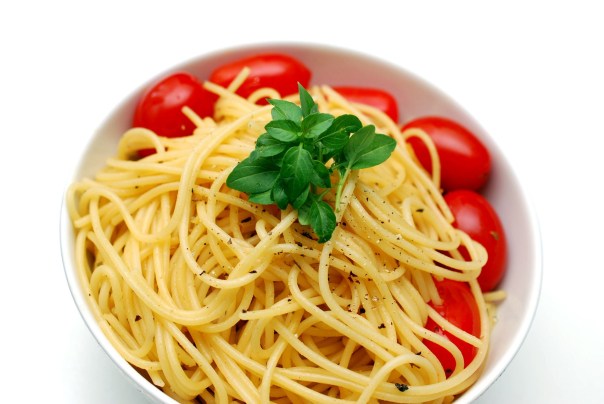
In the meantime, maybe I’ll have just a tiny bit of spaghetti tomorrow.

spaghetti-1112142

Rapping It Up

Day 30 of the Nano Poblano (a.k.a. NaBloPoMo — National Blog Posting Month) challenge is finally here! Thanks for reading, thanks for writing, and thanks to the “cheer peppers” who made it all happen and cheered us on by “liking” our posts. I read the posts of my fellow bloggers religiously and learned so much from all of you.

I’m proud of myself for sticking with it, even though some days were a little rough. Somehow, I managed to eke out 30 different pieces, including:

  • two posts made within 15 minutes of midnight
  • one post consisting of only one sentence
  • two posts that were nothing but questions
  • one that included a video of me singing and playing guitar
  • a poem made up of 14 shorter haiku poems
  • many other posts, some with a bit of history, some just plain silly
  • no cat photos, and only one post with pictures of what I had for lunch

Even though I thoroughly enjoyed NanoPoblano, I’m looking forward to a little down time in December. (Did I just say down time in December?) This year, for the first time since I was a kid, I couldn’t wait for December to get here. I mean, I literally couldn’t wait. As soon as I returned home from New York yesterday, I changed both of my wall calendars to December without realizing that I was two days early.

There’s one thing I meant to post this month and didn’t. It’s a little embarrassing, but here goes: I don’t know how to rap. I don’t know much about it and I think I might be terrible at it. I’d like to learn, though, so that maybe I can use it in my songwriting projects. But how do you learn to rap? The same way you can learn almost anything these days: YouTube! I watched a few videos and I learned that some rappers (I think it’s called freestyle?) compose on the spot by thinking ahead to the end of the phrase before mentally writing the first line. I decided to try it, so I looked around the room for inspiration. I was in the kitchen. On the table was a glass, some cheese and crackers on a plate, and a vase of flowers. I grabbed my pad and pencil, and here’s the result. I may not win a Grammy, but if I make you smile it’s all worth it.

I had no support, I had no backers,
all I had going were these tasty crackers

I needed a genie to grant me three wishes
instead of all these glasses and dirty dishes

I wanted to be strong, I wanted magic powers
or maybe just a bunch of beautiful flowers

I had me some treble, I had me some bass
but I needed something else, like a flower vase

I asked that genie, pretty pretty please
can you bring me some money, or maybe just some cheese?

And on that note, I’m rapping up this edition of loristory. Happy December!

Featured image photo by Anita Peeples

img_2134


Life Imitates Art Garfunkel

It’s Tuesday, 11:30 p.m., Day 28 of the November Nano Poblano blog challenge, and I have to get to sleep soon.

I’m flying out in the morning, early. My alarm is set for Wednesday morning, 3:00 a.m.

I’m reminded of two songs:

“But the dawn is breaking, it’s early morn, the taxi’s waiting, he’s blowing his horn” — John Denver, Leaving On A Jet Plane

“The morning is just a few hours away” — Simon and Garfunkel, Wednesday Morning, 3 A.M.

Aristotle thought that art imitates life, and Oscar Wilde once said that life imitates art … but it seems that my life imitates Art Garfunkel.

Gee, I hope so. I’d love to sing like that some day.

In Carnegie Hall.

While standing next to Paul Simon.

But I’d stay friends with him until we were old.

Old friends.

Now, if I were flying to Denver, that would be like life imitating Art Garfunkel imitating John Denver. I’d like to see that.

Country Roads, bring me home across the 59th Street Bridge Over Troubled Water, to Scarborough Fair.