Tag Archives: politics

Do You Like Ike?

In the midst of all the turmoil surrounding #45, I’m thinking today about a different man: #34. What would he have thought of the current state of American politics?

Dwight David Eisenhower was the U.S. President from 1953 – 1961. He defeated Adlai Stevenson in a landslide. (The electoral vote was 442 to 89.) His campaign slogan, “I Like Ike,” caught on because, by and large, it was true. Ike was a very likeable guy.

Did you know that he had six brothers, and that all seven of the boys were nicknamed “Ike”? For some reason, his was the only one that stuck. It’s a good thing his nickname wasn’t “Dwi.” “I Like DWI” may be true for some people, but it isn’t a very good campaign slogan.

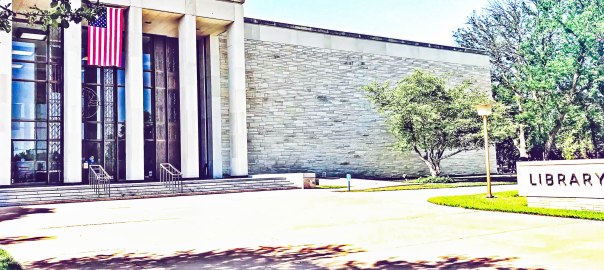
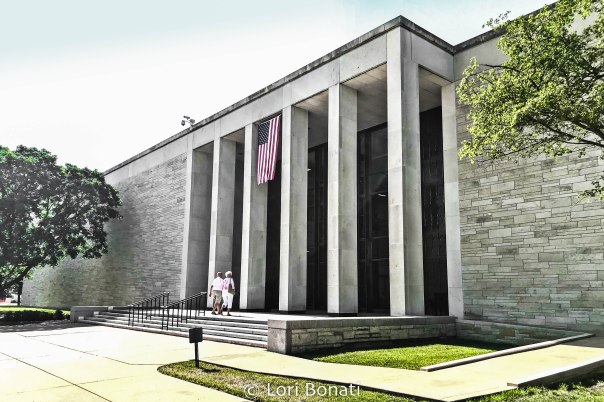
On our recent road trip from Arizona to New York, we stopped in Abilene, Kansas (Dwight’s hometown) after eight hours of driving. Just before entering the town, we passed a billboard advertising the Eisenhower Presidential Library.
DDE Library

Only a week or so before, our friends Kathy and Ray had mentioned that we should check out presidential libraries if we ever came across them in our travels. We decided to take their advice before leaving Abilene the next day.

But first, we had dinner at Joe Snuffy’s Old Fashioned Grill. If you’re ever in Abilene, Kansas, you really should grab a bite there. For a family diner, they have excellent wine! And food! And most of all — service! I can’t say enough about old Joe Snuffy’s. My favorite part was our teenaged server, who, like Frank Mills in the musical Hair, “resembles George Harrison of the Beatles.” He (our server) was very sweet, standing next to me while I took the first bite of my meal to make sure it was okay.

But back to Ike. At the Eisenhower Presidential Library, I learned a lot about #34’s life as a boy, man, and world leader. I even got to tour his childhood home, complete with all the original furnishings.

DDE Home 2

On the tour, I learned some surprising facts. The family was far from wealthy (they’d moved to Abilene with only $24 to their name). His mother was a former Mennonite who was opposed to war. His family valued education highly, but the only way Dwight could attend college was by going to a military school (West Point) where tuition was free.

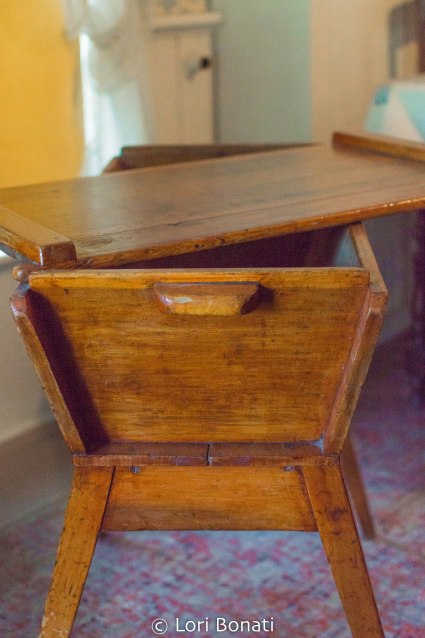
The boys were assigned rotating chores, all learning to cook and to sew. Here’s the “dough box” where the Eisenhowers placed their bread dough to rise.
DDE Home 1

Although I know his Presidency is probably not without controversy, here are some of the positive things Dwight D. Eisenhower (a self-proclaimed “progressive conservative” and a Republican) managed to accomplish while President:

  • continued and expanded New Deal social programs
  • helped end McCarthyism
  • signed the Civil Rights Act of 1957 (and sent Army troops to enforce school integration)
  • authorized the Interstate Highway System
  • promoted science education
  • emphatically expressed his concerns about what he called the “military-industrial complex.”

In spite of all his achievements, Eisenhower once said that “the proudest thing I can claim is being from Abilene.” You’ve got to like that, especially when humility is in such short supply at the White House these days.
Lines in the Sand

As promised yesterday, I’m posting more photos of the Sea of Cortez. I took them in 2006 while on vacation in Mexico. I thought this post would just be about the photos. But, as often happens when I start writing, I never know where I’ll end up. True to form, my voyage today to the Sea of Cortez has brought me to some unexpected territory.

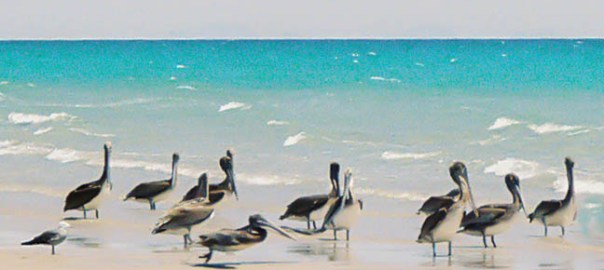
The featured image above shows 13 birds (12 pelicans and 1 independent-minded seagull). I thought that was rather fitting for the Day 13 Nano Poblano challenge. Here are some other photos that I took that day:

I’ve always found footprints in the sand intriguing. The bird tracks were made by a seagull (maybe the one in the photo above). The wave tracks make me think about how temporary everything is, like these word-tracks that I’m typing right now.

I was surprised to see a U.S. Capitol building on a beach in Mexico. I wouldn’t have expected that, given the tensions between the two countries. But the picture was taken in 2006, before talk of any border wall, right? Wrong. I just Googled “history of U.S. border wall” and found this article on worldstir.com that gives a timeline of U.S./Mexico border issues since 1845. Construction of a border wall was first mandated in 1993.

One thing that struck me about that timeline is that U.S. policies toward Mexico have always been calculated to serve our interests and ignore theirs. First we took their land through war, then we encouraged their people to immigrate here for their cheap labor, and then we deported them again when the Great Depression hit. We even require Native Americans whose tribe spans both countries to carry documentation with them when they travel within their own land, and we arrest and deport them when they fail to do so. I’m interested in this topic because, having worked in Tucson schools, I’ve known of many “dreamers” who feel like they’re out of options, or who live in fear that their parents will be deported while they’re at school.

After reading the timeline, I was curious to learn even more and found a Library of Congress post about the history of Mexican immigration. The article begins like this:

“The first Mexicans to become part of the United States never crossed any border. Instead, the border crossed them.”

A line in the sand, the imprint of war. Why can’t we all be like the pelicans and gulls, and just learn to get along?

Badge 2017


Lost and Found

“Lost and Found” is my first ever guest post! I wrote it for Day 9 of “Rage Against the Machine,” running through November at The Seeker’s Dungeon (hosted by Sreejit Poole). You can find my guest post (with song video) by clicking here.

Many thanks to Sreejit Poole for allowing me to participate in “Rage Against the Machine.” Be sure to visit him at The Seeker’s Dungeon.

This is also my Day 9 post for Nano Poblano. Check out their awesome blog posts here!

Badge 2017

Thought Bubbles

On January 22, 2017, I was standing at my kitchen sink doing dishes. It was Inauguration Day. I scraped, I scrubbed, I scoured (I don’t own a dishwasher), and for some reason I started thinking.

Maybe it was the inauguration that made me want to wash something. Or the news about Monsanto bidding on some farmland just west of here, so they could build a seed research facility. Or possibly, just the sight of all those suds in the sink had set my mind to wandering. It was as if my head were full of thought bubbles.

Just as one popped, another one would form. I was thinking about pesticides, and the election, and my children’s future. I felt a sudden urge to scream, but instead I quietly turned off the water, dried my hands, and walked down the hall to my office. Sitting at the keyboard then, I felt a faucet turn on in my consciousness, and my thoughts dripped out through my hands and onto the screen.

Here’s what I wrote that day, word for word:

———-

“So here is what I was thinking while I washed dishes:

I was thinking that some of the world’s biggest problems can best be solved if we do just one thing: simplify.

Break them down into their bare bones.

Start thinking like a child.

Now I know very little about Monsanto, and the science, which makes me feel like I’m not qualified to write to the newspaper expressing my opinion about Monsanto. I’m sure I would get shot down or receive hate mail due to my ignorance. But then I realized that I actually know quite a bit. Here is what I do know about Monsanto:

Aren’t they the company that produces Roundup?

Isn’t Roundup responsible for the decline in the bee population?

Isn’t the decline in the bee population something that threatens our crops and all manner of life on this planet, eventually?

Isn’t Monsanto turning a blind eye to that despite scientific evidence?

Isn’t Monsanto also responsible for creating special seeds, genetically modified, which they are forcing farmers to grow, and isn’t Monsanto prohibiting farmers from growing their own seeds?

Isn’t all of this crazy?

Then I realized that, even though I don’t have too many scientific facts in there, I do have an even more valuable commodity … common sense. Well, maybe just as valuable. And science is, in fact, predicated on common sense, logic if you will.

I was thinking much as an innocent child would, who is often times even closer to the truth of the matter than we realize.

Then I started thinking about politics. Uh-oh. Don’t get me started. It’s inauguration day, after all. But now I am started. And I just can’t stop.

I just can’t stop thinking about how a child would see this whole Donald trump thing. A child would probably say, why would we want to put a bully in charge of anything?

And isn’t it bad to grab, and point, and make fun of people?

And why does he call someone “my African American” … he doesn’t own him.

And why is Donald trump so rich, and all of his friends so rich, and why are only the rich people in charge? And isn’t it better to share?

And why do people want to hurt each other?

Why do they argue so much?

Isn’t it better to get along, to be nice and kind and friendly?

Why do people vote for someone who says he grabbed someone? Or that he could shoot someone and that people would still like him? None of this makes any sense at all.

And why do people think that war solves problems? We have been having wars since forever and they haven’t stopped yet. Maybe adults should try something new instead of repeating the same things over and over again.”

———-

So there you have it – recycled thought bubbles from a little over nine months ago. Unlike regular bubbles, thought bubbles can be saved in special places, like notebooks and hard drives. I take them out sometimes and I shake them like snow globes just to see what happens. Sometimes the scenes come to life, rearranging themselves in newer, smarter, or more interesting ways. Other times, it just snows.

Either way, it’s a much better way to spend my time than doing dishes. And who knows, maybe January 2018 will turn out better. I might have a dishwasher, at least.


Badge 2017


American Dreamer

Early this morning — around 3 a.m. in fact — I started my new job as a tax preparer. I went out into the busy waiting room and asked, “Who’s next?” A tall man in the front row eagerly raised his hand. It was Ronald Reagan.

I tried not to let my disappointment show on my face while racking my brain for a way out. I could pretend I hadn’t seen him. I could announce that we were closing for lunch. Or I could just quit. But in the end, I knew that I had no choice. I gave him a nod and we walked back to the cubicles.

I asked him if he’d like a more private office, and I was overcome with pangs of guilt for doing so. Why was I giving him royal treatment? I should just treat him like everyone else, I told myself. But it was too late. My co-workers had gotten wind of our special client, and they were hustling to vacate the director’s office so that we could use it. We entered the cushy room with its mahogany desk and velvet chairs, and sat down across from each other.

Suddenly, Reagan pulled out a ragged old newspaper with a shocking headline and risqué photograph of a woman. He thought it was hilarious. I told him that he was being inappropriate. Then I mustered up the courage to say that I really didn’t think I should be doing his taxes, because it was my first day on the job, and I’d never prepared anyone’s taxes before. “And besides,” I said, pausing for effect and looking him straight in the eye, “I’m not at all a Trump supporter!”

Reagan wasn’t fazed at all. He still wanted me to do his taxes, but first, we had to do his laundry. So down into the basement we went. I don’t even remember how we got there, but suddenly we were standing in front of an old washer and dryer in a dark, musty basement, filling up the tub with his dirty clothes. I turned on the machine and almost immediately flooded the basement. Realizing that we were standing in six inches of water, we abandoned our project and rushed toward the stairs. Once safe on the first floor, I pulled out my cell phone, called my mother, and asked her to help.

And then I woke up.

It’s only a dream, I thought with relief. And whatever you do, I told myself, do NOT close your eyes and go back to sleep!

Once fully awake, I tried to analyze the symbols in my dream. New Job. Taxes. Dirty Laundry. Flood. Ronald Reagan. What was my dream trying to tell me?

My first attempt at dream analysis resulted in the following possibilities:

  • New Job = I just started a new “career” (retirement).
  • Taxes = Identification with my father (who worked for the IRS).
  • Dirty Laundry = Scandals in the presidency.
  • Flood = Trickle-down economics.
  • Ronald Reagan = See Flood.

All of that made sense. But then it hit me. Last night, just before bed, I’d been practicing my guitar for the first time in a while. One of the songs I played was “American Dreamer,” something I wrote in 2009, right after the American housing bubble burst. (You can listen to it here.) The song tells the tale of someone who got in over his head because he believed what the banks and the real estate developers were telling him. He’d purchased a home with a balloon mortgage and then had lost his job and his home. People were blaming him for being greedy, but he says his mistake was following someone else’s dream.

So on a deeper level, my dream might symbolize what happens when you’ve gone along with the crowd and then are faced with a dilemma. Do you continue to follow the rules, despite your beliefs, or do you stand up to authority? Because if you don’t, you may find yourself in hot water. With Ronald Reagan.

I once dreamed that Bill Clinton kissed me on the cheek. Luckily, I did not have sexual relations with that man. I haven’t had any Obama dreams yet, although that would be nice. I wouldn’t even try to wake up!