Tag Archives: Travel

November in New York

After my recent trip to Spain, which you can read about here and here, you’d think I would have stayed home for a while. But no sooner had I unpacked my bag than I’d packed it again. I was headed to New York City, and I was traveling by train.

For the seven-hour trip from Rochester to New York, I reserved a “roomette” — not a sleeper, exactly, but a step up from coach. It was a small compartment that included two reclining seats, a sink, a toilet, and a curtain for privacy. The seats folded flat for napping, and the café car was right next door.

If you’re going to travel by Amtrak like I did, I highly recommend the roomette, although I have to admit it was weird having only a fabric curtain (with Velcro closures) between your toilet and the narrow aisle through which passengers could meander at will. What if they decided to meander past my roomette at a most inconvenient moment, I wondered, hoping it wouldn’t come to that.
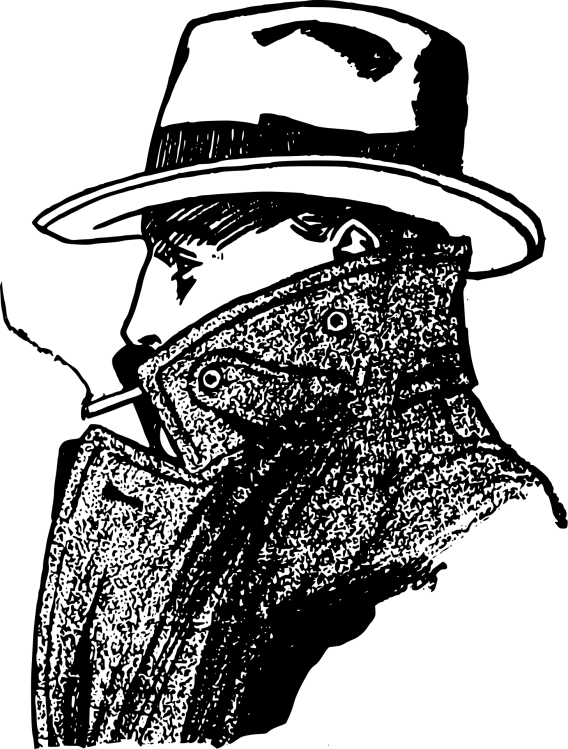
Being in my own private train compartment made me feel like I was in a movie! I was hoping to witness some exciting locomotive drama — the kind they always include in train films like Stranger on a Train, Murder on the Orient Express, or The Before Trilogy. I wanted something to write home about. Perhaps a debonair spy or scraggly train robber would suddenly pounce into my roomette, with an FBI agent or western lawman in hot pursuit. (But not, I hoped, at one of my “most inconvenient moments.”)

Unfortunately, the only drama I encountered was when the café car attendant snapped at me.

“I’d like a small coffee and … um …” I began.

“Don’t order until you know everything you want!” he barked.

That backed me up in a hurry. But not for long; there weren’t too many snacks to choose from.

“I’ll-have-a-small-coffee-and-a-bag-of-chips,” I spat out as fast as I could, hoping I’d been specific enough about the chips. He smiled and I breathed a sigh of relief.

Back in my roomette, I leaned back in my reclining chair, propped my feet up on the opposite seat (I hoped the crabby attendant wasn’t also the Seat Police), opened my chips bag, and watched the scenery fly by. The ride was smooth and the situation was quite enjoyable, despite the lack of drama. Before I knew it, my train pulled in at Penn Station and my ride was over.

I’m supremely proud of what happened next: Not only did I find my way to the correct station exit, but when I reached 7th Avenue, I actually turned in the right direction, the one going downtown toward my hotel! Was I becoming a savvy New Yorker, or was it just dumb luck? Don’t answer that.
After swiftly walking the eight blocks to my hotel (with rolling luggage in tow), checking in, racing to my room, stashing my suitcase, and hailing a cab, I managed to make it to that evening’s destination (a play on the Lower East Side) five minutes before curtain time. Another proud moment! Finally, I was about to get my desired dose of drama.

The play (Sacred Monsters) was directed by my cousin Gina Bonati, who met me in the lobby and sat with me through the performance, causing me to feel (almost) famous. After Gina had shmoozed a bit with the actors, the two of us walked to a nearby bar she knew, where the owner served us each a drink and a plate of fantastic appetizers (hummus, dolmas, falafel, tahini, etc.). This was the interesting city I loved to visit, a treat for all the senses, and it sure didn’t disappoint.

During the rest of my few days there, I managed to squeeze in a Broadway play (Little Bear Ridge Road), a visit to the Metropolitan Museum of Art, a trip to Brooklyn, a walk through Central Park, and a meeting with someone essential to a children’s book I’m working on.

And did I mention the incredible pizza, just two blocks from my hotel?

Getting around New York City seemed easier than ever this time around (thanks to GPS, I have to admit). I’m looking forward more than ever to my next trip there, which will be in January for a writing conference and another meeting about my recent book project. Stay tuned!

Photos of this NYC adventure, as always, can be seen on my Photos page. And if you’re interested in train travel, I’ve written about some of my previous train adventures in a series called “Train Tracker.” You can read the first of several episodes here.

Thanks so much for reading my posts, which began here in 2016. Here’s wishing everyone only GOOD drama in 2026! Happy New Year!
Schooled in Spain (Part 2)

In my previous post, Schooled in Spain (Part 1), I wrote about the beginning of my 8-day trip to southern Spain. That post covered the minor trials and tribulations on day 1, the recovery on day 2, and the market, winery, and tour of Cómpeta on day 3.

Part 2 continues with days 4 through 8, and I’ve added many more photos of Spain to my Photos page.

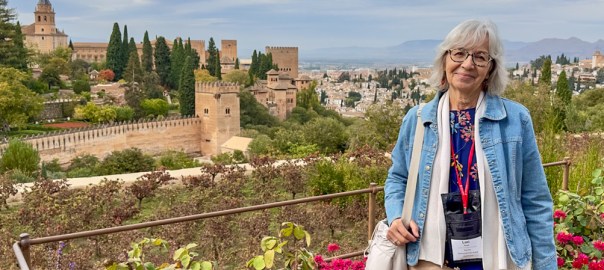
Day 4: Granada and the Alhambra: Thanks to the advance reading list from Road Scholar, I’d read about the Alhambra, but nothing could have adequately prepared me for touring the “Eighth Wonder of the World.” Although we had a tour guide, his words just swirled around me like a fog while I tried to take everything in. There were imposing walls with minimal windows (to ensure privacy), diagonal entryways (again, for privacy), courtyards within buildings, carvings mimicking stalactites, gardens, a reflecting pool, and thousands, perhaps millions, of intricate patterns, texts, and other inscriptions that, in keeping with Islamic requirements, never depicted the human form. I stood in the very room where Christopher Columbus received verbal approval from Queen Isabella to forge ahead with his plan to sail to India (and we all know how that turned out).

I found Granada to be a fascinating city of contrasts, with its ornate ancient architecture alongside fashionable storefronts and glittery Christmas decorations. While there, we visited a huge market, the Cathedral of Granada, and the Royal Chapel (where Queen Isabella and King Ferdinand rest … perhaps not in peace ). I got to see the queen’s robe, crown, scepter, and mirror (!) as well as the king’s sword. Side note: Besides funding Columbus in 1492, the king and queen horribly banished all Jews from Spain that same year and forced Spanish Muslims to convert to Catholicism).

Day 5: Flamenco and Frigiliana: In the morning, we enjoyed a Flamenco demonstration, where I learned that the foot-stomping of the genre is an imitation of the sound of tools striking hot metal in forges where many Romani worked in the past. (It’s considered more correct nowadays to say “Romani” instead of “gypsy,” although our guide and even the Flamenco dancers themselves used the word “gypsy” repeatedly.) Fun fact I learned on this trip: The Romani people originally came from India.

After Flamenco, we had a free afternoon. My choice was to explore a picturesque little village nearby called Frigiliana, only 5 minutes away by taxi. Three of my new friends on the tour joined me, and we had quite an adventure, especially when it came time to return home and we had no idea how to call a cab for the return trip. We’d assumed we’d just call the driver who’d brought us there, until we discovered that Nerja cabs only make the trip one way (from Nerja to Frigiliana, but not the other way around). Luckily, I’d seen a tourist info office a few blocks away, and with their help we managed to make it back to our hotel. It wouldn’t have been so bad being stranded in Frigiliana, though, since the place was absolutely crawling with tapas bars! (It was quite touristy.)

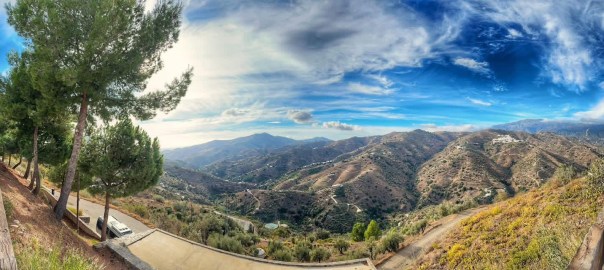
Day 6: I’ve been quite wordy so far in this post, so I’ll cut right to the chase. We visited an olive oil factory, tasted several different olive oils, and were served a delicious lunch in a local home. I even got to practice my Spanish with our host. The scenery there and back was breathtaking, too. I’ve never seen so many olive trees in my life!

Day 7: Again, I’ll be brief. Málaga was interesting and beautiful, and the Picasso Museum was outstanding. Every single piece in the museum is from Picasso’s own personal collection in his home!

Day 8: On this day, I rose early (4:30 am) and shared a cab to the Málaga airport with someone who, like my daughter, loves Brandi Carlile. Over coffee and pastries, we had a long and enjoyable conversation about music while waiting for our gates to open. Then I managed to find my way through both the Málaga and Madrid airports by following signs, arrows, and the sometimes LOUD, even YELLING voices of people directing travelers here and there, mostly in Spanish. I guess they figured if they yelled loudly enough, they’d be understood by everyone. Luckily, I knew enough Spanish to get in the right lines and into my airplane seat on time.

I’m really glad I had the chance to visit southern Spain and to learn about its history and blend of cultures. Thanks for coming on this journey with me, and don’t forget to check out my Photos!

Schooled in Spain (Part 1)

I recently took an 8-day Road Scholar trip to Andalucía, a small slice of Spain on the Mediterranean coast. The area can be quite touristy, but in November, not so much. The trip was stimulating and relaxing … and educational, too.

For a glimpse of my activities during the trip, see my Photos page (with captions). I’ve included photos from days 1-3 today. My next post will include more.

For now, let me just say that what I saw of Spain was a feast for all the senses. From my first sight of Nerja, the beach town where I stayed, to the crowded food markets, to the whitewashed villages, tasty tapas, fiery flamenco dancers, historic buildings, and sublime sunsets, the trip was a delight–not to mention my wonderful tour guides and travel-mates,  none of whom I knew in advance.

Here’s my itinerary and highlights for the first 3 days (the other days will follow in Part 2, still to be written):

Days 1 and 2: Travel from home (Rochester, NY) to Nerja, Spain. Connecting flights: Charlotte, NC, Madrid, and Málaga, followed by an airport taxi from Málaga to Nerja. Total travel time: about 15 hours. Complications:

(1) How many people do you know who’ve checked their baggage and immediately realized they had to get it back? Well, now you know one, because, after checking my suitcase, I realized I’d left a spare camera battery in it! I immediately told someone at the desk, who called the baggage department. As I rushed to the baggage claim area to retrieve my battery, the woman smiled and commented, “A woman on a mission!” I had been slightly panicked thinking I might miss my flight because of this dumb mistake on my part, but her smile reassured me. As it turned out, retrieving the battery only took 10 minutes (possibly due to the fact that my new suitcase was easy to identify by its lovely spring green color); When I returned to my gate, I still had 30 minutes left before boarding time.

(2) We landed a full hour early in Madrid, and since Customs didn’t open until 5 am, we had to wait on the plane for almost an hour before disembarking.

(3) It then took another full hour to make my way to the next gate! It wasn’t real obvious how to get there. When I asked for directions (in Spanish) from the person at the information desk, his information wasn’t very informative: he just sort of pointed down a set of stairs. I took the stairs which ended at a train station with trains going only one way. Signs in Spanish and English were confusing. They seemed to say the trains went to several terminals, none of which were mine. However, I boarded the next train that came along, because everyone else was getting on it. Turns out it took me to the correct terminal and close to my departure gate. Whew!

After landing in Málaga, the rest was smooth sailing. My transport taxi was waiting for me with my name on a sign, just like in the movies. I felt sort of famous. (Not really. But I would have felt famous if I actually was famous for something!) One hour later, I arrived at my hotel with a serious case of jet lag. It was 10 am in Nerja, but 4 am back home, and I’d only slept an hour on the plane.

My hotel room wasn’t going to be ready until 12 noon. What was I going to do with myself for the next 2 hours? What would you do? Probably what I did …

I headed out to the pool area and ordered a bowl of olives and a Margarita. Then I settled myself down in a deck chair, sat back, and gazed out at the blue, blue Mediterranean Sea.

“It’s strong,” the bartender had warned me when she handed over my drink. After my long journey and lack of sleep, I must have looked like someone who couldn’t handle their alcohol.

And boy, was she right. It was super-strong, but I was careful to only take small sips. After drinking half of it, I chucked the other half and made my way to the lobby, where I fell into a stupor (not a drunken one! how dare you think that!). Actually, I fell asleep sitting up. Finally, at noon, my room was ready, and after freshening up, I ventured down to the buffet and then took a 2-hour nap. Feeling somewhat refreshed, I made it to my tour group orientation at 6 pm and met my wonderful tour guide and fellow travelers.

Day 3:

After an introductory lecture on the history of Andalucía (which included its Muslim, Christian, Jewish, and Romani influences), we visited a weekly market in Nerja, followed by a motorcoach trip to a winery nestled in the mountains, a tour of the winery, a gourmet lunch and wine tasting, and a walk through the cobblestone streets of Cómpeta.

And now, it’s time for me to edit more photos. See you next time for a summary of Days 4 and beyond!

Sketches of Spain, and Sweetness

This post is about a part of Spain I’d never heard of … and it’s about my grandsons, too.

Yesterday, while listening to a local radio program about world reggae music, I was surprised to hear a reggae song described as Spanish, Celtic, and Galician. I’d never heard the terms “Spanish” and “Celtic” together in the same sentence. To me, Celtic meant Irish, Welsh, and Scottish. I couldn’t imagine a Spanish reggae song with a Celtic flair.

What’s more, I didn’t have the slightest idea what “Galician” meant. Curious, I Googled it and found a reference to a Galicia in eastern Europe. I thought I’d misheard the radio host and thought nothing more about it.

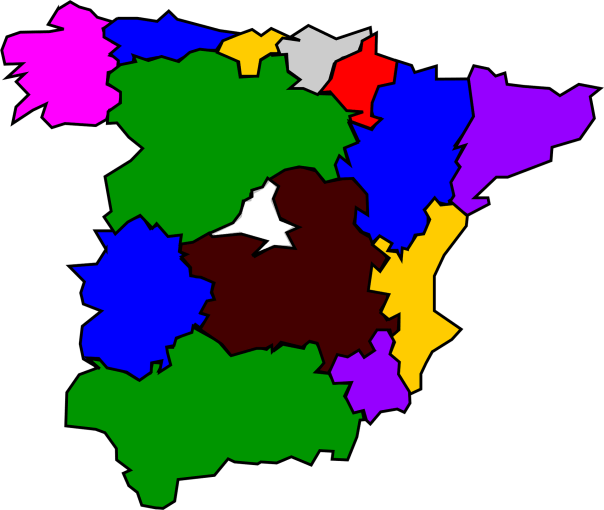
But then, later that evening, while reading a book about Spain (because I’m planning a trip there soon), I stumbled upon a map showing another Galicia – this one a region in the northwestern portion of the country … and the book said that Galicia’s language has Celtic roots.

Galicia is the bright pink region on this map, in the northwest corner of Spain.

Wow! I’d just learned something new about music, language, AND geography. I like learning new things. But today, in the car, when I asked my 10-year-old grandson Porter (who loves maps and history) if he’d ever heard of Galicia, the one in Spain, I learned even more.

Yes, he knew exactly where it was. He even expressed the opinion that the map of Spain would look much better if Galicia were part of Portugal!

He also already knew about Galicia’s Celtic ties, and when I wondered aloud how many languages were spoken in Spain, he mentioned not just Spanish, but Basque and Catalan, too.

After I told him I’d be visiting southern Spain soon, he said he thought there’d be a lot of history there because it was probably the oldest part of Spain. This led to a lively tutorial (by that I mean he tutored me) about Spain’s history, including key points like Charlemagne’s invasion and several Spanish conquests (Mexico, southwestern US, the Philippines, Cuba, and Equatorial Guinea). That’s right. My grandson knows something about the history of Equatorial Guinea, a small country in Africa.

Did I mention that he’s only 10 years old?

Meanwhile, his 6-year-old brother Elliot was quietly absorbing every word, and during a break in the conversation, he sweetly offered his own opinion:

“Grandma, when you come back from Spain, maybe you can tell us all about it … and if you get us anything while you’re there, you can give it to us then.”

Up until today, my main goals in traveling to Spain had been (1) brushing up on my Spanish conversational skills, (2) taking lots of awesome photos, and (3) steeping myself in Andalusian culture. But now, I have a much more important goal: finding a couple of really cool souvenirs for my grandsons.

When Will I Sleep?

I think there must be something in the air. Maybe it’s autumn. Or aliens. Or the fact that I haven’t had to mow my lawn in three weeks. Whatever it is, it’s causing me to throw myself into certain indoor projects with a vengeance. And while that means I’m getting things done, and enjoying all this work, it also means I’m staying up late and not getting enough sleep.

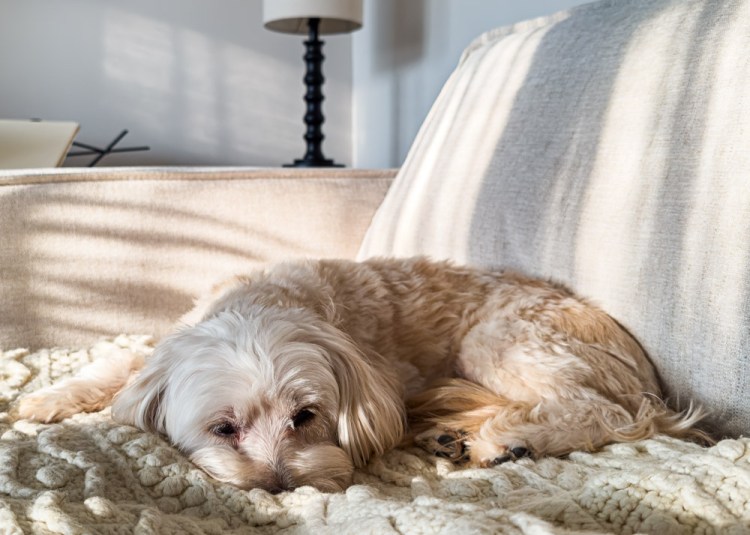
Maya has no trouble sleeping.

In the coming weeks, I’ll be blogging about what’s been keeping me so busy (for example, reading, writing, cooking, and packing for a trip to California where I’ll attend a writing workshop), but today I’m excited to tell you about my newest music project, the YouTube song video IF TIME CAN BEND.

If Time Can Bend began its life as a poem several years ago. It’s about astrophysics, and therefore it touches on relativity, planets, time travel, and string theory. Do I sound like I know what I’m talking about? If so, my effort to pull the wool over your eyes has been a complete success!

Seriously, though, I know just enough about these topics to be dangerous, so I recklessly decided to turn my pseudoscientific poem into a song. Then, even more recklessly, I boldly asked keyboardist Chuck Phillips to help me record it, and the rest is history. Or is it? Maybe it hasn’t been recorded yet? Aha! Now you’re starting to see what the song is about.

Here’s how I describe it on YouTube:

“This lush song based on Lori’s original poem about time will have your head spinning and your heart swooning. Physics never sounded so good! Original music & lyrics by Lori Bonati, with Lori on vocals & midi instruments, and Chuck Phillips on piano and bass.”

I’m not going to apologize for tooting my own horn in that description. First of all, there are absolutely NO HORNS in this song. And also, I’m kind of proud of it, to tell you the truth!

Okay, enough talking. Maybe you should just go check it out here: IF TIME CAN BEND. A big thank you to those of you who do.

By the way, you can like and comment on the video directly on YouTube, or you can just leave a comment below.

So, that’s one song video down, a few more to go, and then I might just sit back and relax for a while. Or not! I’ve got all those books to finish writing … oh well, as Governor Tim Walz says, “We’ll sleep when we’re dead!”

Lucky to Live in the ROC (Part 4)

Welcome back for another installment of “Lucky to Live in the ROC,” the ongoing series in which I write about upstate New York attractions in and around Rochester. In the last episode, I promised you an epic road trip in search of the perfect pizza, and some unexpected artwork, so here goes:

The Pizza

On a recent road trip through upstate New York, I stopped in Geneseo, a quaint college town thirty miles south of Rochester, and discovered “Mama Mia’s Pizza.” The pizza was so amazing – thin and crispy, with great-tasting sauce – that I returned a few weeks later with a friend for another slice. This time, I didn’t just get great pizza, I got a great cup of coffee, too.

When I ordered my coffee, the woman behind the counter said they’d make a fresh pot. “Okay,” I replied, wondering if I was causing them too much trouble as I began to eat my pizza at a table outside. Pretty soon, a young man came out. “I’m going to make you a cup of Costa Rican coffee.” “That’s fine,” I said.” About ten minutes later, I’d finished my pizza and was wondering if I’d ever get my coffee. Suddenly, the coffee man came out with a steaming cup.

“I ran home and got some beans,” he explained. “I bought them at the Rochester Public Market, they’re great.” And he’d come back to the shop and ground them just for me. Wow. It was the BEST cup of coffee I’ve had in a long time.

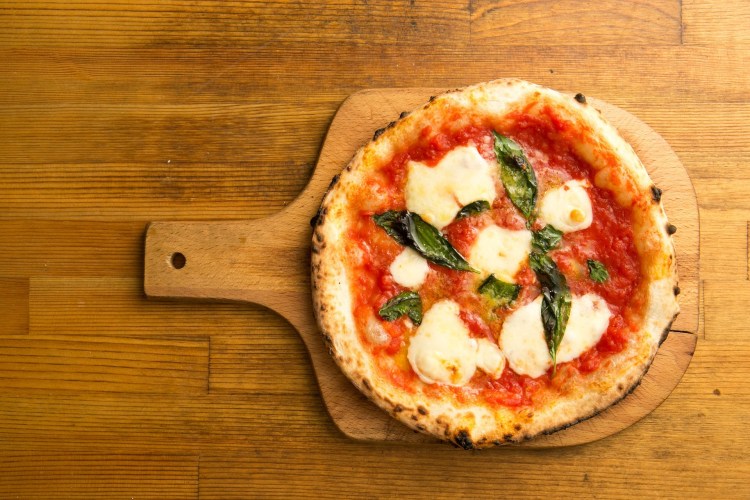
I didn’t take a picture of my pizza because it disappeared too quickly, but it looked something like this:

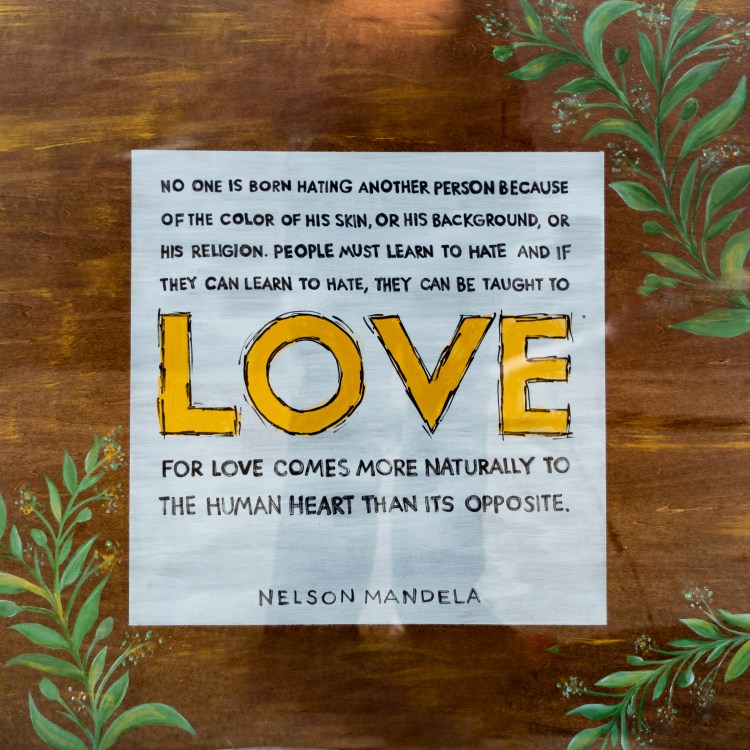
And here’s a sign I saw in a Geneseo shop window.

The Unexpected Artwork

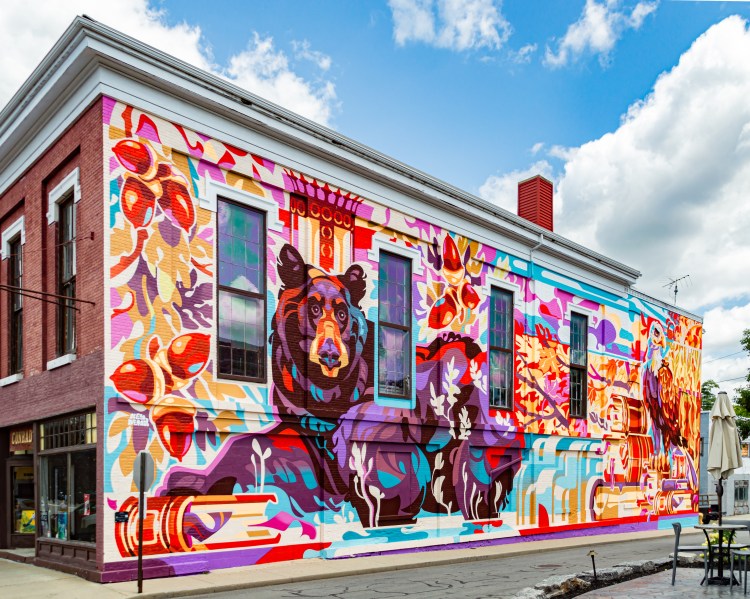
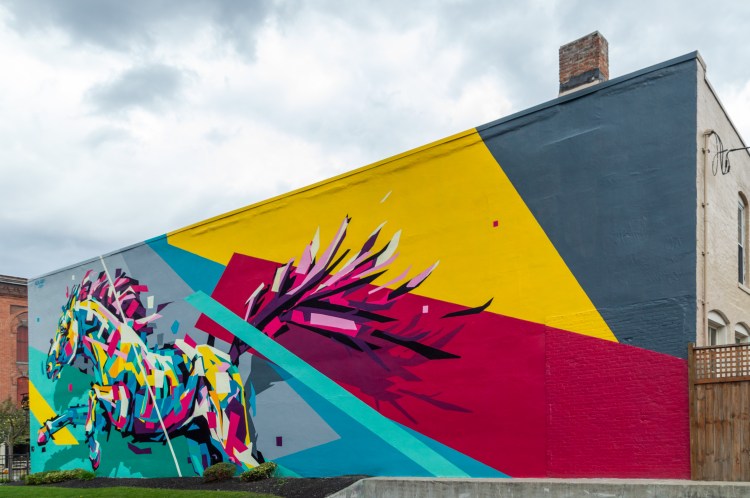
In 1914, Robert Frost wrote “Mending Wall,” a poem about a wall that divided his orchard from his neighbor’s forest. “Something there is that doesn’t love a wall,” he wrote. But in Livingston County, New York, the residents love their walls so much that, last July, they commissioned some artists to paint murals on them, and then they held the Livingston County Mural Festival to show them off.

The colorful walls are actually the sides of buildings, one for each of the nine villages in Livingston County. I hadn’t heard about the murals, but on our way home from Mama Mia’s Pizza, my friend pointed out of his window.

“Cool,” he said. “I’d like to photograph that.” We parked on Main Street and gaped at the mural for a while.

Soon, a woman approached us. I thought she might have been the mural’s artist, eager to talk about her work. But she was just a helpful citizen who wanted to tell us all about the festival.

Like the friendly coffee man, she momentarily ran off and returned bearing a gift: a small booklet detailing everything you ever wanted to know about the festival, including maps and the painters’ names. That day, we made it our mission to visit each and every one of the Murals of Livingston County.

I know that sounds like “The Bridges of Madison County,” but please do NOT mistake this essay for that book. If you’ve ever been forced to read “The Bridges of Madison County,” or if, like me, you were just curious to see how bad it was, I’m sorry to bring it up.

But hey, who am I to judge? I just binge-watched eleven episodes of “Virgin River,” where almost every scene ends with a warm embrace and this stunning dialogue:

“I love you.” “I love you, too.”

I can’t wait for Season Five! And no, I’m not being sarcastic!

But I digress. Here are two more murals of Livingston County. I’ve actually been to four others to date (Avon, Caledonia, Leicester, and Lima), but I lost the photos! It’s the first time a memory chip has failed on me (besides the one in my brain, that is). It’s disheartening, but I can always go back and take more photos. I think the murals will be there for a while.

Next time, I’ll post recent photos of Mother Nature’s artwork: the colorful autumn leaves I’m seeing everywhere. Stay tuned!

Be sure to follow my blog so you don’t miss a thing! Just click below, and then look for the small blue button that says “Follow loristory.” Thanks!

Featured image by Wilfried Pohnke @ Pixabay.com.

Two Bridges and More

Inspired by a recent post by my friend Mary (“A Bridge Too … High!”), I’ve decided to post something about bridges, too.

While Mary’s article is about a bridge in Ireland; mine is about two bridges in Italy.

And, while hers is witty and thoroughly entertaining, mine is more along the lines of “here are some photos of bridges, and here is all I can think of to say about them at the moment.” Oh well. One can’t always be witty and entertaining!

I hope you enjoy the photos, and that you’ll check out Mary’s blog as well.

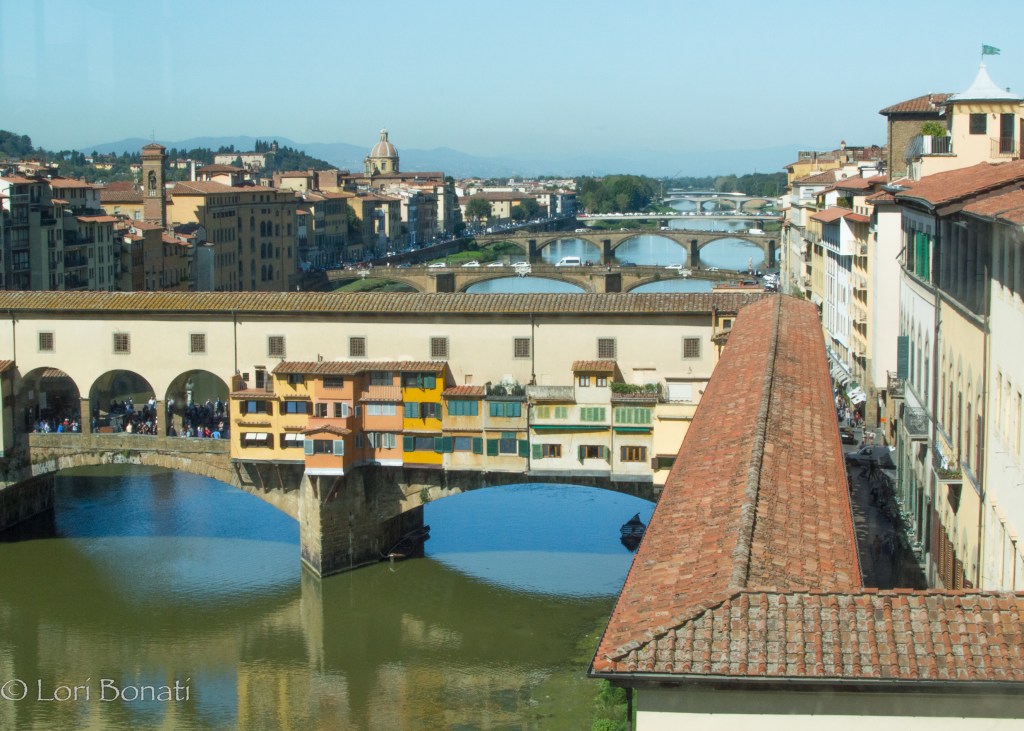
Ponte Vecchio, Florence, Italy, 2017:

Ponte Vecchio (“Old Bridge”) is aptly named; it’s over 1,000 years old! (The first written record of it is from the year 996.) These days, it’s lined with shops, and tons of tourists. I just noticed that there are at least six bridges in this photo!

Gazing at this picture brings me back to the moment when I captured it. I’d just toured the nearby Uffizi Gallery. In fact, I was standing inside the gallery when I took the photo, looking down at the Arno River. It was my first trip to Italy (first time in Europe, too). I’d flown there from Tucson, Arizona with a small travel group (only eight of us). Together, in just one week, we visited several interesting and beautiful sites around Tuscany, including Florence, Pisa, San Gimignano, Lucca, and Siena.

On my last day of the trip, I took a 20-minute bus ride from the outskirts of Florence, where we were staying, into the city, all by myself, just so I could absorb some of the local culture and language on my own time. It was an amazing experience. I could barely speak a full sentence in Italian, yet the people on the bus (who barely spoke English) helped me out when I wasn’t sure which was my stop.

My day of solo museum-hopping (which included a delicious three-course lunch – meat, pasta, tiramisu, and of course vino) went by much too quickly. At about 5 p.m., after standing at the wrong bus stop for ten minutes, I discovered my error just in time to catch the last bus back to the hotel. I wasn’t the least bit nervous. It was a friendly, warm, and welcoming place, and gorgeous, too.

Ponte Sisto, Rome, Italy, 2019:

Two years after my first trip to Italy, I had the chance to go again with the same tour group. This time there were only four of us, and we were going to study Italian in Sicily for a week! After the week was up, rather than flying home directly from Sicily, two of us opted to spend two extra days in Rome. I mean, how could I possibly skip seeing Rome when I had the chance? (I LOVED Rome and hope to return some day.)

Ponte Sisto (the bridge pictured above) has a long history. From what I can gather from my online search, there was a bridge on this site in the 4th century known as Pons Aurelius. It was partially destroyed in 772 when Rome was attacked and taken over by a Lombard king, Desiderius. In 1473, Pope Sixtus IV commissioned the rebuilding of the bridge. It is now only for pedestrians and spans the Tiber River in Rome’s historic district. I didn’t realize it when I took this photo, but that’s the dome of St. Peter’s Basilica (in Vatican City) in the background!

* * * * * * * *

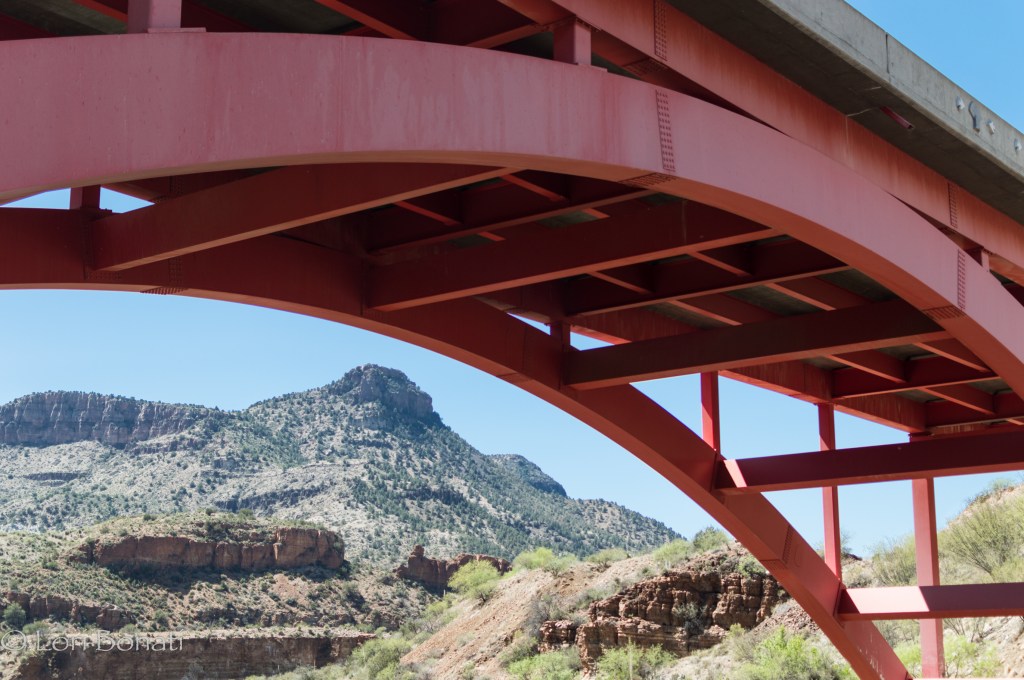
This isn’t the first time I’ve written about bridges. My post, “Bridges in Literature,” will bring you up to speed on the many appearances of bridges (or lack thereof?) in books, songs, and movies. Here’s a sneak peek at the photo I used in that article. It’s a bridge somewhere in southern Arizona:

* * * * * * * *

One last thought: The “featured image” at the top of this post is a blue and yellow banner in honor of Ukraine. These days, I’ve been thinking a lot about the bridges there, and about how so many thousands of innocent victims of the Russian invasion are trying to cross them to safety.

This post is dedicated to the brave people of Ukraine.

* * * * * * * *

If you haven’t already done so, please check out my brand new book, “Wordle Poems: A Poem a Day for Wordle Nerds,” on Amazon. It contains 30 original poems inspired by the daily act of Wordling. No spoilers! Reviews are greatly appreciated!

For more of my writing, visit my author page over at Bardsy, as well as my book, “Standing in the Surf,” on Amazon. It’s a photo journal about the Pacific Northwest area known as the Salish Sea, which includes Whidbey Island, Vancouver Island, Stanley Park, Butchart Gardens, and more.

(I’ve Got a) New Latitude

… or at least I’ll have one come spring, if all goes well with my move from Tucson, Arizona to Rochester, New York.

And, à la Patti LaBelle, I’ve got a new attitude as well. (Be sure to click the link and hear Patti belt it out on New Attitude, written in 1984 for the film Beverly Hills Cop.)

What’s more, just like The Jeffersons (an American tv series from 1975-85), I’m movin’ on up … from the 32nd to the 43rd parallel, to be precise. (The link will take you to Ja’net DuBois and a 35-member gospel choir singing the show’s theme song.)

Yes, I’m moving 2,000 miles in the midst of a global pandemic. Hopefully, I’ll have my vaccine by the time I leave, and so will most of the rest of the world. Fingers crossed.

To keep you informed about my journey’s progress, I’ll be blogging about it, just as I did a year and a half ago when I took a three-day train trip in the opposite direction (and lived to tell the tale) in my blog series, “TRAIN TRACKER.” I’m calling this new series, “NEW LATITUDE.”

And now, for Episode 1, which I envision being narrated by Meryl Streep:

When the pandemic hit, I was one of the lucky ones. I was able to work from home, and then I retired, which I’d been planning on doing anyway. I started Zooming with friends. My classes and clubs continued on the web. I ordered groceries online and I did curbside pickup. I made masks, baked, practiced guitar, and polished my book manuscript. Hell, the grocery store even delivered wine. What more could I ask for? Well, I’ll tell you what more I could ask for: the opportunity to see my family, in person.

You see, as Paul Simon sings in The Boxer, I’d “left my home and my family” 17 years earlier for a better job and a warmer climate. And by family, I mean two grown daughters, my mother, four siblings, and my entire extended family. And then, 5 years ago, a grandson came along, and then another. Can you blame me for wanting to move back?

Porter
Elliot

For every year I’ve lived in Tucson, I’ve wondered if I made the right decision in moving out here. Don’t misunderstand: I love Tucson. It’s dry, sunny, friendly, has great food, hiking, and bicycling, beautiful desert scenery, great sunsets – I could go on and on. But living 2,000 miles from family meant flying back and forth at least once a year to keep in touch. I’d done that without too much concern for 17 years, but for the last 3 of those years, I’d been seriously considering moving back. I have lovely friends here in Arizona, but I was beginning to feel my family slipping away. (If you follow me, you may recall reading about this dilemma in my post, “Was I Loco to Relocate?“)

Luckily, I’ve had my dog, Maya, to comfort me during the pandemic while I thought this through. You remember Maya, don’t you, from “Pandemic Paws” and “Battle of Wits“? If you do, you can rest assured that she’s doing much better these days — no longer the stressed-out anxiety-ridden dog I’d adopted in June. But if anyone needed therapy, it was me.

Months of living through the pandemic forced me to face facts. It was now or never. I wasn’t getting any younger, and if I didn’t make a move soon, I might never get the chance again. So, one day, I logged onto the real estate site, Zillow, and started surfing. I later learned that I wasn’t the only one doing that. The New York Times recently reported that Zillow-surfing has become something of a national pastime.

Surfing in the morning, surfing in the evening, surfing at suppertime. Would my search for a new home on Zillow end in success?

Would I ever find happiness?

Find out the answer to that and other burning questions in the next exciting episode of NEW LATITUDE!

Dona Nobis Pacem

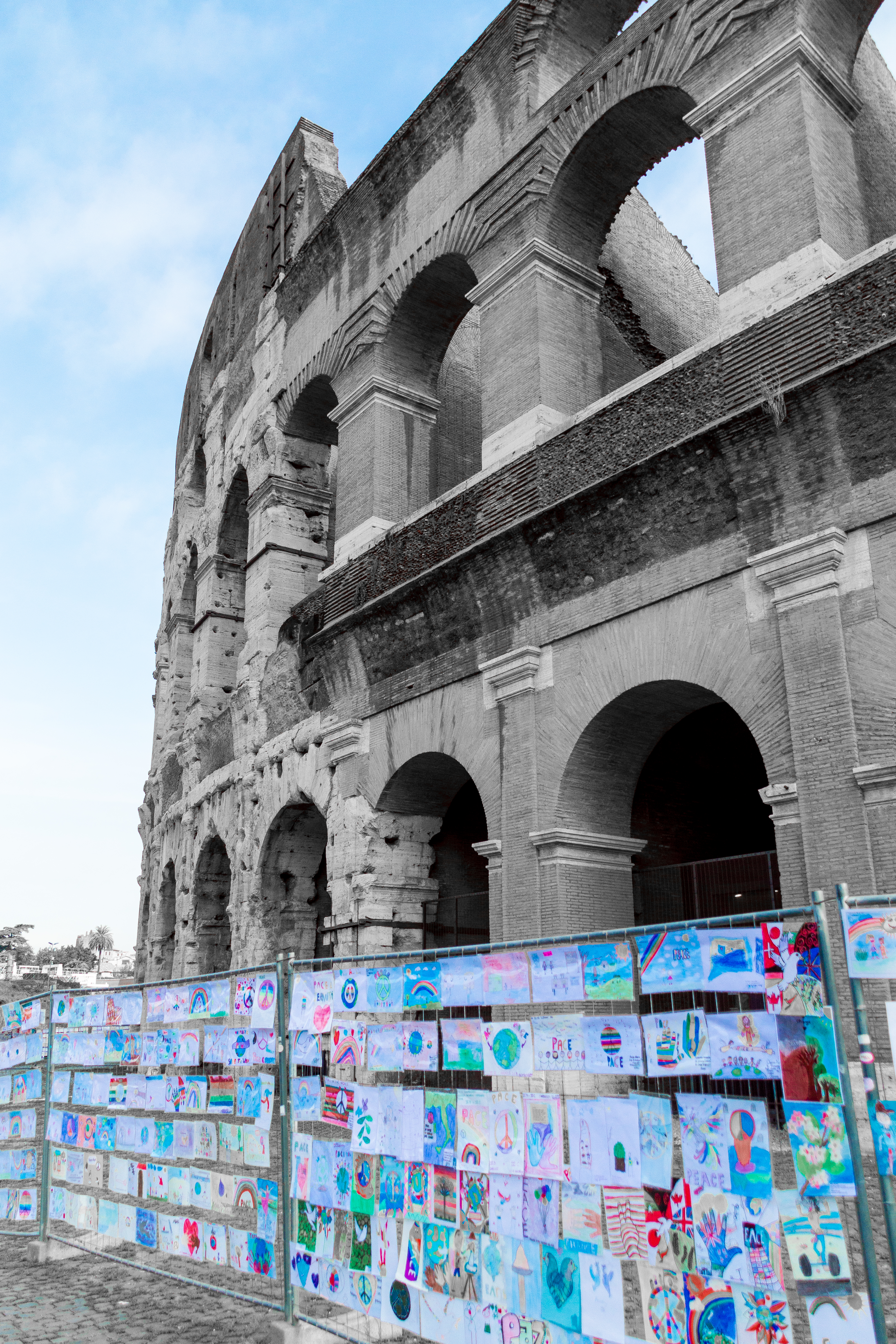
The Roman Colosseum, built between 72 A.D. and 80 A.D., is a symbol of brutality.

It is widely believed to have been built by tens of thousands of slaves. During some of the spectacles, it is said that 10,000 animals were slaughtered in a single day. Gladiators fought to their deaths and criminals were executed, all for the sheer entertainment of crowds of 50,000 or more. It is not my favorite place.

In fact, I never was very interested in Roman history, or in seeing the Colosseum. But when I was in Rome for two days in September with someone who did want to visit the Colosseum, I said, “sure, why not,” and went along.

It’s big. It’s old. And it’s kind of shocking to be strolling along on an ordinary cobblestone street, turn a corner, and there it is, looming over everything. Kind of spooky, actually.

Colosseum 3

But for me, the most compelling part about the Colosseum was the fence around it — a fence that was covered with children’s colorful drawings calling for peace. I loved the contrast.

Maybe there’s hope for this world yet.

Colosseum 2.jpg

This is post #3 for NanoPoblano2019. Click the link to read some other posts from a wonderful bunch of dedicated bloggers known as “cheer peppers.”

nanopoblano2019 Badge


Grandma’s Friendly Village

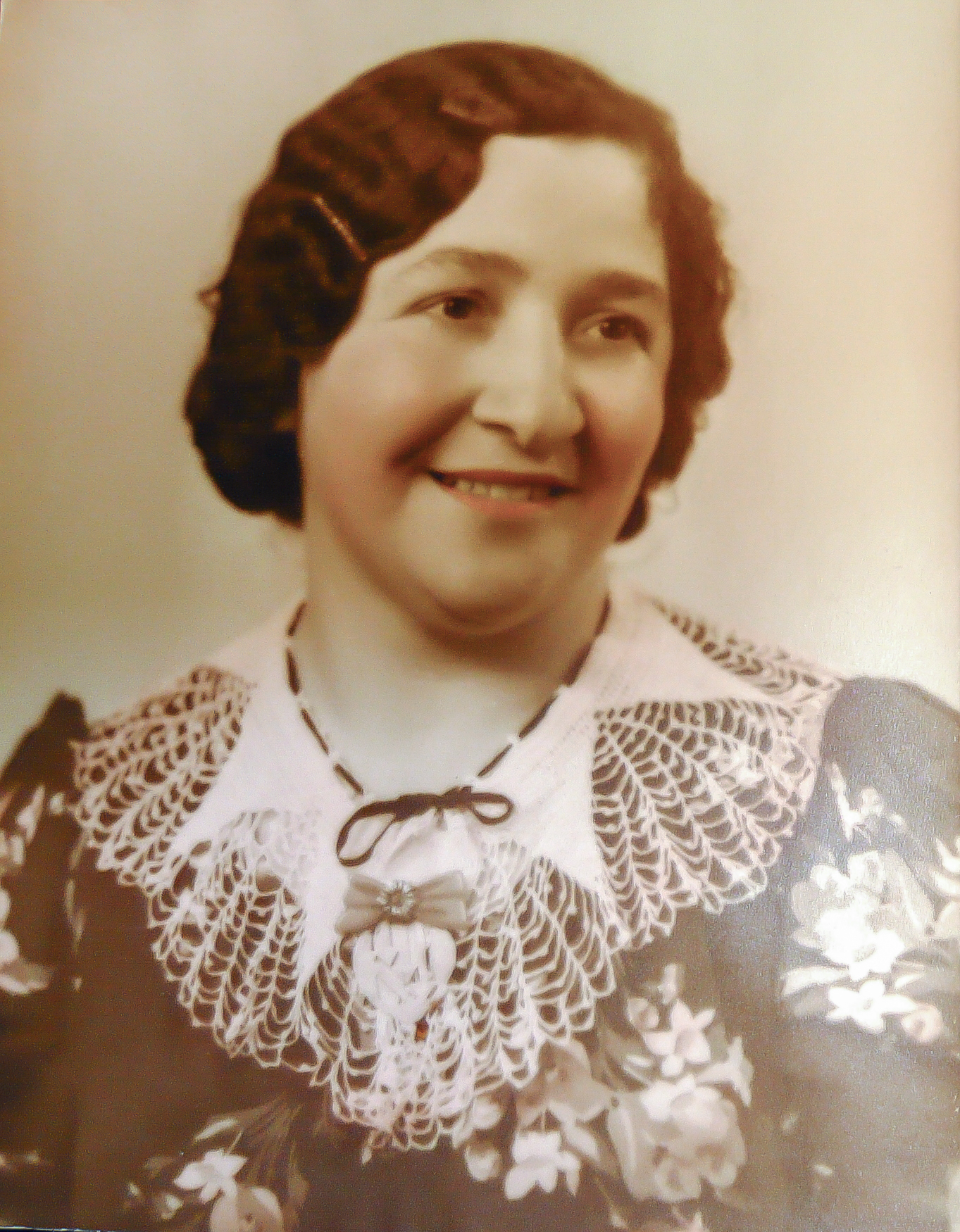
My grandmother Angeline was born in central Sicily, in a small village with the beautiful name “Villarosa.”

In 1910, at age 8, she emigrated from Sicily to America with her own grandmother, got married at age 16, quickly had five bambinos, and was widowed at 30. She later remarried and had a good life, but she never got to see Villarosa again.

Here she is at about age 30 (I’m guessing).

Grandma Armenia

I liked going to Grandma’s house. She always seemed cheerful, and she served us plenty of macaroni, ice cream, and raspberries, saying the word “mangia” practically as soon as we’d walked through her door. Her house was decorated with colorful starched doilies that she’d crocheted herself. I wonder if she crocheted the collar in the above photo. I have a special memory of the two of us sitting in a summer garden next to some pansies while she taught me to crochet.

Although Grandma never talked about her childhood (probably because I never asked), I’d always wondered what Villarosa was like. About a month ago, I finally got to see it for myself.

I’d signed up for a 5-day Italian language immersion program in Taormina, Sicily, mainly so I could learn about my Sicilian roots and visit Villarosa. Luckily, our group leader and two other students also were interested in seeing more of Sicily, so we rented a car on day 6 and headed for my grandmother’s home town.

Villarosa (pop. 4,824) is on the outskirts of Enna. The two cities couldn’t appear more different. Enna (left), seen from a distance, was a glittering city on a hill, while Villarosa (right) was its poor, dusty cousin. But Villarosa, as it turned out, was AMAZING.

I’d Googled “Villarosa” the day before we set out and learned a surprising fact: It’s kind of well known for its man-made lake, a popular fishing destination. And the man-made lake was the result of the building of Ferrara Dam. OMG, I thought. Grandma’s maiden name is Ferrara!

Here’s the dam, the lake, and me:

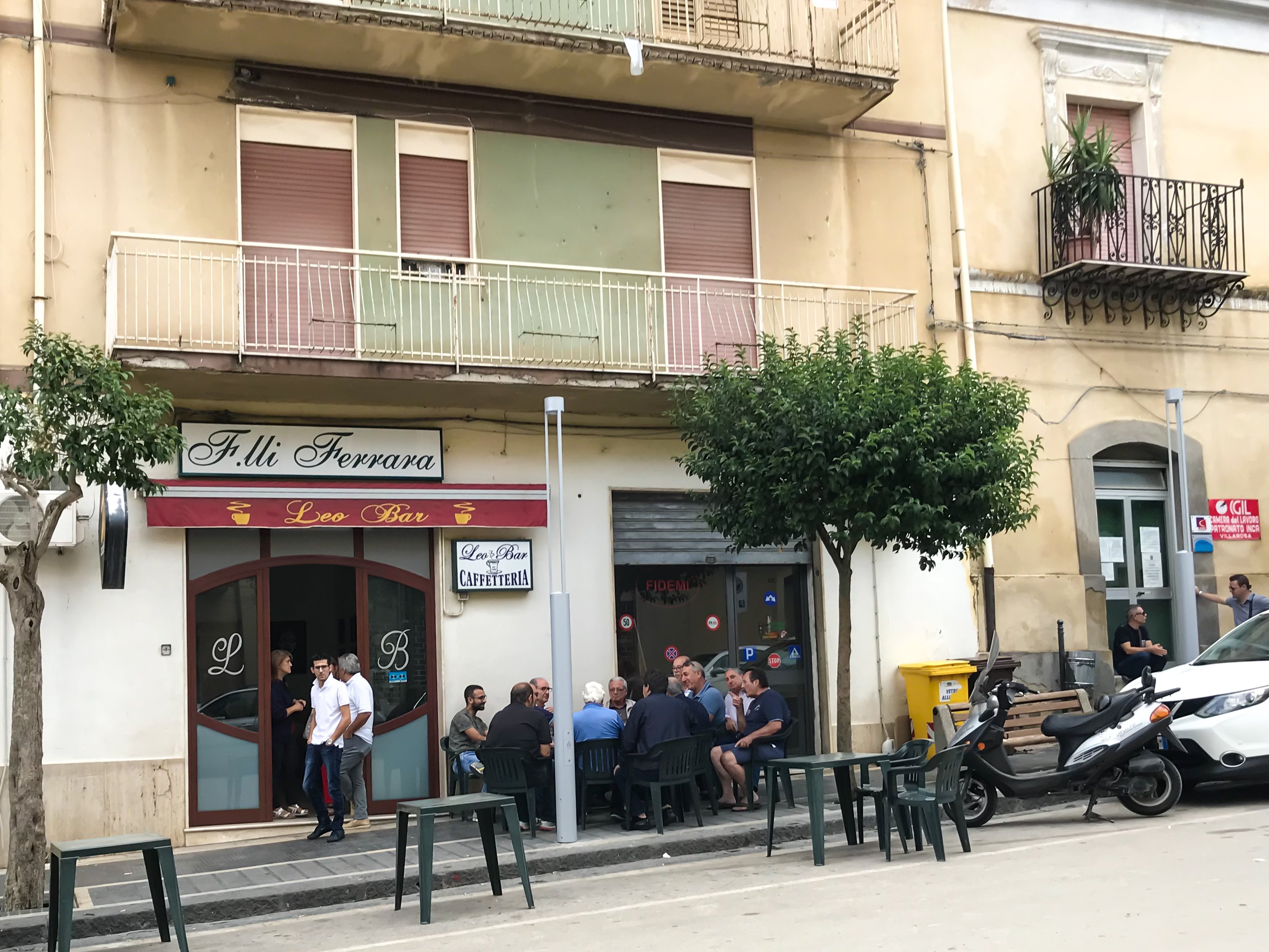
After parking in town, we looked around, hoping to find a place for lunch. Directly across from our car there was a restaurant, complete with group of Italian men deep in conversation. It looked like something out of a movie. Then I noticed the sign above the doors: F.lli Ferrara (Ferrara Bros.). And on the doors, the initials “LB.” Grandma’s maiden name, and my initials!

Men

We didn’t want to interrupt the men (OK, maybe we did feel a little intimidated) so we walked on down the block. Seeing a small, elderly man nearby, one of our group asked (in her newly-learned basic Italian) where we could eat. The man pointed down the street and rattled off directions in Italian. Then, probably realizing we didn’t capice, he escorted us all the way to tiny “Casa Mia.” It wasn’t open yet, but they welcomed us in. No one who worked in the restaurant spoke English. I ordered bruschetta and risotto (in Italian).

Suddenly, a family of about 20 people entered. It was an 80th birthday party! We smiled and nodded at them. A woman (angel?) from their group approached our table and asked (in English!) what had brought us to Villarosa.

“My grandma’s from Villarosa,” I said. “I was hoping I might find some family here.”

I’m an interpreter!” she said, handing me her business card. “I can help you.”

After I provided my Grandma’s name, and what I was pretty sure were Grandma’s parents’ names, she made a few phone calls, and within an hour I was sitting across the table from Gaetano Ferrara, owner of the Ferrara Bros. restaurant that we’d seen before lunch. His grandfather and my great-grandfather shared the same first and last names. It’s possible we’re cousins.

Gaetano spoke no English, but, with the help of the interpreter, I was able to ascertain that his brother, Pietro, owned a gelato/cannoli shop in town, and would be there at his shop to meet us! Mamma mia! It doesn’t get much better than that. But then it did. On our way out of the restaurant, the owner treated us all to shots of grappa and limoncello, on the house.

When I learned that the limoncello was homemade, I asked if they’d be willing to share the recipe … and they did. And yes, that alcohol is 90-proof.

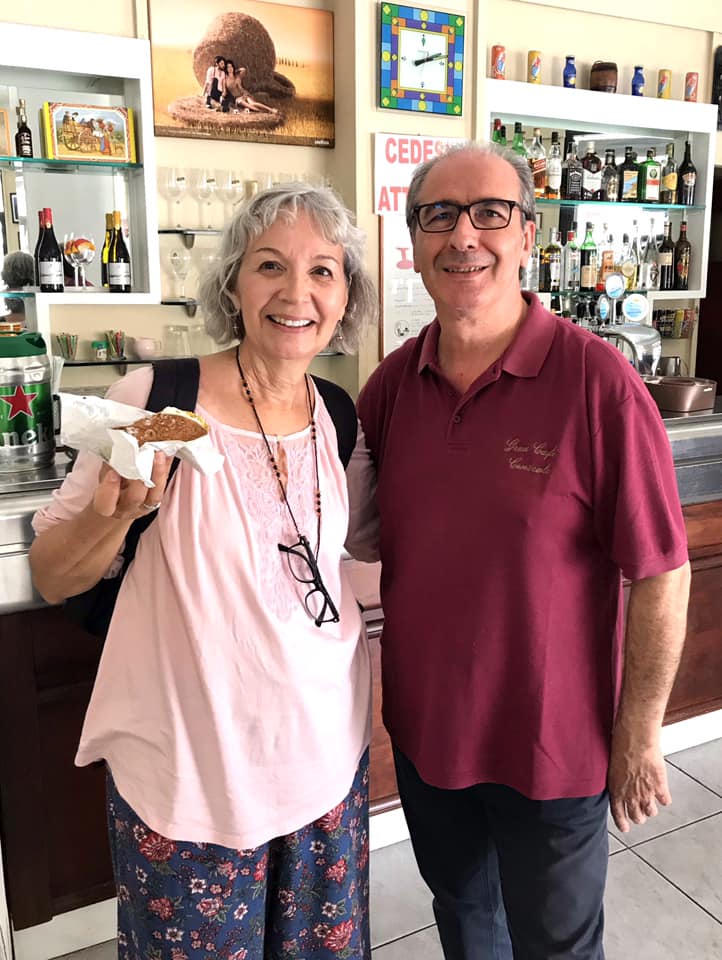
The hospitality didn’t end there. When we got to Pietro’s store, we were all treated to free gelato and cannoli. Here I am with Pietro Ferrara, another possible member of my family tree.

Connolo Cousin

After returning home, I discovered that Ferrara is a common name in that part of the world, so I’m not sure if Gaetano and Pietro are my cousins, but it doesn’t matter. It was an amazing trip, one I’ll never forget. I’m so happy to know that my roots include such a warm and welcoming town. And I’m still in touch with that lovely interpreter, who has offered to translate a letter for me so I can get in touch with the folks at the Villarosa town hall to learn more about my relatives.

For now, ciao until next time!

P.S. This is my first post for the 30-day November blogging challenge known as NanoPoblano2019. Our challenge is to write for 10 days, read others’ posts for 10 days, and share our posts on other blog sites for 10 days.

Please click this NanoPoblano2019 link and read some of the wonderful posts from other members of our little writing group.

nanopoblano2019 Badge